AIA|LA ADVOCACY REPORT
July 21, 2026


The ROAD Ahead: A Once-in-a-Generation Law Meets the City That Needs It Most
By Will Wright, Hon. AIA|LA – Director of Government & Public Affairs, AIA Los Angeles | July 21, 2026
Imagine walking down the sidewalk. The joy of tree canopy overhead. Pockets of shade, splashes of sunlight. Butterflies everywhere. Bees buzzing in the African Blue Basil. A western fence lizard warming itself on a garden wall, puffing out its proud blue belly, too content to dart out of your way. And all along this sidewalk: three- and four-story buildings, some rising six or seven stories, each one served gracefully by a single set of stairs.
Where a one-story, 800-square-foot cottage once stood, a narrow 25-foot-wide building now rises, wrapped in balconies and outdoor decks, its stairs connecting each terrace in an alternating rhythm that gives the facade harmony and balance. The power of the front porch. The delight of a backyard terrace and a BBQ grill. The splash of a garden hose on bare toes. A few rocking chairs. A porch swing.
This is life. This is community. And it is a community we can have right in the heart of Los Angeles, if we adjust our laws to let smaller parcels develop one by one, so that almost every building is a little bit different from the one next door. That is urban fabric. We want smaller quilt patches, not large bulky chunks. We want a neighborhood block owned and cared for by dozens and dozens of people, not a single distant corporate owner with a five-over-two consuming the entire street.
So how do we get there? This month, Washington, of all places, handed us a genuinely useful set of tools.
The small building becomes a first-class citizen
Just after midnight on July 11, quietly and without a signing ceremony, the 21st Century ROAD to Housing Act (H.R. 6644) became law: passed 85 to 5 in the Senate and 358 to 32 in the House, born of an unlikely partnership between Senators Tim Scott and Elizabeth Warren, and described by the New York Times as the largest federal housing effort in a generation. AIA National championed several of its provisions, and AIA 2026 President Illya Azaroff, FAIA, called it “an important step” toward putting an affordable home back within reach.
Read the whole bill and a pattern emerges that should quicken the pulse of every architect in this city: for the first time in memory, federal housing law treats the small building as a first-class citizen.
Section 102 directs HUD to publish guidelines helping states and cities safely permit point-access block buildings, multifamily housing served by one internal stair, up to six stories, with competitive pilot grants to test their safety, feasibility, and cost. This is the building type that makes narrow-lot infill pencil: floor plates devoted to homes instead of corridors, cross-ventilation, family-sized units, courtyards.
Section 209 funds local governments to adopt pre-reviewed housing designs, pattern books, for low- and mid-rise buildings of up to 25 dwelling units, so a proven design can be permitted again and again without reinventing the wheel. Section 211 modernizes FHA multifamily loan limits to reflect what construction actually costs, and new pilots expand access to mortgages under $100,000, financing scaled to an ADU, a duplex, a bungalow court. Small buildings, small loans, repeatable designs: this is the federal government describing our quilt patches.
And the money now follows production. Section 213, the Build Now Act, ties Community Development Block Grant funding to housing output: high-cost cities that keep under-building lose ten percent of their grant, and the savings flow to cities that build. Section 208 creates a $200 million-a-year Innovation Fund rewarding jurisdictions that demonstrate measurable increases in supply.
There is much more: streamlined federal environmental reviews, CDBG dollars newly eligible for affordable construction, a pilot converting vacant commercial buildings into homes, a requirement that every CDBG recipient publish a searchable database of its undeveloped public land, an end to the permanent-chassis rule that burdened manufactured housing, a 100,000-unit lift of the Rental Assistance Demonstration cap, and a three-year authorization of the disaster-recovery block grant program. The Bipartisan Policy Center’s section-by-section summary is worth your bookmark.
The critics have a point, and the point is us
The New York Times, having called the Act historic, also called it “unlikely to do much anytime soon.” Fair. The law authorizes far more than it appropriates; its own final section provides no new funds. And the federal government cannot rezone a single parcel in Los Angeles. Zoning, permitting, and building codes remain ours.
But read that critique again and notice what it actually says: this law does nothing unless cities act. It is a matching offer, not a rescue. And the stakes of inaction are no longer abstract. The City of Los Angeles received $48.4 million in its last CDBG award; under Build Now, that funding shrinks if we keep under-building and grows if we accelerate. Meanwhile, the AIA/Deltek Architecture Billings Index declined again in May. For our members, an expanded pipeline of small projects isn’t policy trivia. It’s next year’s work.
Los Angeles is closer than we think
Los Angeles City Planning’s Missing Middle LA initiative has four draft ordinances out for public review right now, measures to expand ADUs, duplexes, small-lot homes, and bungalow courts, plus a published Homeowner’s Guide to Missing Middle Housing and the Low-Rise Design Lab’s groundwork on repeatable, dignified small-building design. Local firms are already sketching the future: JKA’s single-stair, courtyard-organized concept for Larchmont Boulevard, with its pressurized stair, enhanced fire resistance, and cross-ventilated family units, is precisely the building type Sections 102 and 209 were written to multiply. And for a county still rebuilding from the 2025 firestorms, the disaster-recovery authorization and the RAD cap lift are quiet but consequential.
Here is what outsiders often miss: the machinery of map-based, ministerial approval already exists in Los Angeles. The Citywide Housing Incentive Program, adopted in February 2025, made even “off-menu” density-bonus incentives ministerial. Under the city’s Housing Element Sites ordinance, a housing project on a mapped inventory site that reserves twenty percent of its homes for lower-income households is now approved by right, with no discretionary review. And on designated rezoning sites, the code sets a minimum density of twenty units per acre: a floor, in a discipline that has only ever known ceilings. Thousands of parcels, searchable on ZIMAS, already carry their entitlement with them. The task is to extend that logic downward, to the small lot and the small building.
Five reforms to press for
One: legalize the single-stair building, with evidence. The State Fire Marshal’s long-awaited report, released in March, was cautious: four stories, it suggested, not six, absent further study. Culver City already permits six. This is exactly what HUD’s new pilot grants are for: fund the testing, modeling, and demonstration projects that turn caution into confidence, so the next report has the data this one lacked.
Two: build the pattern book, and put it on the map. Pair Section 209 funding with a citywide library of pre-approved designs: courtyard housing, bungalow courts, slender small-lot buildings, then cross-list those designs with the sites we have already unlocked: the Housing Element inventory on ZIMAS and the searchable database of undeveloped public land the new federal law requires every CDBG recipient to publish. Land, entitlement, and design, published together, is a catalog a builder anywhere in the country can act on.
Three: finish Missing Middle LA, then go further. Adopt the draft ordinances, and treat the eight-to-25-unit building as its own production sector, with right-sized parking, fees, and utility standards, so small projects stop being priced like scaled-down towers.
Four: make permitting a promise. Use Section 207 planning grants to fund shot clocks, concurrent reviews, and transparent fee schedules, so a small builder can price certainty into a pro forma.
Five: court small-scale capital. Outside investment goes where risk is legible. A small developer, a community lender, a pension fund allocating to workforce housing: each prices three things: land, construction, and uncertainty. We can’t do much about the first two. Uncertainty is entirely within our control. Pre-approved plans, ministerial timelines, transparent fees, and right-sized FHA loan products turn the twelve-unit building from a bespoke gamble into an investable asset class. And a city of investable small buildings is a city of many owners, not few.
Start today. Literally.
Written comments on the Missing Middle LA draft ordinances close July 21, the very day this newsletter lands. Send yours to City Planning this afternoon. Then join us at AIA|LA as we shape member input on a single-stair code amendment and discuss whether or not to develop and promote a Section 209 pattern book. The federal government just told every city in America: show us production, and we will reward you. Los Angeles should take that deal.
The lizard on the garden wall isn’t waiting. Neither should we.
— Will Wright, Hon. AIA|LA – Director of Government & Public Affairs, AIA Los Angeles
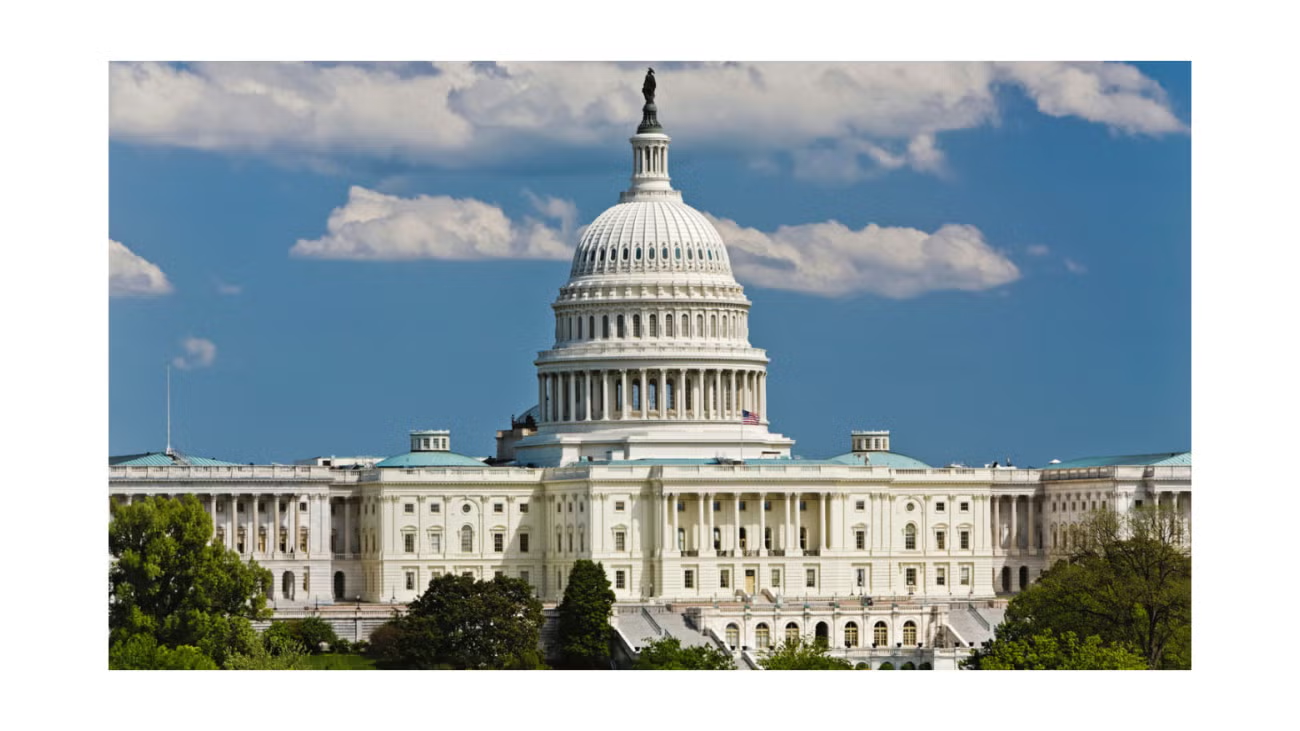
Congress Delivers Major Housing Win for Communities and Architects
July 13, 2026
AIA applauds landmark housing law that will help communities build more homes.
WASHINGTON –July 13, 2026 – The American Institute of Architects (AIA) today celebrated the enactment of the 21st Century ROAD to Housing Act, landmark bipartisan legislation that takes meaningful steps to address the nation’s housing shortage and improve access to affordable housing.
Communities across the country continue to face rising housing costs and a shortage of homes that families can afford. This new law provides communities with new tools to increase housing production, modernize federal housing programs, and remove barriers that have slowed the delivery of new housing.
“For too many Americans, finding an affordable home has become increasingly out of reach,” said AIA 2026 President Illya Azaroff, FAIA. “This law is an important step toward changing that. Architects are essential partners in creating housing that is safe, resilient, and designed to meet the needs of every community. AIA has long advocated for policies that make it easier to build more housing, and we will continue working with policymakers and federal agencies to help turn these reforms into homes people can live in.”
The legislation advances several priorities AIA has championed to help communities expand housing options and combines dozens of previously introduced bills aimed at addressing the affordability crisis. It sets policies to expand housing supply, streamline the construction of manufactured homes, and restrict large corporate investors from buying up single-family properties. Together, these reforms will help communities deliver more housing while creating new opportunities for architects to put their expertise to work.
There are several wins for the architectural community and AIA members that will likely expand the pipeline of projects, particularly in housing preservation, adaptive reuse, and new multifamily development.
Key reforms include:
As implementation begins, AIA will continue advocating for policies that help the affordable housing community comply with BABA, increase housing supply, support architects, and help communities create more affordable, sustainable, and resilient places to live.

THE SIDEWALKS OF LIFE: WHAT PARIS TEACHES US ABOUT LA’S CHARTER REFORM
By Will Wright, Hon. AIA|LA – Director, Government & Public Affairs, AIA|LA
I am writing this from Paris on a family holiday, where the city is enduring its third back-to-back heat wave. In the shade it is pleasant, but your clothing sticks to your skin. In the sun it is hot — hot like a burnt croissant — and the occasional breeze is all that makes it tolerable. It is my first time back in twenty years, and I confess I miss our Los Angeles weather, where no matter how brutal the afternoon, the nights arrive cool and crisp.
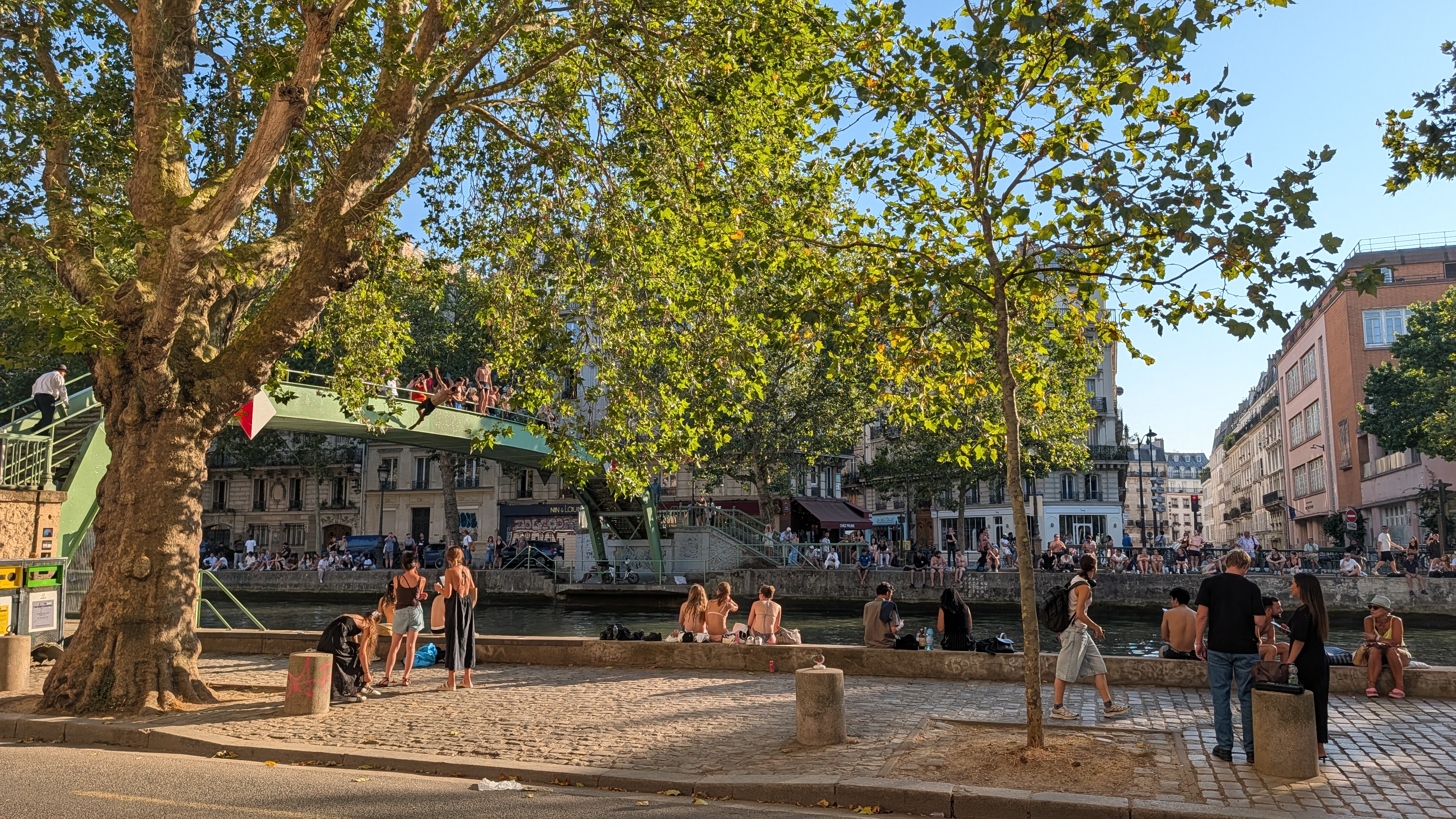
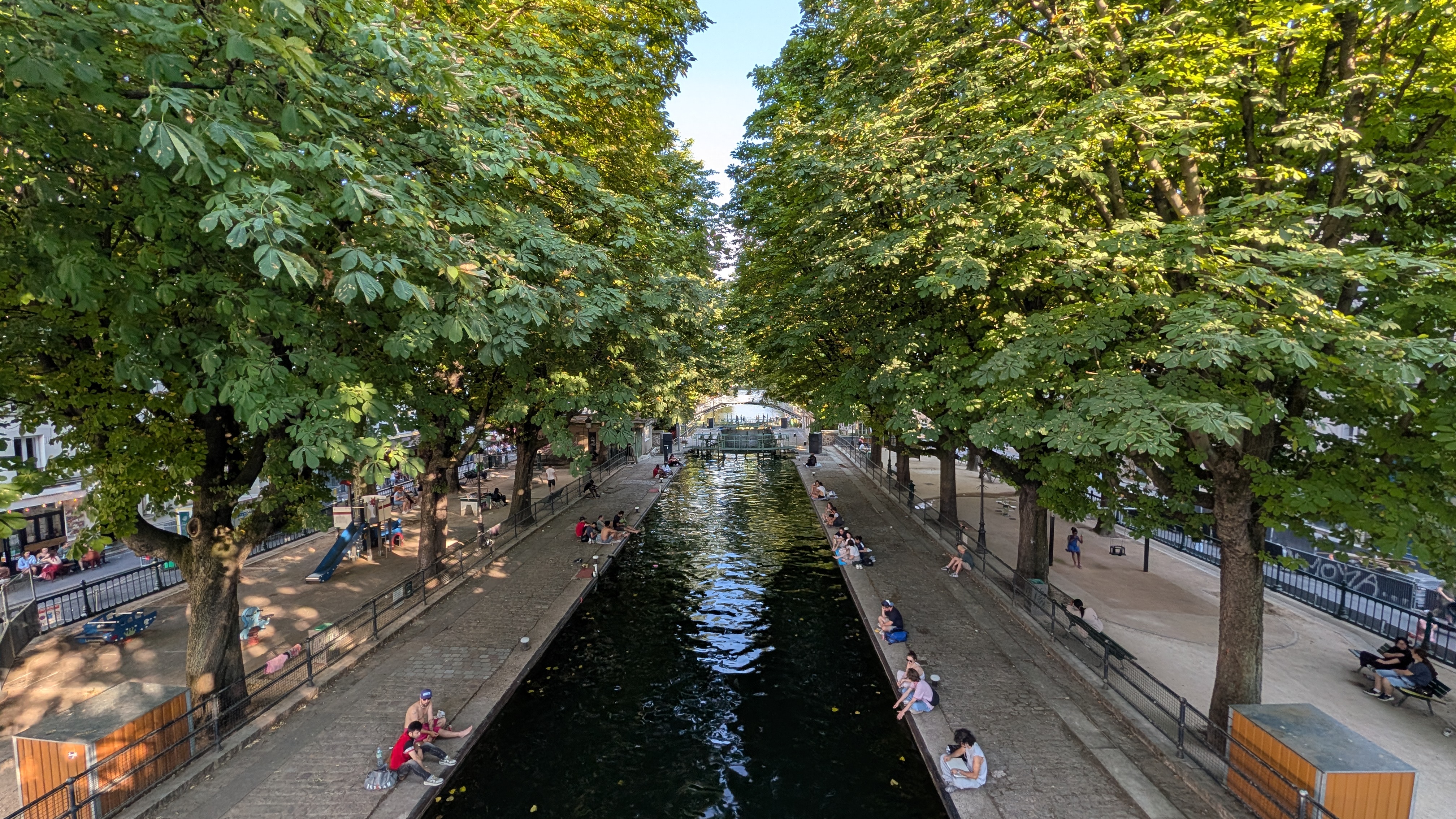
But the heat is not what stays with me. What stays with me is the street life. People walking, biking, gathering in small clusters to talk. Hundreds sitting on benches and curbs along the Canal Saint-Martin with cups of wine or bottles of beer, and casual picnics, out in the open, enjoying the city the way a city is meant to be enjoyed — together, as people. Cyclists pass like fireflies. Scooters snip through the intersections of the 10th arrondissement. The metro is stuffed and still pleasant, with headways sometimes under two minutes. Public toilets sit on nearly every block, a quiet acknowledgment of the simple biological fact that humans need to relieve themselves — a fact the City of Los Angeles too often forgets to respect. I see almost no parking lots or garages. The city is prioritized for people, and for history, heritage, and a genuine, authentic sense of place.
Part of that vitality is simply that the city gets out of the way. The sidewalks flourish with outdoor dining, and every corner is made livelier because local businesses are allowed to thrive. It is worth asking why, in Los Angeles, we should need a permit to put a table on a sidewalk at all. If a street ever grows too crowded with people enjoying a meal together, the city can respond to that specific situation with additional resources — but we should not spend scarce and expensive effort solving problems that do not yet exist and may never arise.
That authentic sense of place is what resonates most. And beneath it lies something I believe we can replicate in Los Angeles, if we try: a workforce held up with purpose and intent. The craftspeople and tradespeople here are one hundred percent connected to the act of the architecture itself. Buildings need people to become, and they need people to sustain and maintain themselves.
THE CRAFT THAT HOLDS A CITY UP
Consider the rooftops. In December 2024, UNESCO added the skills of Parisian zinc roofers and ornamentalists to its Representative List of the Intangible Cultural Heritage of Humanity. Nearly eighty percent of the roofs in Paris are clad in zinc, and UNESCO called the city a “living archive” of the skills that shape its identity — the measuring, the custom-cutting on a Parisian folding machine, the dormers and friezes and finials worked by hand in the ornamentalists’ workshops.
What moves me about that recognition is not nostalgia. It is that the honor was granted to people, not to objects. And it arrived precisely because the trade is under strain — too few young workers entering it, and a warming climate forcing those aging zinc roofs, and the people who tend them, to adapt. UNESCO status was pursued, in part, to draw a new generation into the craft. Paris understood that a heritage of stone and metal is meaningless without a living heritage of hands to steward it.
Los Angeles can learn from that purpose: to respect and nourish the deep connection between people and the buildings in which we live, work, and play. A building is never finished. It is a relationship, renewed daily by the people who maintain it and the neighbors who animate it. A civil society is built on the actions of the daily bump — neighbors connecting in small moments, resolving the minor frictions of shared space before they harden into larger, unresolvable tensions.
LA WILL NEVER BE PARIS — AND THAT’S NOT THE POINT
LA will never be Paris. That is not my argument. But as a young and still-growing city, we have a great deal to learn from an old one — chiefly, that a city thrives when it makes it easier for people to come together and thrive together, with purpose and dignity.
Which brings me home, and to the November 2026 ballot.
A city charter is not an abstraction. It is our operating manual — the document that governs how we plan, how we build, how we spend, and how we hold one another accountable. It determines whether a good idea moves or stalls, whether a park is funded or starved, whether a neighborhood can grow or is frozen in place. On Tuesday, November 3, 2026, Los Angeles voters will decide a slate of charter amendments — the city’s first significant overhaul in more than a quarter century, since the last major reform in 1999. These changes were shaped by the Charter Reform Commission, which transmitted its final report last spring, and then finalized by the City Council in late June. Council President Marqueece Harris-Dawson framed the stakes plainly: it has been 27 years, and it is a much different world.
For those of us who design and steward the built environment, these are not distant civic mechanics. They are the rules that will govern our professional lives for a generation. Here is what is on the table, and why it matters to us.
WHAT’S ON THE NOVEMBER 3rd BALLOT (Council File 26-0489)
Please note: Ballot language was still being finalized as of this writing = REIR Committee Report – CF 26-0489 (Charter Reform)
Infrastructure, budget, and finance:
+ A formalized Capital Infrastructure Program and a new Director of Public Works to lead it. This reflects the kind of long-term planning AIA|LA has long championed — a structural commitment to maintaining, repairing, and building out the city we have, rather than the fragmented, department-by-department patchwork we have lived with for decades.
+ A shift toward a two-year budget cycle, giving city programs more time to be evaluated and scrutinized than an annual scramble allows.
+ Restructuring the city’s top financial oversight, moving the City Administrative Officer’s role toward a chief-financial-officer model with clearer responsibility for debt management.
+ Loosening long-standing restrictions on how the city raises revenue and awards contracts, with the aim of streamlining procurement and giving Los Angeles more financial flexibility.
Land use and zoning — the measures nearest to our practice:
+ Greater flexibility on density. The reform package would grant the City Council authority to exceed the charter’s existing 13:1 Floor Area Ratio ceiling by ordinance — a technical-sounding change with enormous consequences, because FAR is one of the mechanisms that governs whether we can build the denser, more humane, more affordable development our housing crisis demands.
+ Tighter timelines on entitlements. A new 75-day clock would require the City Council to act on a General Plan Amendment already approved by the Planning Commission — and if the Council fails to act, the amendment is deemed approved. Anyone who has watched a worthy project languish in procedural limbo understands why this discipline on delay matters.
Ethics, elections, and governance:
+ Stronger ethics enforcement, raising the maximum penalty for violations to $15,000 (adjusted for inflation) and imposing a five-year “revolving door” cooling-off period that bars Ethics Commission officials from running for the offices they once policed.
+ Clearer City Council authority to set broad policy for the Los Angeles Police Department by ordinance — while preserving the Chief’s authority over tactical deployments and individual discipline. Los Angeles has long been an outlier in barring its elected legislators from making department-wide policy, and this measure would clarify that line. The same package would write into the charter an explicit duty for the LAPD to protect the constitutional rights of all persons — naming, specifically, the rights to assemble and protest. In a moment when the freedom to gather in public is contested ground, that is no small thing.
Recreation and Parks:
+ A measure to roughly double the department’s guaranteed minimum funding, phased in over the coming decade. Los Angeles currently ranks near the bottom of the nation’s hundred largest cities for park access, and its parks department never fully recovered from Great Recession-era cuts. The guarantee is a floor, not a ceiling — but a higher floor for public green space is a direct investment in the places where Angelenos actually come together.
Los Angeles Unified School District:
+ Additional measures for district voters addressing LAUSD governance and elections.
Civic participation — the fine print worth reading closely:
Two changes in the package deserve more attention than they will get. The first would raise the signature threshold for referendary petitions — the tool residents use to challenge an ordinance the Council has already passed — from 10% to 15% of the vote in the last mayoral election. That is a fifty-percent increase in the bar for holding the Council accountable between elections, and it runs in exactly the wrong direction for a body that has given Angelenos ample reason to want that check within reach.
The second is subtler, and it cuts both ways — a genuine set of opposable complements. The reforms would replace the word “Citizen” with “Civic” throughout the article governing Neighborhood Councils, a thoughtful gesture toward inclusion in a city where so many stakeholders are not citizens. In the same stroke, though, the charter would strike the existing language that guarantees Neighborhood Council participation to everyone who lives, works, or owns property in an area, and replace it with “stakeholders,” a term to be defined later by ordinance. Architects and designers live inside the Neighborhood Council system — it is where entitlements are debated, where projects find friends and enemies, where the public realm is argued into being. Broadening the language of belonging while narrowing its guarantee is precisely the kind of change that looks minor on the ballot and feels major at the podium. Read it closely before you vote.
It is also worth noting what did not make the ballot — and who kept it off. Some of the boldest structural reforms the Charter Reform Commission put forward were set aside by the Council itself and referred to a new committee for possible consideration in 2028. Among them: expanding the 15-member City Council to 25 seats, adopting ranked-choice voting, lowering the voting age to 16, and splitting the City Attorney’s office into separate prosecutorial and advisory roles. A separate proposal to let noncitizen residents vote in local elections was advanced and then pulled at the end of June over unresolved legal and implementation questions.
Council expansion is the one I would sit with and examine more deeply. (Full disclosure: I’m still 50/50 on the whole matter). Los Angeles has one council member for roughly every 260,000 residents — among the least representative ratios of any major American city. More seats would mean smaller districts, more accessible representatives, and a table with more voices at it. Although it would potentially be more expensive to support and maintain more councilmembers, more councilmembers would mean a stronger, more viable Mayor as chief executive of the city – which in turn may help improve functionality and effectiveness in city governance. A return on the investment that may be well worth the additional expense of supporting more councilmembers, even if having more councilmembers adds confusion and complexity to the functions of effective governance. These are ideas worth further debating, and joining the civic debate more effectively is where the design community can add more weight and nuance. More design thinking helps to better balance the pros and cons of an issue.
That is precisely the kind of “coming together” our charter should make easier. And yet it was the reform the current body was least willing to advance. The relevant council committee met seven times in a single month to work through this docket — enormous deliberative effort — and still declined to let us vote on the one structural change that would most redistribute its own power. One former councilman called this year’s outcome “the great punt of 2026,” an underwhelming result for four years of work. He is not wrong. The bodies that benefit most from the status quo are rarely the ones eager to change it, which is exactly why this decision belongs to us, at the ballot, and not to them.
FROM SPECTATORS TO PARTICIPANTS
Here is where I ask something of you. Do not treat November 3 as a spectator sport. Read these measures. Argue about them. Support the ones that will make Los Angeles more vibrant, more functional, and more accountable — and oppose the ones you believe will not.
The land-use reforms alone will shape whether we can build the housing and the public realm this city desperately needs. The infrastructure and finance reforms will determine whether we maintain what we have with foresight rather than crisis. And the governance questions — including the ones the Council chose to leave off the ballot — will decide how genuinely this city invites its people to the table.
Paris did not become Paris by accident, and it does not sustain itself by accident. It does so through a deliberate, daily investment in the connection between people and place — in the craft that holds the roofs up, in the sidewalks that let strangers become neighbors, in the small dignities of a bench, a café chair, a two-minute train. We can make our own version of that here. Not by imitation, but by intent.
For Los Angeles to become all it can be, it must strengthen the ability of people to come together and thrive together, with purpose and dignity. Charter reform is one lever within reach. On November 3, let’s pull it — thoughtfully, and together, on the sidewalks of life.
—
Will Wright, Hon. AIA|LA, is Director of Government & Public Affairs at AIA|LA.
2026 AIA|LA CITY LEADERS BREAKFAST SERIES
The Next Five Receptions (August–October 2026)
Presented by Graphisoft
AIA|LA’s City Leaders Breakfast Series, presented by Graphisoft, returns this summer and fall with five intimate roundtables connecting architects directly to the people shaping how capital, housing finance, tourism, and transit converge across Los Angeles. Meet CIM Group’s Lina Lee (Aug 13), LA Tourism’s Adam Burke (Aug 20), Housing Partnership Network’s Robin Hughes (Sept 4), Alagem Capital’s Darcy L. Coleman (Oct 9), and Metro’s Nick Saponara (Oct 16) — five perspectives on who funds, finances, and builds the next Los Angeles. No panels, no lectures — just candid dialogue and real access.
Available to join us? Register today.
Lina Lee — 1st Vice President of Development, CIM Group (Aug 13)
As 1st VP overseeing entitlements, land-use diligence, and design development across both ground-up and repositioned assets, Lee can speak from the developer’s seat about how entitlement predictability and timeline risk factor into CIM’s underwriting — a direct test of AIA|LA’s case for streamlined appeals and missing-middle typologies.
Adam Burke — President & CEO, LA Tourism & Convention Board (Aug 20)
Burke’s mandate ties civic economic health to the visitor economy and hospitality sector, intersecting with AIA|LA’s public-realm advocacy and civic design initiatives. Useful terrain for framing how placemaking and design quality serve Los Angeles’s economic development goals in the run-up to 2028.
Robin Hughes — President & CEO, Housing Partnership Network (Sept 4)
With 35 years in affordable housing finance and policy across local, state, and federal levels, Hughes is a strong sounding board on the Measure ULA new-construction exemption debate and on the financial feasibility of Missing Middle LA’s draft ordinances for affordable and middle-income housing.
Darcy L. Coleman — VP, Asset & Investment Management, Alagem Capital (Oct 9)
Coleman’s oversight of $4B+ in capital transactions across hospitality and mixed-use assets, paired with her role co-chairing ULI’s Homelessness Initiative Council, makes her relevant to both the Measure ULA exemption (capital-markets impact on new construction) and AIA|LA’s broader housing-production-meets-homelessness agenda.
Nick Saponara — Executive Officer, Transit Oriented Communities, LA Metro (Oct 16)
Saponara’s oversight of Metro’s 10,000 Homes joint-development commitment connects directly to our advocacy efforts to promote more housing near our transit corridors, the AB 835 single-stair reform window, and is a natural opening to raise AIA|LA’s long-term land-use vision for transit-adjacent sites, including optimizing public lands for more housing opportunities.
AND MORE TO BE ANNOUNCED
The Right to Have Rights — and a Place to Call Home
As America turns 250, belonging is the through-line: a home to build, a citizenship to claim, a vote to cast.
By Will Wright, Hon. AIA|LA
This month our nation turns two hundred and fifty. It is a birthday worth pausing over — not to rehearse the old arguments, but to remember what the whole experiment was for. The United States was never a piece of land so much as an idea about who belongs, and on what terms. At 250, the honest and hopeful question is not how divided we have become, but how much we still hold in common: the wish for peace and health, for a fair shot, for a place to call our own. Here in Los Angeles — young city, old land — we know something about belonging. It is written in our sidewalks and our porches, in the slow work of turning strangers into neighbors.
I will not pretend the season has been all celebration. Just last week, our own City Council declined to advance the reforms that would have mended Measure ULA — the well-intended transfer tax whose barriers to building housing, though unintended and contrary to the measure’s own goals, are real and remain. I am grateful to the councilmembers who put concrete proposals forward, and I share the Mend It, Don’t End It coalition’s view that we made real progress even as much more work remains. The numbers are hard to look away from: since ULA took effect, multifamily housing production has fallen by nearly a third, larger transactions have collapsed, rents have climbed, and the City, County, and our schools have forgone more than $450 million in property tax revenue. I lead with this disappointment not to dwell on it, but because optimism that refuses to name what is broken is just decoration. We only fix what we are willing to see.
So let me hold that frustration in one hand and, in the other, three larger reasons for hope. Three matters are unfolding at once this summer, and though they arrive under different headlines, they are one story. Each is about how a person becomes part of a place: through a home, through a claim to citizenship, and through a vote. Braided together, they describe the architecture of belonging — the structure a democracy builds so that more people can stand inside it.
Start with the home, because shelter is the first and most primal need. In late June, Congress did something it had not managed in a generation: it passed, with overwhelming bipartisan majorities, the 21st Century ROAD to Housing Act — 85 to 5 in the Senate, 358 to 32 in the House. The New York Times called it the most significant housing legislation since 1990. It will not lower a single rent overnight. What it does is plant a garden: it clears regulatory thickets, aligns incentives toward supply, and opens new paths — from small-dollar mortgages to single-stair reform — that let more families build the wealth homeownership has always promised. Those of us who advocate alongside the design community have said it for years: every ounce of blight you see is the residue of a failed policy, not a failed market. When the policy finally says yes, the architects and builders are ready. More homes mean more households, and more households mean more stewards — people invested in the block, the tree canopy, the school down the street. Ownership, at its best, is not accumulation. It is stewardship.
That word — stewardship — is the quiet center of this whole reflection. To be a steward is to hold something in trust for those who come after: land, a neighborhood, a set of civic habits. It is the oldest wisdom on this continent, carried for millennia by Indigenous peoples who understood that if you take care of the land, the land takes care of you. My own family’s arc taught me a humbler version of the same lesson. We came to this part of the world in the late 1600s, settling in what would become Massachusetts, then drifting to Tennessee in the 1700s, then Texas in the 1800s; the Trail of Tears carried other branches of my family into Oklahoma, where new families were made in the aftermath of terrible loss. I carry both inheritances — the arriving and the displaced — and they leave me with one conviction: we only take care of what we love, and we only love what we feel we belong to. Stewardship is belonging with its sleeves rolled up.
Which brings me to citizenship, and to a decision handed down just days before this anniversary. On June 30th, the Supreme Court, in Trump v. Barbara, reaffirmed birthright citizenship under the Fourteenth Amendment — holding, in Chief Justice Roberts’ words, that children born here to parents unlawfully or temporarily present are subject to the jurisdiction of the United States and are citizens at birth. The Court reached back through Wong Kim Ark and past the shadow of Dred Scott to keep a promise made after the Civil War. There were dissents, as there often are on questions this old and this hard; that is the nature of a court that argues in the open. But the promise held. Roberts closed with a line I keep returning to: citizenship, then and now, is “the right to have rights — to freely participate in our political community,” a promise the Framers extended to “every free-born person in this land.”
I read that decision the way I read any good civic plan: it is generous, and it is built to last. Immigration is not a threat to be managed but a force that has made this country one of the best places on Earth to dream out loud. Go back far enough, and every one of us traces to somewhere else. The task before us is not to narrow the door but to build enough room behind it — enough homes, enough opportunity — that we can keep welcoming the courage it takes to arrive.
And so to the third thread, the one that completes the circle: the vote. A home gives you a stake. Citizenship gives you standing. The ballot is how you use them. There is real debate right now over how we register and how we vote, and I will say plainly where I land: the answer to a healthy democracy is more participation, not less. Sensible identification has its place — but let it be a fulcrum that lifts opportunity, never an obstacle that blocks it. Mail-in voting is a convenience and a lifeline, a way to make sure the working parent, the night-shift nurse, and the homebound elder all have their say. If we want a country that belongs to everyone, we have to make the act of belonging easy to perform. A vote is a small, recurring act of stewardship: the citizen tending the commons.
Notice how tangled these threads already are. In the very days the Court affirmed the citizenship of every child born on our soil, that landmark housing act sat unsigned — held as leverage to force a national voting bill that would make it harder, not easier, to register and cast a ballot. Home, citizenship, vote: the three strands of belonging, knotted together in a single standoff. I choose to see the knot not as proof of dysfunction but as a reminder that these things rise and fall together. You cannot build a welcoming country and wall off the ballot box in the same breath.
And here is where we, in Los Angeles, have already begun to do more than watch. As of June 30th, the City adopted its Low-Rise Ordinance — our own answer to California’s new transit-housing law, SB 79. Rather than accept a one-size-fits-all mandate, Los Angeles chose to phase the change in on its own terms, extending missing-middle housing incentives into fifty-seven Opportunity Station Areas across the city: neighborhoods near transit where courtyards, paseos, and porch-fronted homes can rise on lots that once allowed only one. It builds on programs that have already added more than half a million units of housing capacity. This is what a city looks like when it decides to build rather than merely debate — and it is worth celebrating in the same breath as the founding we mark this month. The framers gave us a structure meant to be amended and made more generous over time. A courtyard of new homes on a Los Angeles corner is a small, local act of that same conviction: the belief that the plan can always be made to hold more of us. Learn where those Opportunity Station Areas fall, support the homes that will rise in them, and keep pressing to mend the tools, like Measure ULA, that still stand in the way.
I think often about oaks. On my porch in Chinatown, a quarter mile from the Los Angeles State Historic Park, I am growing a few coast live oaks that may outlive me by two hundred years — perhaps five hundred, if they are lucky and we are wise. An oak stands in one place through generations of trips around the sun and asks only to be a good neighbor to everything around it: shade for the traveler, an anchor for the soil, a home for the smallest insect. Oaks make good decision-making trees. They remind us that the choices we make now are held in trust for people we will never meet.
At 250, let that be our posture: to build well, welcome widely, and vote with intention — and to do all of it as stewards, holding this remarkable, unfinished country in trust for the next generation. Our sidewalks, our view-sheds, our footsteps and the wake of our smiles — that is much of what we will ever really have, and perhaps much of what we will ever really need. Let us make more room in the shade. There is a place for everyone under it.
###
Unfinished Business: What Happened with Measure ULA — and What Comes Next
By Will Wright, Hon. AIA|LA
On July 1, 2026 — the last day the Los Angeles City Council could legally send a Measure ULA reform to the November ballot — the Council voted 13-1 (Councilmember Curren Price absent) to shelve the most consequential reform on the table: a 10-year exemption from the tax for newly constructed multifamily and mixed-use residential buildings, proposed by Councilmembers Yaroslavsky and McOsker. Only Councilmember Traci Park voted to advance it.
On that same day, the Council voted to unlock a record $544 million in accumulated ULA revenue for fiscal year 2026, the largest single-year deployment since the tax took effect. The juxtaposition tells the story: the City is spending more ULA money than ever under a structure the evidence says is broken, while declining to fix it.
AIA|LA is disappointed. We are not deterred.
What We Were Asking For — and Why It Matters
AIA|LA, as a member of the “Affordable LA: Mend It, Don’t End It” coalition, advocated for a reform package grounded in a growing body of evidence.
The core of our ask was structural: exempt newly constructed multifamily and residential mixed-use properties from the ULA tax for a defined period. The coalition had advocated for 15 years; the Yaroslavsky-McOsker proposal before the Council was a more conservative 10-year window following a Certificate of Occupancy. Even that narrower version was shelved. We also asked the Council to reduce the tax rate on existing multifamily and mixed-use properties to between 1.5% and 3.5%, remove barriers to revenue bonding, expand public reporting, and fix governance gaps in the Citizens Oversight Committee.
These were not requests to repeal Measure ULA. The data makes the case for fixing it compellingly. A May 2026 RAND Corporation report — using rigorous difference-in-differences methodology that controls for broader market conditions — found that Measure ULA has reduced high-value real estate transactions citywide by 31%, decreased large apartment building production by 30%, cost local agencies $452 million in forgone property tax revenue, including $80 million earmarked for LAUSD, and eliminated an estimated 16,650 full-time equivalent construction jobs since 2023. Rents have risen. The people bearing these costs are the working Angelenos and lower-income renters the measure was designed to protect.
RAND’s modeling of targeted reform shows what is possible over ten years: nearly 19,000 new housing units, 33,000 construction jobs, $823 million in additional municipal revenue, and preservation of 72% of current ULA revenue. Reform is not a trade-off between housing funding and housing production. It produces more of both.
What Did Pass — Partial Progress Worth Noting
The Council’s July 1 actions were not a complete standstill. A five-year ULA exemption for Palisades Fire survivors will appear on the November 3 ballot — pending a required second Council read on August 4, a near-term date members should track. A pilot tax credit program reducing the ULA rate to 1.5% for qualifying affordable projects using prevailing-wage labor was adopted. Technical amendments on nonprofit eligibility and foreclosure carve-outs passed. The CAO was directed to study bonding.
But the new construction exemption — which the LA Housing Department estimated would cost approximately 5% of ULA revenue while adding roughly 330 units per year — was shelved. The Council rejected not the 15-year exemption the coalition sought, but the more cautious 10-year version. That remains unfinished business.
The Broader Landscape
The Council’s decision was shaped by a fast-moving political environment. The week prior, the Howard Jarvis Taxpayers Association had withdrawn its statewide ballot initiative — which would have eliminated Measure ULA and similar transfer taxes across California — after Sacramento reached a last-minute deal. In its place, ACA 22 will appear on the November ballot, asking California voters to require a two-thirds supermajority for future citizen-initiated local special taxes. HJTA secured a structural prize for future tax fights statewide. Industry stakeholders who had funded the campaign hoping for direct ULA rate relief got nothing.
As Scott Kend, acquisitions director at Combined Properties, wrote in a June 30 analysis: the path to meaningful ULA reform “doesn’t run through Sacramento. It runs directly through LA voters.” State legislation is exhausted. Litigation is settled. The Council cannot amend ULA by ordinance. The only live pathway is a local ballot measure.
Councilmember Yaroslavsky — who co-authored the exemption, then moved to shelve it — said it plainly: “The pressure behind ULA reform is not going to go away, because the valid concerns from people who build housing are not going away.” The “Mend It, Don’t End It” coalition, in its post-vote statement, committed to “continue working with City leaders, community partners, labor, housing advocates, and the business community to advance practical reforms.”
What Comes Next — and How Members Can Help
There is no regular LA city election in 2027 — the City’s municipal elections run on even-year cycles. The next regular ballot opportunity is 2028. The Council can call a special election at any time, though at high cost. AIA|LA will pursue reform at whichever opportunity comes first, working within the coalition toward that goal. Members should also watch August 4: the Council’s second read on the Palisades Fire exemption.
Between now and then, here is how AIA|LA members can help:
Stay vocal. Sustain direct pressure on your Council District office — through testimony, letters, and public comment. Reform will not happen without continued constituent engagement from the design and building community.
Expand the coalition. As AIA|LA members Greg Verabian and Scott Hunter have suggested, our advocacy gains power when architects stand alongside general contractors, engineers, land use attorneys, and affordable housing advocates. ULI, the LA Chamber, the Carpenters Union, and Abundant Housing LA are already engaged. Show up alongside them.
Tell the jobs story. As Riley Reagan, owner of The World of Stone, wrote on June 30: every project that doesn’t get built means electricians, plumbers, masons, and truck drivers who don’t work. RAND’s 16,650 lost construction jobs is not an abstraction. Architects are uniquely positioned to make that cost visible — and that argument is the reform movement’s most powerful point of cross-coalition appeal.
The case for reform has never been stronger. The work continues.
Will Wright, Hon. AIA|LA Director, Government & Public Affairs – AIA Los Angeles
For questions or to get involved: will@aialosangeles.org
The Week the City Stopped Pretending
By Will Wright, Hon. AIA|LA – Director of Government & Public Affairs, AIA Los Angeles
There is an oak in my neighborhood that someone, years ago, decided to groom like a poodle. It has survived the indignity. Oaks usually do. They hold up the sky while we argue beneath them, and if you watch one long enough, you begin to read its branching as a kind of decision tree — every fork a choice the tree made about where the light was. I have been thinking about that oak since the week of June 17th, because for once our city stood at a fork and chose, out loud, in daylight, with a vote count attached.
To understand why that Wednesday mattered, you have to remember January. Back then, when Councilmember Nithya Raman first moved to put Measure ULA reform before the voters, the Council flinched — and kicked the question to committee, where these things go to wait. For five months, the design and development community kept the pressure on. On May 28th, Councilmembers Katy Yaroslavsky and John Lee carried a reform package through the Rules Committee (CF 26-0782). On June 1st, AIA|LA submitted formal public comment to that committee, urging the Council to treat the new RAND findings as the definitive evidentiary record and to advance the reforms without delay. And on June 17th, the Council did an about-face from its own earlier refusal: it voted nine to five — a McOsker–Yaroslavsky motion — to direct the City Attorney to draft a November 2026 ballot measure lifting ULA from newly built multifamily and residential mixed-use buildings for their first ten years. The next day, City Planning released the draft Missing Middle LA ordinances. Two events, one day apart, and underneath both the floor of SB 79 rising to meet us on July 1st.
I want to be careful here, because careful is what the moment deserves. None of this is finished. The measure still needs a second Council vote to actually reach the ballot, and the Council could lose its nerve and pull it before summer’s end. Note, too, the gap between what AIA|LA endorsed and what advanced: the Yaroslavsky–Lee recommendations called for a fifteen-year exemption and a reduced rate of 1.5–3.5% on existing multifamily, plus a fix to the bonding rules that have left more than half a billion dollars in ULA funds sitting undeployed. What the Council actually sent to drafting was narrower — a ten-year carve-out for new construction alone. The fuller correction is still in front of us. We are not at the destination. We are at the fork.
Why should this room — architects, the people who actually draw the buildings — care about a transfer-tax fight that sounds like it belongs to economists and lobbyists?
Because the tax has a design consequence, and the design consequence is nothing getting built. Measure ULA was sold as a windfall for affordable housing, and it has raised real money — roughly $1.2 billion over three years for construction and tenant aid. I do not wave that away. Councilmember Ysabel Jurado, who voted no, made the argument that deserves an honest hearing: ULA was meant to keep Angelenos housed, not only to count housing starts, and you cannot measure a safety net solely by the cranes it does or does not summon. She is right that production is not the only metric. But she is answering a question the evidence has begun to answer back — and not from one study, but from three.
Here is the mechanism, and we should understand it better than anyone, because it is built into the ground we design on. Proposition 13 freezes a property’s assessment until it sells; the city’s tax base grows mostly when buildings change hands. And the buildings that change hands at the high end are doing nearly all the lifting. Sales over five million dollars are just four percent of all transactions — but they account for more than forty percent of the growth in the city’s tax base. ULA taxes exactly those sales at four to five and a half percent, and the turnover has frozen. RAND finds high-value transactions down thirty-one percent across the board, and more than forty-six percent for the multifamily and commercial deals that actually precede development; UCLA’s separate work puts the drop near fifty percent for the parcels most likely to become apartments; and the Harvard fiscal study “Fiscal Externalities of Transaction Taxes: Evidence from the Los Angeles Mansion Tax”, cited by RAND, lands the point in a single coin: for every dollar ULA raises, about sixty-three cents is lost through the drag of depressed turnover on the property-tax base. Three teams, three methods, one conclusion. The building we did not sell becomes the classroom we did not fund.
And that fallout is not abstract. RAND estimates roughly four hundred fifty-two million dollars in revenue already forgone across local, county, and state agencies — including about eighty million dollars earmarked for LAUSD — with losses that could climb toward $1.68 billion by 2033 if nothing changes. Through early 2026, the tax has cost the city more than nine thousand housing units that would otherwise have been built, of which roughly a thousand would have been privately produced affordable units — affordable homes lost, quietly, by a tax meant to fund them. That is the irony with teeth: a policy designed to house the vulnerable is, in part, being paid for by the very low-income renters it set out to protect.
The hopeful half of the same research is what AIA|LA put on the record on June 1st. RAND models the reform directly: exempt newer multifamily and commercial properties and tax older projects at a lower rate, and over ten years the city generates an estimated $823 million in additional municipal revenue — including $198 million for LAUSD — produces nearly nineteen thousand new homes (about two thousand of them income-restricted), supports more than thirty-three thousand construction jobs, and still preserves seventy-two percent of current ULA revenue. This is the line worth carrying out of the room: it is not a trade-off between revenue and housing. Well-designed reform generates more of both.
I would be doing you a disservice if I pretended the path were clean. There is a real strategic fear among reform’s own allies, and it deserves to be stated plainly: Joe Donlin of United to House LA warns that a local carve-out could fuel the full-repeal argument and play into the hands of the Howard Jarvis Taxpayers Association — whose own measure, already qualified for November, would not reform our mansion tax but repeal it and others like it statewide, while raising the voter threshold for any new tax. So Angelenos may face a genuine trilemma on one ballot: reform ULA, repeal it, or — in a separate motion advanced that same Wednesday — exempt Palisades fire homeowners from it. Refusing to reform a broken tax for fear of arming its enemies is its own kind of risk. I think the more honest course is to fix the thing on the evidence and make the case to voters in daylight. But I will not pretend the worry is foolish. It is not.
Now to the half of that week that is most directly ours by trade — and where, candidly, almost no architects show up. Missing Middle LA is the city finally putting a number on a word it has used loosely for a decade. For too long, we have practiced what I can only call performative zoning: maps that permit housing on paper while the conditions beneath them ensure it never pencils. The draft ordinances begin to undo that — bringing the ADU rules current with state law and SB 9, streamlining small-lot subdivisions and starter homes under SB 684, and promising objective design standards for townhouses, row houses, bungalow courts, and cottage courts wherever residential use is allowed. The animating idea, which AIA|LA has pressed hard, is precision: the missing middle is two to twelve units on a single lot — the gentle density of Lincoln Heights and the older blocks of CD-1 and CD-14, the scale a mom-and-pop owner can actually finance, the typology that pairs naturally with single-stair reform under AB 835 and with the adaptive reuse of our one-third-empty downtown towers.
Here is the part that should pull you out of your chair: those objective design standards are being written right now, and the comment window closes July 31st, with the City Planning Commission hearing not until the fall. The standards drafted this summer will govern what you are allowed to draw by right for years. This is the rare moment when a few hundred words from a practicing architect — about a setback, a courtyard dimension, a stair, a street-facing entry — can shape the buildable city more than any amount of admiration after the fact.
A neighbor of mine once tore down a derelict house after nearly a decade of lawsuits, and I stood on the sidewalk watching the Caterpillar and thought: demolition is just a mushroom consuming a fallen oak — death, and then fulfillment, more homes in the space where limbo used to be. That is the choice in front of us. Not whether we care about people — we all do — but whether our instruments help or quietly starve the things they were built to feed.
So here is the ask, and it is small enough to act on this week. Attend LACP’s Missing Middle webinar. Read the draft ordinances with an architect’s eye and submit comments before July 31st. And when the ULA ballot language firms up this summer, weigh in — as the people who know better than anyone, the difference between a rule that permits a building and a rule that produces one.
The oak does not get to vote. We do.
Don’t Let Policy ‘Happen’ to Your Practice: Join the 2026 AIA|LA Agency Roundtables and ‘Design’ It!
Navigating the regulatory landscape of Los Angeles is often one of the most complex, time-consuming, and expensive challenges in architecture today. Projects stall, budgets inflate, and timelines stretch—often due to processes that feel out of our control.
But you do have control.
The AIA|LA Government Outreach (GO!) Committee has organized a comprehensive series of quarterly roundtables with the leadership of the three agencies that dictate the flow of your projects: Los Angeles City Planning (LACP), the Department of Building and Safety (LADBS), and the Department of Water and Power (LADWP).
These sessions are not standard webinars; they are working forums designed to break down silos, modernize standards, and establish a shared culture of trust between the private sector and city personnel.
Why You Need to Be in the Virtual Room
Gain Immediate Clarity: Get ahead of major operational shifts (like Zoning Plan Check moving to LACP) before they disrupt your current workflow.
Direct Access to Leadership: Cut through the red tape and hear firsthand updates on emerging initiatives directly from General Managers and Department Heads.
Solve Specific Roadblocks: Have a project stalled by 14′ ground floor minimums or late-stage LADWP transformer placements? This is where we advocate for specific, technical code clean-ups.
Shape the Agenda: Your boots-on-the-ground experience directly informs AIA|LA’s advocacy efforts, turning your daily frustrations into actionable policy reforms.
Below is the 2026 schedule for each agency. Please RSVP via the links provided to secure your spot and ensure your voice is heard.
1. Meetings w/ Los Angeles City Planning (LACP) Leadership
Focus: The Regulatory Shift & Code Clean-Up
Our upcoming April session will dive deep into the ‘nuts and bolts’ of the Development Services Bureau, focusing extensively on the critical transition of the zoning plan check process, shifting from LADBS to LACP. Future sessions will tackle statewide housing initiatives (SB 79, AB 130), the impact of AI on compliance, and navigating the Missing Middle and Livable Communities Initiative.
2026 Schedule (Virtual via Zoom, 1:00 pm – 2:30 pm)
2. Meetings w/ LA Department of Building and Safety (LADBS) Leadership
Focus: Building Codes, Streamlining, & Resilience
Connect directly with Osama Younan, P.E., General Manager of LADBS. This is the forum for architects and design professionals to clarify building code interpretations, push for permit streamlining, and discuss the implementation of sustainable building practices.
2026 Schedule (Virtual, 1:00 pm – 2:00 pm)
3. Meetings w/ LA Department of Water and Power (LADWP) Leadership
Focus: Powering Progress & Streamlining Infrastructure
Since 2021, we have secured critical wins with LADWP, including faster processing for ED1 affordable housing and smarter financial solutions for line extensions. Our Prime 2026 Advocacy Priority is pushing LADWP to require review and approval by the Service Planner and ESR (Field Team) during the normal Plan Check Period—avoiding the costly delays that occur when the ESR first sees a project late in the construction phase.
2026 Schedule (Virtual via LADWP’s MS Teams, 11:00 am – 12:30 pm)
Have a specific item for the agenda? We want to hear about the specific issues, challenges, and recommendations you are facing in the field. Please email Will@aialosangeles.org to have your item added to the docket for upcoming meetings.
Advocate. Innovate. Streamline. We look forward to seeing you there.
Very truly yours,
AIA Los Angeles GO! Committee

Help Shape the Future of LA: Join the AIA|LA & LACP Design Review Sessions
Calling all architects and designers with a vision for a better Los Angeles!
The AIA|LA, in partnership with the Los Angeles City Planning (LACP)’s Urban Design Studio, invites you to participate in the Professional Volunteer Program (PVP). This collaborative initiative offers a unique opportunity to directly influence the design quality of upcoming projects across the city and play a vital role in shaping the urban fabric of Los Angeles.
Why Participate?
Impact Your City: Share your design expertise and insights on pending projects that will be reviewed by the Planning Commission. Your feedback can help shape the future of our city’s built environment.
Educate and Collaborate: Work alongside LACP planning staff to discuss urban design issues, complex urban typologies, and project-specific design challenges.
Expand Your Network: Connect with fellow architects, designers, and city planning professionals who share your passion for urban design.
How to Get Involved:
The PVP will be hosting 31 virtual design review sessions throughout the year. These sessions are a great opportunity to get involved and make a real difference. We encourage you to register for three or four sessions that fit your schedule.
View the Full Schedule and Register Today:
Prepare for a Meaningful Impact:
To maximize your contribution, we recommend reviewing the Urban Design Studio’s resources and the City’s design guidelines:
Confidentiality:
PVP discussions provide an open forum for design feedback, and all participants are expected to maintain confidentiality and anonymity.
For More Information:
Please contact Will Wright, Hon. AIA|LA, at (213) 639-0764 or will[@]aialosangeles.org with any questions.
Together, we can create a more vibrant, equitable, and resilient Los Angeles through the power of design. Join us in shaping the city’s future!
FOR MORE INFORMATION:
Will Wright, Hon. AIA|LA
Director, Government & Public Affairs
t: 213.639.0764
e: will@aialosangeles.org
www.aialosangeles.org
*Disclaimer: The advice and perspectives shared here belong to the author and should not be considered official recommendations from AIA Los Angeles.


