AIA|LA ADVOCACY REPORT
December 16, 2025

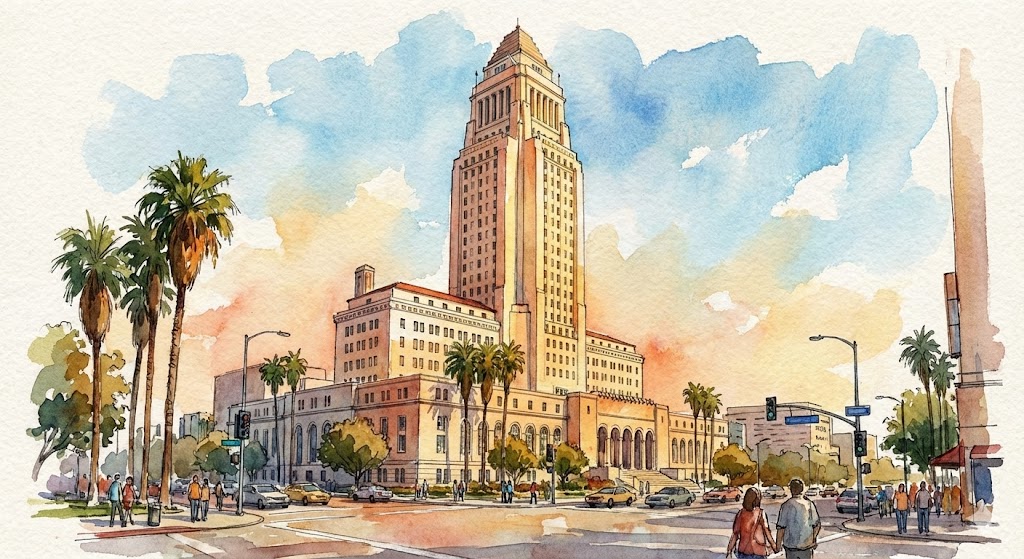
Summary of 2025 AIA|LA Legislative Day(s) at City Hall
From December 4-9, 2025, AIA|LA held highly productive Legislative Day(s), strengthening our collective voice through meetings with Mayor Karen Bass, Councilmembers across seven districts, and executive leaders from LADBS, BOE, and LAFD. Our primary objective was to build alignment and present a solutions-oriented agenda focused on practical, easily implementable improvements to city processes.
We centered our discussions on six key advocacy pillars: streamlining development services through innovations like pre-plan check meetings and a public modifications database; advancing professional certification for low-risk projects; reforming key bottlenecks at LADWP and in height measurement definitions at LAFD; clarifying public improvement triggers at BOE; and understanding the new zoning review process at LACP. These productive dialogues established a clear roadmap for collaboration, positioning AIA|LA’s 4,900+ members as essential partners in addressing the urgent need for faster project reviews and shaping a more efficient, resilient, and equitable Los Angeles.
Meeting Recap:
•Mayor Karen Bass: Discussed citywide priorities, including housing production and homelessness. The Mayor committed to convening department General Managers to directly address our core development service challenges, including LADBS process reforms and LADWP coordination bottlenecks.
•Councilmember Bob Blumenfield (CD3): Focused on housing and economic vitality. The Councilmember agreed to champion our prospective motion on streamlining development services, which will integrate our proposals for an Expedited Review Unit, professional certification, and digital permitting improvements.
•Councilmember Nithya Raman (CD4): Supported our legislative efforts for professional certification for Tenant Improvement projects and single-stair code reform, directly addressing our goals for fostering housing affordability through innovative code changes.
•Councilmember Ysabel Jurado (CD14): Focused on restoring Civic Center functionality and streamlining development services.
•LADBS (Osama Younan, GM): Our quarterly meeting focused on process reform. The GM agreed to further explore piloting initial intake (pre-plan check) meetings, creating a public modifications database, and eliminating unnecessary building stamps, all central to our streamlining agenda.
•LAFD Leadership: Discussed creating a public database of approved modifications and, crucially, agreed to issue an information bulletin to clarify how building height is measured, resolving a significant and persistent code bottleneck.
•Bureau of Engineering (BOE) Leadership: Advocated for mandating design excellence and reforming public project procurement. We also pressed for a clear bulletin clarifying when R3 street improvements are required, addressing a major source of project uncertainty.
•Council Offices (CD1, CD5, CD7, CD11): Discussions across these districts reinforced our platform on fostering housing affordability and resilience through “Design-Driven Affordability” and expanding Adaptive Reuse (CD1, CD5); enhancing equitable urban design through “Healthy Community Design” principles (CD7); and emphasizing the urgent need to reform departmental bottlenecks like LADWP standards to improve coastal resilience efforts (CD11).
•Note: Meetings with the CAO, LACP, and Councilmember Nazarian (CD2) were postponed to early 2026.
Summary of the 2025-2026 AIA|LA Advocacy Platform
The AIA|LA 2025-2026 Advocacy Platform addresses critical challenges hindering Los Angeles’s built environment through four priority issues:
1. Streamline Development Services: Inefficiencies delay projects and increase costs. We recommend establishing a permanent, cross-departmental “Expedited Review Unit,” implementing a citywide “Zoning Certainty” program, advancing architect professional certification for low-risk projects, and modernizing digital permitting infrastructure with transparent performance metrics.
2. Foster Housing Affordability & Resilience: The housing crisis requires innovative solutions. We advocate for “Design-Driven Affordability” via streamlined approvals, expanding the Adaptive Reuse Ordinance, enacting Single-Stair Code Reform for “missing middle” housing, and investing in the AEC workforce.
Prospective Next Steps in 2026
To transform the momentum from our successful 2025 Legislative Day(s) into tangible results, AIA|LA must move from advocacy to implementation. Our resolution for 2026 is to operationalize our key legislative wins and empower our membership to become active agents of change. This requires a proactive and structured approach to partner with city staff on the ground level to ensure our proposed reforms—from professional certification to the modifications database—are designed and implemented effectively.
•Formalize Joint Task Forces with City Departments: We will establish dedicated, member-led task forces to work directly with LADBS, LACP, LAFD, and BOE staff. These groups will provide technical expertise and real-world feedback on the implementation of key initiatives, including:
◦ Piloting the Pre-Plan Check Meeting program at LADBS.
◦ Structuring and populating the Public Modifications Database.
◦ Defining the scope and process for the Professional Certification pilot for TI and small residential projects.
◦ Drafting the LAFD information bulletin on Building Height Measurement.
◦ Developing the BOE bulletin on R3 Improvement Triggers.
•Launch a Robust Member Education & Mobilization Campaign: We will develop clear, actionable guides and host quarterly advocacy workshops to train members on these new city processes as they come online. This will empower firms to utilize these new tools effectively, reducing project delays and demonstrating the value of our advocacy.
•Implement a Systemic Data Collection Initiative: To hold the City accountable for agreed-upon reforms, we will launch a system to gather real-time data from members on project processing times, code inconsistencies, and specific bottlenecks. This evidence-based approach will be crucial for our follow-up meetings with the Mayor and Council leadership to demonstrate where progress is being made and where roadblocks persist.
•Restore Civic Center Functionality: The Civic Center suffers from deferred maintenance and fragmented planning. We call to halt the Kenneth Hahn Hall of Administration demolition for seismic reassessment, activate the Civic Center Authority for a master plan update, and conduct a comprehensive asset optimization study.
•Enhance Equitable Urban Design: Disparities in design and infrastructure persist. We propose a citywide “Signature Events” framework, integrating “Healthy Community Design” principles into planning codes, mandating design excellence for public infrastructure, and strategically planning for the legacy use of 2028 Olympic infrastructure.
WOTUS Overhaul: Clean Water, New Rules
Summary of the Proposed Rule
The U.S. Environmental Protection Agency (EPA) and the Department of the Army have issued a pre-publication notice proposing significant revisions to the definition of “waters of the United States” (WOTUS) under the Clean Water Act. This proposal aims to align federal regulations with the Supreme Court’s 2023 Sackett v. EPA decision, creating a significantly narrower scope of federal jurisdiction.
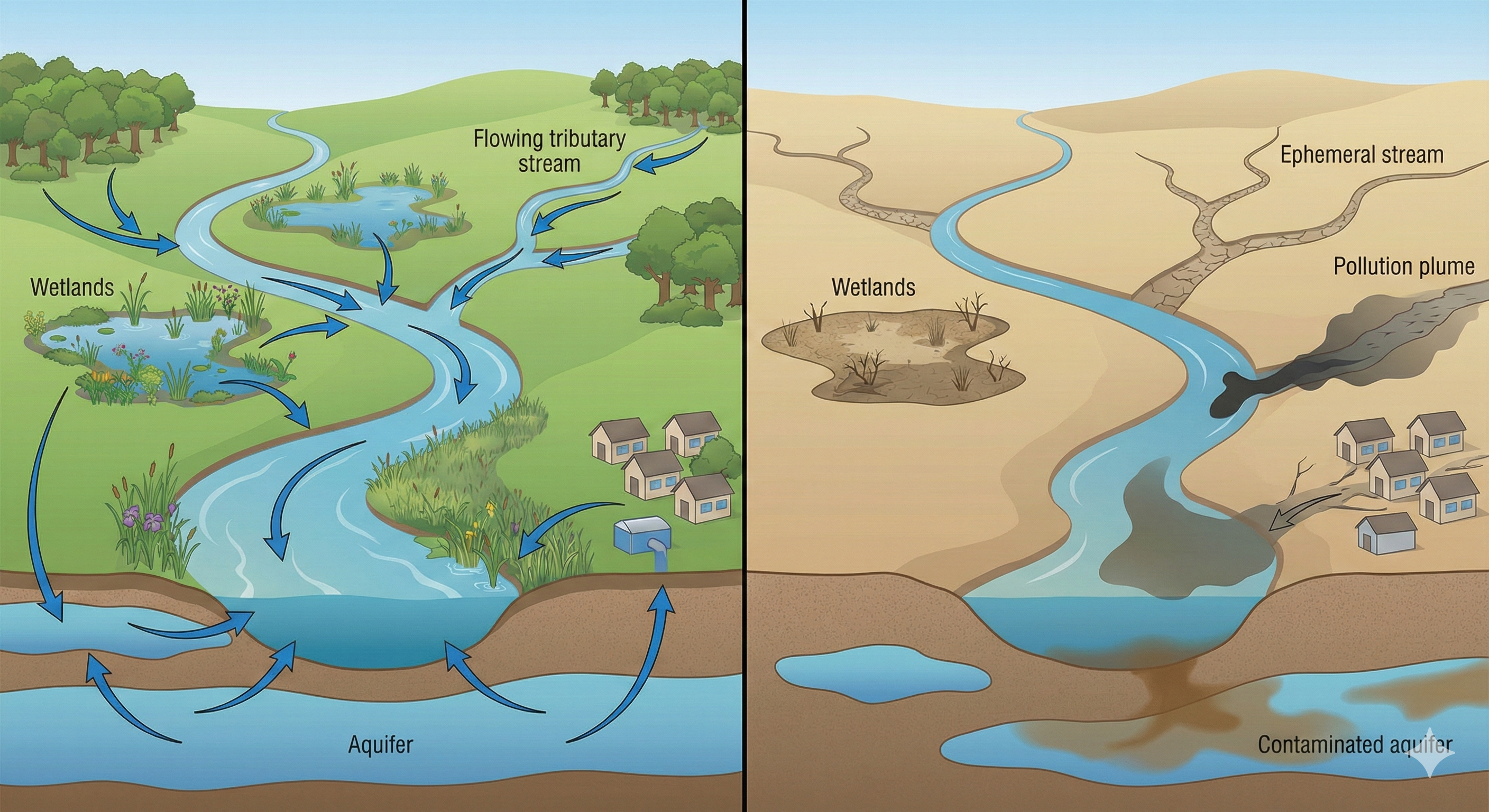
The proposed rule eliminates “interstate waters” as a standalone jurisdictional category, arguing that such waters must meet other jurisdictional tests to be regulated. It introduces a strict definition of “relatively permanent” waters, requiring standing or continuous flow year-round or at least during the “wet season,” effectively excluding ephemeral streams that flow only in response to precipitation. Additionally, the rule defines “continuous surface connection” for adjacent wetlands to require physical abutment (touching) to a jurisdictional water and the presence of surface water during the wet season.
The proposal also codifies exclusions for groundwater, prior converted cropland, and ditches constructed in dry land. The agencies argue that this restrictive approach provides necessary regulatory certainty and adheres to the constitutional limits of federal authority, shifting the primary responsibility for protecting non-jurisdictional waters—such as isolated wetlands and ephemeral streams—to States and Tribes.
The Flaws of the Proposed Approach
The proposed rule represents a fundamental retreat from the Clean Water Act’s statutory objective to “restore and maintain the chemical, physical, and biological integrity of the Nation’s waters.” By prioritizing a restrictive legal interpretation over hydrological science, this definition creates a fragmented regulatory landscape that endangers the nation’s health, infrastructure resilience, and economic prosperity.
The most critical flaw is the severance of legal jurisdiction from scientific reality. Water does not respect political boundaries or rigid definitions of “surface connection.” The proposal’s requirement that wetlands must have a “continuous surface connection” and contain surface water during the wet season ignores the vital function of subsurface connectivity. Wetlands often filter pollutants, recharge aquifers, and absorb floodwaters through hydrological connections that are not always visible on the surface. By excluding wetlands that do not physically “touch” a navigable water, the rule allows for the destruction of the natural sponges that protect downstream communities from flooding and pollution.
Furthermore, the exclusion of ephemeral streams—those flowing only after precipitation—poses a severe threat to the arid West and the nation’s resilience to climate change. In regions like Southern California, ephemeral streams constitute the majority of the waterway network. These features transport water, nutrients, and, unfortunately, pollutants to major rivers and oceans during storm events. Excluding them from federal protection means that pollution dumped into dry washes will inevitably contaminate vital downstream water supplies during the rainy season. As climate change intensifies drought and flood cycles, the protection of these “temporary” waterways becomes even more critical for watershed management and disaster mitigation.
Finally, the rule’s explicit exclusion of groundwater ignores the inseparable relationship between surface water and aquifers. Contaminated groundwater frequently discharges into surface waters, degrading ecosystems and drinking water sources. By compartmentalizing these resources, the rule undermines the holistic management required to ensure clean water access.
Resilience and prosperity depend on robust infrastructure, and our natural waterways are the most efficient infrastructure we possess. Deregulating swamps, marshes, and ephemeral streams forces local governments to invest billions in artificial filtration and flood control to replace the free services nature previously provided. This proposed definition sacrifices long-term national security and public health for short-term administrative narrowing, leaving our water systems vulnerable to degradation that will be costly, if not impossible, to reverse.
COMMENT LETTER
December 16, 2025
VIA REGULATIONS.GOV
U.S. Environmental Protection Agency EPA Docket Center Office of Water Docket Mail Code 28221T 1200 Pennsylvania Avenue NW Washington, DC 20460
U.S. Department of the Army Corps of Engineers 108 Army Pentagon Washington, DC 20310-0104
Re: Docket ID No. EPA-HQ-OW-2025-0322; Comments on the Proposed “Updated Definition of ‘Waters of the United States’”
Dear Administrator Zeldin and Assistant Secretary Telle:
As the Director of Government & Public Affairs for AIA Los Angeles (AIA|LA), a chapter of the American Institute of Architects representing the architecture and design community in the Los Angeles region, I submit this letter to express significant concerns regarding the proposed rule to revise the definition of “Waters of the United States” (WOTUS).
As architects and design professionals, we are statutorily and ethically obligated to protect the health, safety, and welfare of the public. Vital to this mandate is the resilience of the natural and built environments. While we appreciate the agencies’ intent to provide regulatory certainty following the Supreme Court’s decision in Sackett v. EPA, we believe the proposed definition adopts a scientifically flawed approach that fundamentally undermines our nation’s water security, infrastructure resilience, and long-term economic prosperity.
1. The Disconnect Between Legal Definitions and Hydrological Science: The proposed rule’s strict requirement for a “continuous surface connection” and the exclusion of wetlands lacking such visible abutment ignore the hydrological reality of how water systems function. Wetlands serve as critical natural infrastructure—filtering pollutants and mitigating flood risks—regardless of whether they physically touch a navigable water on the surface. By severing jurisdiction based on surface visibility rather than functional connectivity, the rule effectively authorizes the degradation of these natural sponges. This forces local municipalities to design and fund expensive artificial infrastructure to replicate services that nature previously provided for free, directly contradicting the goal of economic prosperity.
2. Disproportionate Impact on the Arid West and Ephemeral Streams: Of particular concern to our constituency in Southern California is the proposed definition of “relatively permanent” waters, which excludes ephemeral streams flowing only in response to precipitation. In the arid West, ephemeral streams constitute a vast majority of the waterway network. These features are the primary arteries for transporting water and nutrients—as well as pollutants—to major river systems and the Pacific Ocean. Excluding these features from federal protection ignores the reality of our region’s climate. When rain arrives in Los Angeles, it often comes in intense bursts. Pollution dumped into currently unregulated “dry” washes will inevitably contaminate downstream jurisdictional waters during these events. A definition that fails to account for the intermittent but violent hydrology of the West endangers millions of residents who rely on these watersheds.
3. Threats to Groundwater and Holistic Management: We also object to the rigid exclusion of groundwater from consideration in the jurisdictional context, particularly regarding the connectivity of wetlands. Subsurface flows are often the primary mechanism by which wetlands recharge aquifers—a critical source of drinking water for our region. Ignoring this inseparable relationship promotes a compartmentalized management approach that threatens water quality and availability.
Conclusion: Clean water is the foundation of a resilient built environment. By drastically narrowing the scope of federal protection, this proposed rule shifts an untenable burden onto State and local agencies and increases the vulnerability of our communities to pollution and climate-driven flooding. AIA|LA urges the agencies to reconsider the proposed definitions and adopt a science-based approach that recognizes the true connectivity of our aquatic resources.
Truly yours,
Will Wright, Hon. AIA|LA
Director of Government and Public Affairs
AIA Los Angeles
Headline: URGENT: Protect Our Water Resilience – Comment on the New WOTUS Rule
To: AIA Los Angeles Membership
From: Will Wright, Hon. AIA|LA, Director of Government and Public Affairs
Date: December 16, 2025
The Issue: The EPA and the Department of the Army have proposed a new, significantly narrower definition of “Waters of the United States” (WOTUS) in response to the Supreme Court’s Sackett decision. While regulatory certainty is important, this proposal ignores scientific reality and threatens the resilience of the Los Angeles region by removing federal protection for ephemeral streams, wetlands, and groundwater.
Why It Matters to Architects: As professionals dedicated to the Health, Safety, and Welfare of the public, we cannot ignore a rule that undermines water quality and flood resilience.
Resilience at Risk: Excluding wetlands that don’t physically “touch” navigable waters destroys natural infrastructure that protects communities from flooding.
Ignoring the Arid West: The rule excludes “ephemeral streams” (those that flow only after rain). In LA, these are our primary waterways. Excluding them allows pollution to accumulate in dry washes and flush into our ocean during storms.
Cost Shift: Deregulating natural systems forces local municipalities to build expensive artificial infrastructure to do the work nature does for free.
HOW TO TAKE ACTION: We need individual members to submit comments to the EPA before the 45-day deadline. You do not need to be a water expert; you just need to be a concerned professional advocating for a resilient built environment.
Step 1: Draft Your Comment
Use the points above or your own experience. Keep it professional and focused on the impact on our region’s resilience.
Step 2: Submit by [Insert Date – 45 Days from Pub.]
Preferred Method: Go to Regulations.gov and search for Docket ID No. EPA-HQ-OW-2025-0322. Click the “Comment” button.
By Email: Send your comment to OW-Docket@epa.gov.
Crucial: You must include Docket ID No. EPA-HQ-OW-2025-0322 in the subject line.
Tips for Effective Comments:
TEMPLATE LETTER
[Date]
U.S. Environmental Protection Agency EPA Docket Center Office of Water Docket Submitted via Regulations.gov
Re: Docket ID No. EPA-HQ-OW-2025-0322; Comments on the Proposed “Updated Definition of ‘Waters of the United States’”
To Administrator Zeldin and Assistant Secretary Telle:
I am writing as a member of the architecture and design community in Los Angeles, California, to submit comments regarding the proposed rule revising the definition of “Waters of the United States” (WOTUS).
As a design professional, my work is guided by a statutory and ethical obligation to protect the health, safety, and welfare of the public. Water quality and flood resilience are foundational to the safety of the built environment. While I understand the need to align regulations with the Supreme Court’s Sackett decision, I am deeply concerned that the proposed rule adopts a definition so narrow that it threatens the resilience of the arid West.
1. The Exclusion of Ephemeral Streams Endangers Southern California The proposed requirement that jurisdictional waters be “relatively permanent” (flowing year-round or during a “wet season”) disproportionately impacts the Los Angeles region. In our semi-arid climate, the vast majority of our waterway network consists of ephemeral streams and dry washes that flow only in response to precipitation. Under this proposed rule, these vital arteries would lose federal protection. This creates a dangerous loophole where pollution can accumulate in dry riverbeds and flush into our communities and ocean during storm events, bypassing the Clean Water Act entirely.
2. Natural Infrastructure is Vital for Economic Resilience Wetlands and waterways function as natural infrastructure, providing flood control, filtration, and aquifer recharge services essentially for free. By requiring a “continuous surface connection” for jurisdiction, the proposed rule leaves many functioning wetlands vulnerable to development or degradation. When we lose this natural infrastructure, local municipalities are forced to design and fund expensive artificial solutions to manage stormwater and pollution. This is an unnecessary burden on taxpayers and a step backward for resilient community planning.
3. Groundwater and Surface Water are Connected The rigid exclusion of groundwater ignores the reality of our local hydrology. In California, protecting our aquifers is a matter of national security and public health. Regulations that treat surface water and groundwater as entirely separate entities fail to protect the holistic water systems our communities rely on.
I urge the agencies to reconsider the proposed definitions, particularly regarding “relatively permanent” waters and the treatment of ephemeral streams. A definition that works for the wet East Coast does not work for the arid West. We need a rule that recognizes the scientific reality of connectivity to ensure our communities remain safe and resilient.
Sincerely,
[Your Name] [Title/Position] [Firm Name (Optional)] [City, State]

Will you join us?
The annual AIA|LA Legislative Day(s) at City Hall is a strategic initiative designed to strengthen the architectural profession’s influence on the policies shaping Los Angeles. Our primary purpose is to position architects and designers not just as technical experts, but as essential leaders in crafting the city’s future.
The core objectives for the 2025 event are to:
Advocate for the 2025 AIA|LA Advocacy Platform: Present our unified agenda focused on streamlining development, fostering housing affordability and resilience, restoring the Civic Center, and enhancing equitable urban design.
Build & Strengthen Relationships: Establish and deepen direct connections with key policymakers, including the Mayor, Councilmembers, and department heads, to ensure ongoing dialogue and collaboration.
Elevate the Architect’s Role: Demonstrate the unique value of architectural expertise in solving complex urban challenges like the housing crisis, climate resilience, and bureaucratic inefficiency.
Empower Members: Provide AIA|LA members with a platform and the necessary tools to become effective advocates for their profession and their city.
Call to Action & RSVP!!!
Calling all Architects & Designers! The future of Los Angeles is being written right now, in the halls of power. Are you holding the pen?
This year, we return to City Hall in person for a powerful, collective movement to advocate for a smarter, more resilient, and equitable Los Angeles. Policymakers need your specialized knowledge to navigate the housing crisis, streamline convoluted permitting, and revitalize our civic core. Without your voice, crucial decisions are made in a vacuum.
This is your unparalleled opportunity to step forward, connect directly with civic leaders, and ensure design leads the conversation.
Who We Are Meeting With: Our schedule includes crucial in-person and virtual meetings with key decision-makers, including:
Don’t just witness the future of LA being built – help design it.
Mandatory Orientation: Mon, Dec 1 | 4:00 PM (Virtual) – RSVP HERE #Orientation
Secure Your Spot for Meetings: Spaces are limited. Review the full schedule and RSVP for individual meetings below.
The AIA|LA 2025 Advocacy Platform: Designing a Better Los Angeles
AIA|LA champions critical reforms to create a more efficient, resilient, and equitable city. Our platform focuses on four priority areas:
1. Streamlining & Modernizing Development Services: Bureaucratic inefficiencies delay projects and increase costs, hindering housing production. We advocate for a permanent, cross-departmental “Expedited Review Unit” for public benefit projects and a citywide “Zoning Certainty” program to provide upfront confirmation of development rights. We call for expanding architect professional certification for low-risk projects, reforming key bottlenecks at LADWP and in accessibility reviews, and modernizing digital permitting infrastructure for true transparency and accountability.
2. Fostering Housing Affordability & Resilience: To address the housing crisis, we must leverage diverse talent and innovative design. We champion “Design-Driven Affordability” through streamlined approvals and advocate for expanding the Adaptive Reuse Ordinance and enacting Single-Stair Code Reform for “missing middle” housing. We support AEC workforce development for immigrant professionals, integrating international student talent, and promoting resilient, climate-responsive housing design.
3. Restoring Civic Center Functionality & Cohesion: Our Civic Center requires cohesive planning and revitalization. We urgently call to halt the demolition of the Kenneth Hahn Hall of Administration and commission an independent seismic reassessment. We advocate for activating the Civic Center Authority to update the Master Plan, optimizing underutilized assets, and prioritizing public access, green space, and multi-modal connectivity.
4. Enhancing Equitable & Healthy Urban Design: Development must serve all communities equitably. We propose a citywide “Signature Events” framework to foster local vitality and integrate “Healthy Community Design” principles—like walkable spaces, street trees, and green infrastructure—into planning codes. We champion mandating design excellence for public infrastructure, expanding community-led participatory planning, and strategically planning for the permanent community use of the 2028 Olympic & Paralympic legacy permit streamlining infrastructure.
CLICK HERE to access the draft of the 2025 AIA|LA Advocacy Platform & share your comments!

WHAT IS ALL THE NOISE ABOUT???
A Summary of the Venice Dell Community Project & Current Impasse
The Venice Dell Community (also known as the Reese Davidson Community) is a fully entitled, mixed-use affordable housing development proposed for City-owned Parking Lot 731 at 200 North Venice Boulevard. A joint venture between Venice Community Housing and Hollywood Community Housing, the project includes 140 residential units (68 permanent supportive, 34 low-income, 34 artist/workforce), a community arts center, and a public parking structure. Despite securing City Council entitlements in 2021 and over $42 million in State funding, the project is stalled because the City refuses to execute the Disposition and Development Agreement (DDA).
The impasse has escalated into litigation: the non-profit developers sued to compel the City to honor its commitments, and the City Attorney is now requesting $850,000* in outside counsel funding to countersue, alleging the developers failed to build the very project the City is obstructing. This obstruction has triggered a formal inquiry from the State Department of Housing and Community Development (HCD), warning that the City’s actions violate Housing Element law and risk the City’s “Prohousing Designation” and associated funding.
To complicate matters, the Board of Transportation Commissioners recently suggested moving the project to Lot 701—a suggestion made eight years after the initial RFP. This obstruction has triggered a formal inquiry from the State Department of Housing and Community Development (HCD), warning of Housing Element violations.
Current discussions frame Lot 731 and Lot 701 as competing sites in a zero-sum game. However, the solution to the housing crisis is addition, not substitution. The impasse can be resolved by committing to the original objective (Venice Dell) on Lot 731 immediately, while simultaneously expanding City goals to develop additional housing on Lot 701.
*CLICK HERE to read the letter I sent to the City Council Budget & Financing Committee, sharing my opposition to the wasteful expenditure.
Beyond Scarcity—A “Win/Win/Win” Path for Housing in Venice
By Will Wright, Hon. AIA|LA*
The City of Los Angeles stands at a defining crossroads regarding the Venice Dell Community. On one path lies a future of litigation, broken promises, and fewer homes for our unhoused neighbors. On the other path lies a “Win/Win/Win” solution that restores trust, saves taxpayer money, and maximizes our public assets to their fullest potential.
Currently, the City is treating the development of public land as a binary choice: build affordable housing on the fully entitled Lot 731 (Council File: 22-0496) or move the project to the proposed Lot 701 (Council File: 15-1138-S42). Given the scale of our housing and homelessness emergency, this is a false dilemma rooted in a scarcity mindset. To achieve true fiscal responsibility and housing justice, the City must reject “either/or” thinking and embrace an abundance strategy: Commit to the original objective on Lot 731 and expand objectives to include Lot 701.
The High Cost of Broken Promises: The City must honor its original commitment to build Venice Dell on Lot 731. Reneging on a project awarded through a competitive RFP process nearly a decade ago sends a devastating, chilling signal to the broader development community. If the City discards valid contracts and entitlements after years of investment, reputable non-profit developers will view Los Angeles as an unsafe partner. They will refuse to participate in future RFPs, fearing their capital and time will be wasted by arbitrary political reversals. This “chilling effect” will cripple our ability to leverage public land for the public good, stalling the housing pipeline for years to come.
Fiscal Prudence vs. Wasteful Litigation: Continued obstruction is not only legally perilous; it is fiscally irresponsible. Los Angeles faces an ongoing budget deficit, yet the City Attorney is requesting an additional $850,000—on top of millions already spent—to litigate against its own partners. It is unconscionable to use taxpayer money to fund a countersuit against non-profits for “failing to perform” when the City itself is the obstacle preventing performance.
Instead of burning cash on lawsuits and risking the loss of $42 million in State funding already secured for Venice Dell, the City should finalize the Disposition and Development Agreement (DDA). This course correction avoids State penalties, protects the City’s “Prohousing Designation,” and secures vital outside investment.
The “Win/Win/Win” Solution: The Board of Transportation Commissioners has identified Lot 701 as a viable site. We should not use Lot 701 as an excuse to kill the Venice Dell project on Lot 731. Instead, we should view this as an opportunity to double our ambition.
Win 1: Build the entitled, funded 140 units on Lot 731 immediately.
Win 2: Immediately initiate a new RFP process to build additional housing on Lot 701.
Win 3: The City doubles its impact, housing hundreds more Angelenos, while avoiding legal sanctions & costly unnecessary litigation.
Venice Dell represents the “gold standard” of affordable development: permanent supportive housing in a coastal zone where exclusion has been the historical norm. To kill this project is a violation of the City’s promise to Affirmatively Further Fair Housing (AFFH). We do not need to choose between sites. We need to choose housing. By building on both, the City transforms a political stalemate into a victory for housing production, fiscal responsibility, and community compassion.
AIA|LA Recommendations for Improving LADWP Development Services
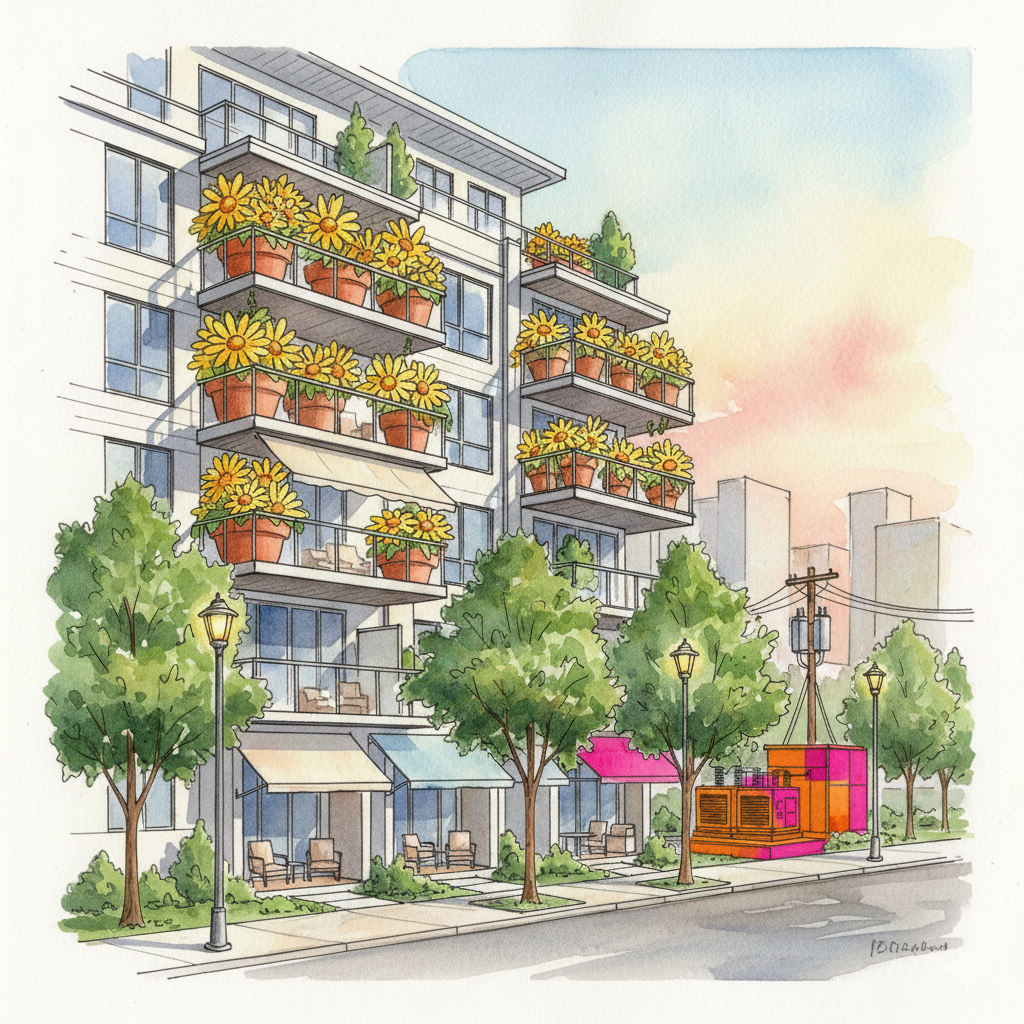
AIA Los Angeles recognizes LADWP’s essential role in shaping our city’s built environment. To effectively address Los Angeles’s housing crisis and climate challenges, we urge LADWP to prioritize enhanced clarity, transparency, and streamlined processes. We recommend focusing on the following key areas to significantly improve development services:
Priority 1: Enacting Transparent & Consistent Design Standards
Goal: Eliminate ambiguity and ensure predictability in LADWP’s technical requirements to support efficient and compliant project design.
Recommendations:
Priority 2: Achieving Operational Efficiency & Accountability
Goal: Reduce project delays and cost overruns by improving LADWP’s internal processes and service delivery timelines.
Recommendations:
Priority 3: Ensuring Financial Predictability & Ratepayer Transparency
Goal: Provide clear, timely financial information to allow developers, residents, and businesses to plan effectively.
Recommendations:
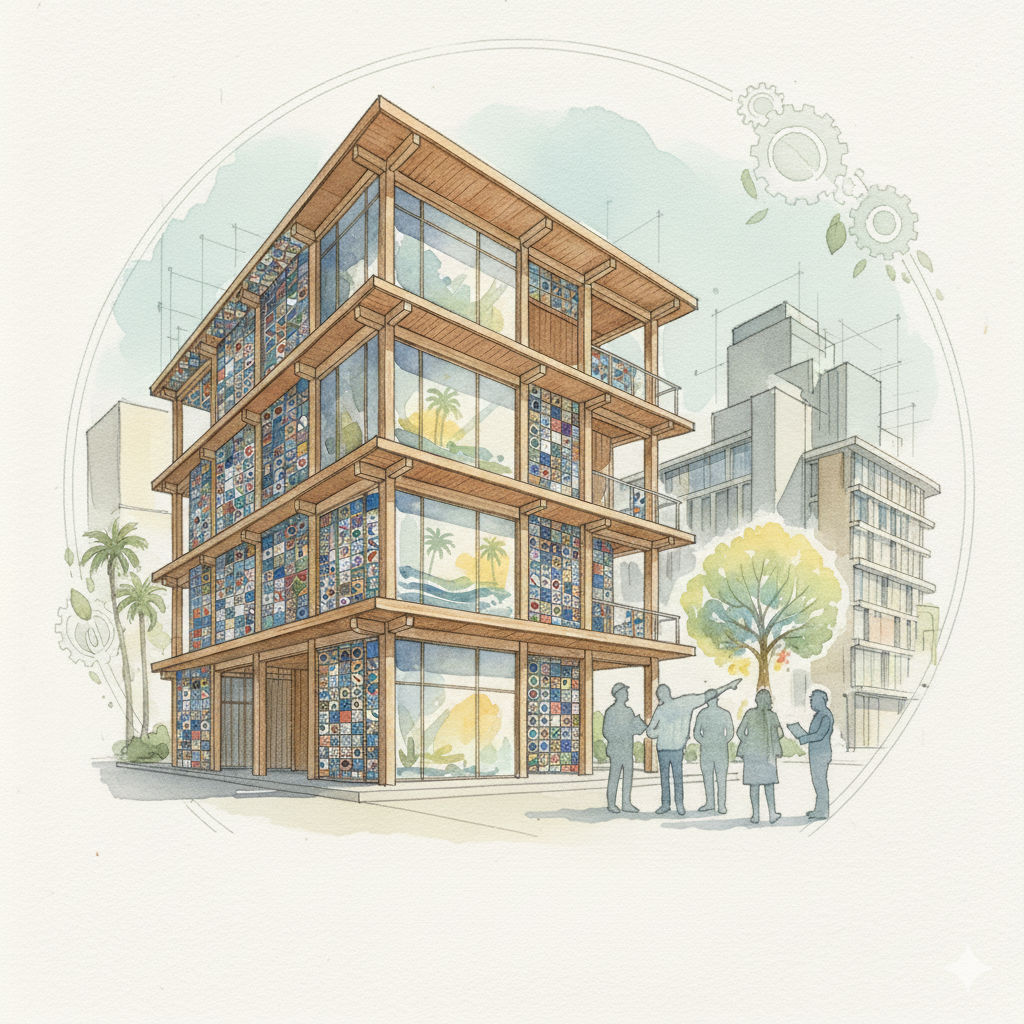
Call for Entries: Innovate with the Santa Monica Mass Timber Accelerator
AIA|LA is delighted to officially partner with the City of Santa Monica on an exciting new initiative: The Santa Monica Mass Timber Accelerator.
As architects and designers, we constantly seek methods that marry aesthetic beauty with environmental responsibility. Santa Monica has long held a reputation as a regional leader in sustainability and innovation. Now, through the Mass Timber Accelerator, we have a unique opportunity to advance the City’s built environment by exploring the potential of high-strength, prefabricated wood products.
Why Participate? Southern California is poised to become a significant market for mass timber, yet widespread adoption requires pioneers willing to demonstrate its feasibility. This program creates a structured pathway for design teams to lead that charge. Mass timber offers tangible benefits to the building sector, including:
Program Details & Support Part of the broader Accelerator Cities Program—co-funded by the Softwood Lumber Board and the USDA Forest Service—this initiative is designed to de-risk the adoption of new systems.
The program will competitively select up to five private development projects to receive funding and technical assistance. Selected teams will not be working alone; participants will receive expert guidance from WoodWorks regarding structural design, fire resistance, code compliance, and detailing. This is a rare opportunity to receive financial backing and high-level technical consulting to bring a mass timber project to life.
How to Apply: We invite all eligible design and development teams to apply. Whether you are looking to assess workforce capacity, explore Cross-Laminated Timber (CLT) feasibility, or simply create the next landmark sustainable project in Santa Monica, we want to see your vision.
Key Deadline: Applications are due to the Office of Sustainability & the Environment by February 27th, 2026, at 11:59 PM.
Selected teams will be notified by mid-March 2026. Join us in shaping a more sustainable, efficient, and beautiful future for Santa Monica.
Download the Santa Monica Mass Timber Accelerator Application Guide Here
FROM AIA CALIFORNIA
A Year of Impact: Key Advocacy Achievements Shaping California’s Built Environment
By Scott Terrell – Director of Government Relations, AIA California
11.19.25
Advocacy Update: A Year of Impact
AIA California’s 2025 advocacy efforts delivered major progress for the profession—strengthening the licensure pipeline, protecting project delivery, advancing housing and climate priorities, and supporting firms through key practice initiatives. These accomplishments reflect the coordinated leadership of AIA California members, committees, and statewide partners, who are committed to improving the built environment.
The year’s signature victory was the passage of AB 759 (Valencia), establishing the new “Architect-in-Training (AIT)” title for individuals formally pursuing licensure. Beginning January 1, 2027, candidates identified by the California Architects Board who have passed at least one ARE division and work under a licensed architect may apply for the designation. Usable for four years—with a possible four-year extension—AIT aligns architecture with engineering and land surveying, strengthens public understanding of the licensure pathway, and supports retention and diversity. This achievement follows nearly a decade of advocacy by AIA California and the Academy for Emerging Professionals.
AIA California also secured a significant project-delivery win through amendments to AB 339 (Ortega). As introduced, the bill would have imposed 60-day notice and negotiation requirements on most local contracting decisions, delaying planning and design work. After sustained coalition advocacy, architects, engineers, and related design services were fully exempted, protecting timely project delivery and the Qualifications-Based Selection (QBS) process.
Additional legislative priorities advanced, including AB 507 (adaptive reuse), AB 39 (local electrification planning), SB 79 (transit-oriented development), and AB 253 (private plan review). AIA California also helped advance key disaster-recovery measures and continued work on AB 1265 (Historic Tax Credit) and AB 368 (Passive House Standards), the latter now signed into law.
AIA California played a major role in statewide policy development through the AB 529 Adaptive Reuse Working Group, submitting more than three dozen technical proposals—over half statewide—and extensive comments on HCD’s draft report.
Climate leadership remained central, with AIA California advancing embodied-carbon code implementation, engaging in CALGreen modernization, contributing to the CALGreen Carbon Reduction Collaborative, and helping shape updates to the California Existing Building Code.
AIA California also elevated professional protections through its Duty to Defend initiative. In response to continued misuse of defense-obligation clauses, AIA CA developed a letter firms may submit to clients—or request AIA California submit on their behalf—along with talking points and a webinar now available on the website.
These achievements underscore AIA California’s leadership in advancing a resilient, sustainable, and equitable future for architects and the communities they serve.
CLICK HERE to read in full.
The Future of Los Angeles: Powered By Design
Want to help us shape the 2025 AIA|LA Advocacy Platform?
We welcome your comments. Kindly review the draft below and help us improve this platform with greater precision, expertise, and recommendations that will deliver achievable results to improve our city.
Please share your comments with me at Will{@}aialosangeles.org
All feedback is welcome! You can also add your EDITS HERE on this google doc.
The AIA|LA 2025 Advocacy Platform: Priority Issues & Recommendations (DRAFT)
The American Institute of Architects, Los Angeles Chapter (AIA|LA), through its 2025 Advocacy Platform, will champion critical reforms to enhance Los Angeles’s built environment. Our focus is on creating a city that is more efficient in its development services, more resilient and affordable in its housing, more functional in its governance, and more thoughtfully designed in its civic spaces.
Priority Issue 1: Streamlining & Modernizing Development Services Citywide
Challenge: The City of Los Angeles’s development services are plagued by inefficiencies, bureaucratic hurdles, and a lack of transparency, significantly delaying projects and increasing costs for all types of development, including much-needed housing. While the 2028 Olympic & Paralympic streamlining is a necessary measure, its lessons must be applied universally.
Recommendations:
Establish a Permanent, Cross-Departmental “Expedited Review Unit” (ERU): Formalize and expand the proposed LADBS dedicated Olympic unit into a standing, inter-departmental ERU. This unit would serve as a single point of contact and coordination for all projects meeting defined public benefit criteria (e.g., affordable housing, sustainable infrastructure, community facilities), not just projects directly related to the Olympics & Paralympics.
Implement a Citywide “Zoning Certainty” Program: Mandate a preliminary, expedited zoning confirmation process for all projects, providing architects and developers with written confirmation of development rights before significant design and engineering work begins. This reduces upfront risk, costs, and project delays.
Advance Architect Professional-Certification for Low-Risk Projects: Leverage the experience from Olympic temporary use exemptions to pilot and rapidly expand a robust architect professional-certification program for specified low-risk tenant improvements and minor alterations, thereby reducing City Plan Check workload and expediting project delivery.
Integrate and Modernize Digital Permitting Infrastructure: Capitalize on any IT infrastructure upgrades spurred by the 2028 Games to achieve true inter-departmental system integration. A unified, transparent e-permitting portal accessible to all stakeholders is essential to eliminate bottlenecks across the “10 other departments.”
Develop Objective, Transparent Metrics for Review Performance: Establish clear, publicly accessible service level agreements (SLAs) for review times across all City departments involved in development. Regularly publish performance data and hold departments accountable for meeting these targets to drive continuous improvement.
Priority Issue 2: Fostering Housing Affordability & Resilience Through Diverse Talent
Challenge: Los Angeles faces an acute housing crisis, exacerbated by a complex development process and a workforce that is not fully leveraged. Immigrants and international students are crucial to both the economic vitality of the AEC industry and the diversity of thought needed for innovative housing solutions.
Recommendations:
Champion “Design-Driven Affordability” via Streamlined Approvals: Advocate for expanding objective design standards and streamlining administrative approvals for affordable housing projects, including incentives for projects that integrate sustainable design and community-serving ground-floor uses.
Invest in AEC Workforce Development & Immigrant Integration Programs: Support initiatives that provide mentorship, upskilling, and pathways to licensure for immigrant architects and skilled tradespeople (e.g., expanding programs like the Immigrant Architect Coalition’s mentorship and scholarship initiatives). This is crucial given that the construction industry could face a nearly 16% GDP contraction without immigrant labor.
Leverage International Student Talent for LA’s Future: Advocate for policies and programs that better integrate international architecture and design students into the local workforce post-graduation, recognizing their role in driving innovation (over half pursue STEM fields) and enriching design perspectives.
Promote Resilient, Culturally Responsive Housing Design: Encourage the adoption of design guidelines and funding mechanisms that prioritize resilient building practices and culturally sensitive design for new housing, particularly for communities vulnerable to climate change, drawing on the inherent resilience and diverse perspectives of LA’s immigrant population.
Advocate for Immigration Policy Reform at the Federal Level: Partner with AIA National and other organizations to advocate for federal immigration policies that create more stable and predictable pathways for skilled architects, engineers, and construction workers (e.g., reforms to H1-B visas, expanded access to EB-2 NIW, O-1, and L-1 visas), ensuring a robust talent pipeline for housing delivery.
Priority Issue 3: Restoring Civic Center Functionality & Cohesion
Challenge: The Los Angeles Civic Center, a critical nexus of governance, suffers from deferred maintenance, underutilized assets, and a lack of cohesive planning, exemplified by the threat to the Kenneth Hahn Hall of Administration. This fragmentation hinders public service and undermines civic identity.
Recommendations:
Halt Demolition of Kenneth Hahn Hall of Administration (HOA) & Commission Independent Reassessment: Strongly advocate for an immediate pause on all demolition plans for the HOA. Demand an independent, objective, and transparent reassessment of its seismic safety and rehabilitation costs, exploring all viable, less expensive retrofit alternatives (e.g., shear walls, diagonal bracing) and prioritizing its retention as a public-facing government asset.
Activate the Los Angeles Civic Center Authority for Master Plan Update: Leverage the existing “Civic Center Authority” (LAAC Chapter 2) to convene a multi-jurisdictional task force. This task force, with strong representation from the architecture and design community, should be directed to conduct a comprehensive study and recommend a holistic update to the Civic Center Master Plan.
Conduct a Comprehensive Civic Center Asset Optimization Study: Commission a study to identify and strategize the adaptive reuse, revitalization, or optimal development of existing federal, state, county, city, and private-sector holdings within the Civic Center. This includes addressing “missing teeth” like the Parker Center replacement site, Civic Center Mall, First and Broadway lot, and underutilized surface parking lots.
Prioritize Public Access, Green Space & Multi-Modal Connectivity: The Civic Center Master Plan update must prioritize enhanced public access, expansion and integration of green spaces (like Grand Park), and improved multi-modal transportation connectivity, fostering a more vibrant, pedestrian-friendly, and accessible public realm.
Establish a Civic Center Design Review Panel: Create a standing, independent design review panel, comprised of leading architects, urban designers, and community representatives, to provide expert oversight and ensure high-quality, cohesive design for all future development and renovation projects within the Civic Center.
Priority Issue 4: Enhancing Equitable & Healthy Urban Design Across LA
Challenge: Los Angeles’s urban fabric often lacks equitable access to quality design, green space, and infrastructure, leading to disparities in health and economic opportunity. Development, while essential, must be guided by principles that ensure it serves all communities.
Recommendations:
Develop a “Signature Events” Framework for All Neighborhoods: Implement a citywide program, inspired by Santa Monica’s model, that streamlines permitting, waives fees, and provides priority support for qualifying community events (e.g., those benefiting non-profits, free to the public, supporting local businesses) across all LA neighborhoods to foster local identity and economic vitality.
Integrate “Healthy Community Design” into Planning Codes: Advocate for the revision of zoning and planning codes to explicitly incorporate principles of healthy community design, promoting walkable neighborhoods, access to fresh food, public art, and green infrastructure in all new developments and significant renovations.
Mandate Design Excellence for Public Infrastructure Projects: Champion policies that require higher standards of architectural and urban design for all public infrastructure projects (transit, parks, public buildings), ensuring they contribute positively to the aesthetic, functional, and social fabric of their surrounding communities.
Expand Community Design Workshops & Participatory Planning: Fund and promote community design workshops and participatory planning processes that actively engage diverse local residents, especially in underserved communities, in shaping the design outcomes of projects affecting their neighborhoods, ensuring equitable and culturally resonant urban development.
Utilize 2028 Legacy Infrastructure for Broader Community Benefit: Strategically plan for the post-2028 Games conversion and adaptive reuse of temporary Olympic infrastructure, ensuring these assets transition smoothly into permanent community facilities, public spaces, or affordable housing, rather than being dismantled without lasting benefit.
### DRAFT ###
The AIA LA & LACP Professional Volunteer Program (PVP)
Architects & designers passionate about improving the design quality of newly proposed projects throughout the City of Los Angeles are encouraged to participate in the Professional Volunteer Program (PVP), which is a collaborative design review program organized by AIA LA & Los Angeles City Planning (LACP)’s Urban Design Studio.
This year, we will be coordinating thirty-one virtual design review sessions, which will serve as opportunities for architects and designers to help the Los Angeles City Planning’s Urban Design Studio critically review upcoming projects throughout our City.
Nov 18 (10am)
Dec 2 (10am)
Dec 9 (10am)
FOR MORE INFORMATION:
Will Wright, Hon. AIA|LA
Director, Government & Public Affairs
t: 213.639.0764
e: will@aialosangeles.org
www.aialosangeles.org
*Disclaimer: The advice and perspectives shared here belong to the author and should not be considered official recommendations from AIA Los Angeles.


