AIA|LA ADVOCACY REPORT
October 28, 2025

OCTOBER 24, 2025
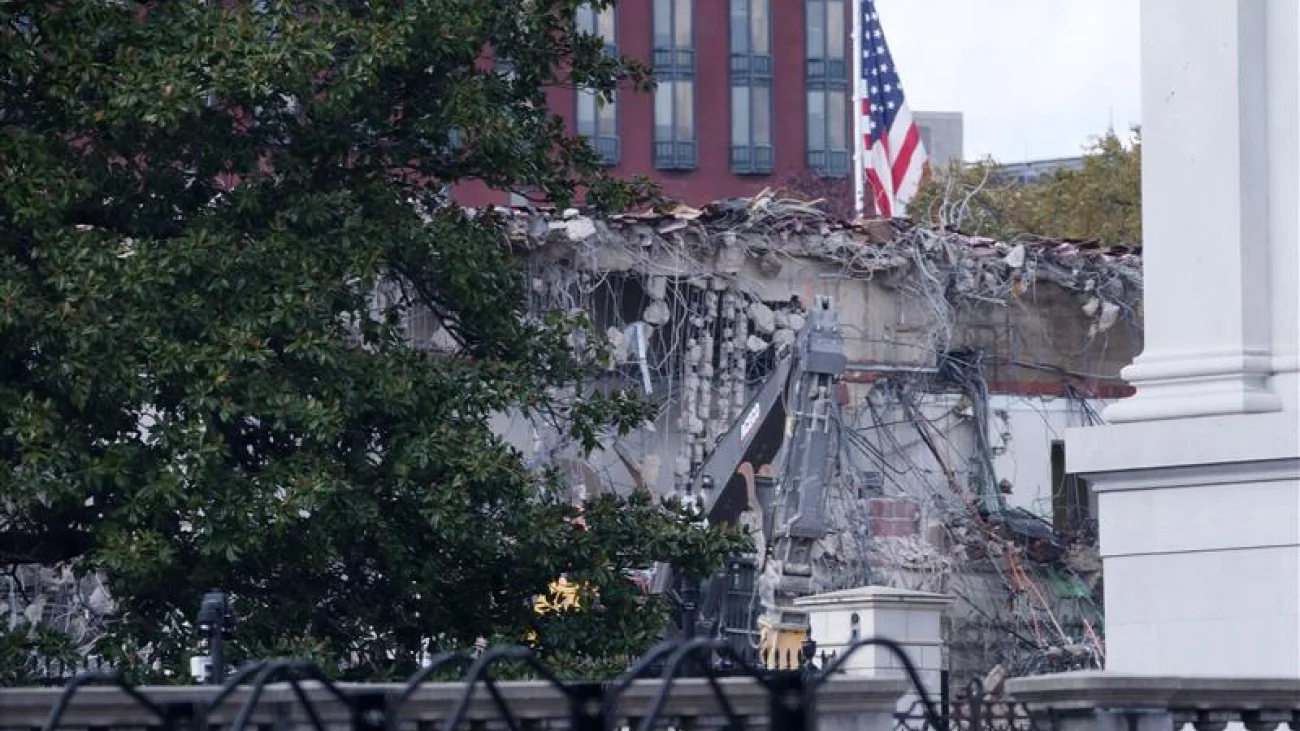
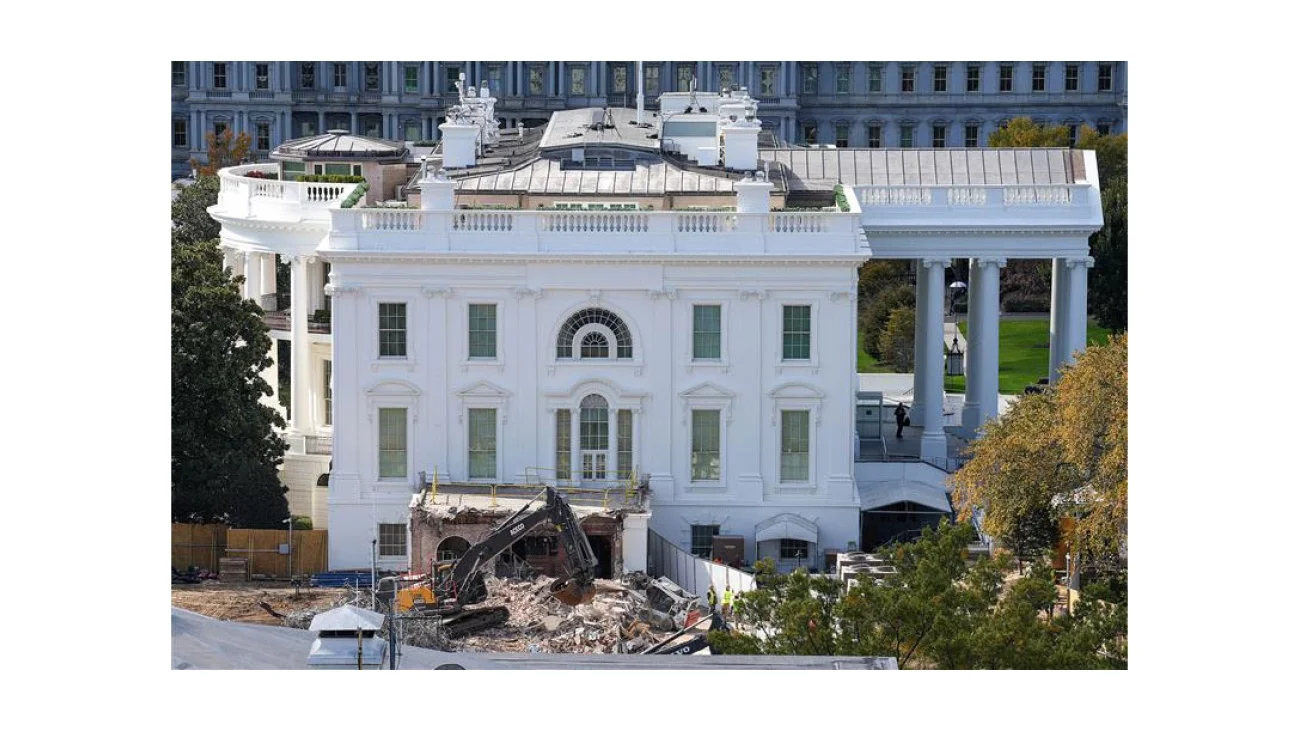
The demolition of the East Wing without full public engagement or clarity undermines the very process that the design and preservation professions developed to protect our civic architecture.
October 24, 2025 – The American Institute of Architects (AIA) affirms with deep concern that the full demolition of the White House East Wing stands in direct contradiction to earlier public assurances that the project “will be near it, but not touching it, and it will pay total respect to the existing building.” This undertaking calls into question not only the integrity of the architecture involved but the transparency, process, and public stewardship that underlie our civic built environment.
“The White House is not simply another building; it is the People’s House, a living symbol of democracy and national identity.”
As set forth in our August 5, 2025, statement and letter to the Committee for the Preservation of the White House, AIA urged rigorous oversight in recognition that the White House is not simply another building; it is the People’s House, a living symbol of democracy and national identity. We recommended a project governed by the highest standards of design excellence: a qualifications-based selection of the architect, alignment with historic-preservation standards, full transparency in funding and procurement, proportionality of design to the existing complex, and collaboration with expert practitioners to safeguard longevity and public value.
The demolition of the East Wing without full public engagement or clarity undermines the very process that the design and preservation professions developed to protect our civic architecture. Public architecture requires open decision-making, meaningful opportunity for citizen participation, and a design process rooted in stewardship of heritage as well as service to future generations. When these processes are sidestepped, trust is eroded, and the public dimension of architecture is diminished.
The AIA reiterates that architects bring a commitment to how communities are seen, how history is respected, how public investment is honored, and how places reflect the people they serve. The White House — its form, setting, and meaning — deserves that care.
We call on decision-makers to halt any further irreversible alteration of the historic fabric, to publish full documentation of the project’s scope, budget, schedule, and procurement path, and to reopen meaningful engagement with the professional community and the public.
Only by returning to a process grounded in transparency, preservation, and excellence can the People’s House continue to reflect their values.
For more details, please CLICK HERE.
In Tribute: Remembering Martin Ramirez, AIA, NOMA (1980-2025)
It is with profound sadness and the heaviest of hearts that we share the tragic news of the passing of our colleague and friend, Martin Ramirez, AIA, NOMA. On October 9, 2025, Martin died in a motorcycle accident, leaving a void in our professional community that will be deeply felt by all who had the privilege of knowing him.
On behalf of AIA Los Angeles, we offer our deepest and most sincere condolences to his family, his friends, and his many professional colleagues at Gannett Fleming (now GFT) and beyond.
The loss of Martin is staggering. He was, in every sense, a compassionate leader, a profoundly collegial colleague, and a genuine mentor. He was exceptionally generous with his time, always eager to share his insight and expertise with students and emerging professionals. Martin was defined by a profound optimism—a belief in the power of design and architecture to truly uplift communities. He was insightful, aspirational, and deeply committed to making lives and places happier, healthier, and more functional for everyone.
His kindness, engaging humor, and friendly, social nature made him a connector. He was determined, but that determination was always coupled with a compassion that made his leadership so effective.
Martin’s generosity and support for AIA Los Angeles were extraordinary. He was an active and essential participant in our ongoing AIA|LA City Leaders Breakfast Series. Through his leadership, his firm, Gannett Fleming (now GFT), served as the Presenting Sponsor for the series for two consecutive years. But Martin’s contribution was never passive; he was a true partner in shaping the series itself. He provided critical thematic ideas, offered thoughtful recommendations for speakers, and possessed a unique talent for guiding the audience into powerful, productive dialogues. He helped us reach a consensus on immediate next steps, translating conversation into action to advance the priorities of our city.
Michael B. Lehrer, FAIA, a past president of AIA|LA, shared this personal reflection after hearing the news:
“I just heard from Alice Kimm that our most beloved colleague, Martin Ramirez, died in a motorcycle accident on Thursday. I met him first at the AIA leadership breakfast at my studio, and we became fast friends and colleagues. He was an exceptional human being, an exceptional architect, and made an amazing contribution to AIA LA by sponsoring the leadership breakfast for two years, with his kind, ebullient, humble, and sunny personality. I am personally shocked and a major loss. I came to love him for his intelligence, for his incredible kindness… the respect and appreciation he joyfully exuded–in word and deed–touched me deeply. He was a consequential guy with the vast promise ahead already beginning to show in big ways… I was so touched and impressed by how he came to LA, had his company sponsor our leadership breakfast for two years, showed up at every one, and set the scene as he introduced each of them. So smart. And such a good thing to do. A very, very special guy.”
Martin’s repeated willingness to run for the AIA|LA Board of Directors was a testament to his deep, unwavering commitment to serving this profession and this city. His platform was a clear reflection of his character, focusing on advocacy, inclusivity, and collaboration.
To truly understand Martin’s drive, one only needs to read his own words. In a recent interview for our website, he shared the moment he first wanted to become an architect:
“Yes! When I was 5 years old and living in Mexico with my grandparents in a house that didn’t have floors. I was very curious as to why that wasn’t the case for some of my other relatives. I asked my grandfather one day, ‘Who designs and builds houses?’ When he said, ‘Architects do’ (in Spanish), I knew that from that day on, I would someday become an architect.”
His advice to future generations captured his spirit perfectly: “Don’t lose sight of and follow your dream. No matter your background or where you come from, we all have the power to be architects, and don’t let anyone tell you otherwise.”
Martin lived by that advice. His greatest personal driver was mentorship. As an adjunct professor at his alma mater, Arizona State University, he was moved “to know that I can help a student of architecture or even a professional looking to grow in their career.” He wanted to show students the breadth of the profession, to “know they can follow their dream and be influenced by the power of design.”
His vision for the profession was a powerful call to action for us all. He challenged us to see architecture as “less about being iconic and more about realizing that it can define one’s perception of society.” He argued that “Architecture needs to be responsive and be a platform that can transcend architects into deeper discussions about social equity.” He believed architects should be everywhere: “in politics, policy, healthcare, be developers, educators, and CEOs to help create a stewardship for ‘just’ and equitable solutions.”
This was not just a theory for Martin. As Vice President and West Coast architecture practice leader at Gannett Fleming, he was translating this vision into reality. He was serving as the Principal Architect for the Inglewood Transit Connector, a project that embodies the very connectivity and community focus he championed.
Martin Ramirez was kind, compassionate, insightful, determined, and boundlessly generous. His passing is a profound loss for his family, his friends, and our entire community. He was, as Michael Lehrer so aptly put it, “a consequential guy with a vast promise.”
His leadership, his sunny personality, and his unwavering commitment to a better, more just, and more beautifully designed world will be dearly and truly missed.

Your Expertise Needed: Help Shape LA’s New Housing Policies
Architects and Designers, your input is needed!
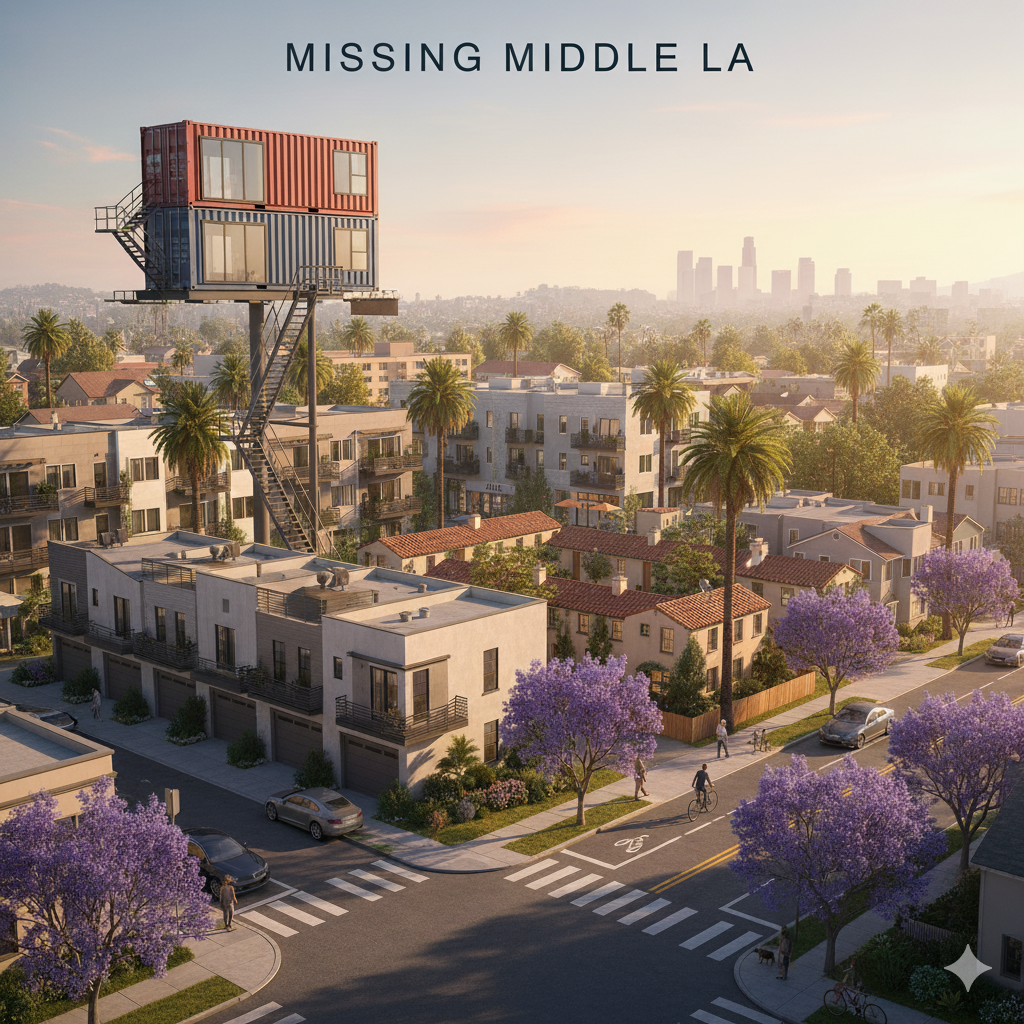
As key shapers of Los Angeles’s urban fabric, your design expertise is essential. Los Angeles City Planning (LACP) is launching Missing Middle LA, a new initiative to tackle the housing crisis by expanding options like ADUs, duplexes, and small-lot townhomes.
This program focuses on creating more attainable, neighborhood-scale housing through high-quality, objective design standards—and your professional perspective is critical to its success.
Share Your Insights Before the Event: Before LACP’s official kickoff, they are gathering stories and professional feedback from those who have experience designing, building, or navigating the complexities of small-scale housing in Los Angeles. Please share your experiences and help inform these new ordinances from the start by filling out LACP’s testimonial form. (Please email will{@}aialosangeles.org with your input, as well – so that the AIA|LA can help amplify your ideas)
Join the Conversation: Learn more and provide further input at LACP’s virtual launch event:
Missing Middle LA Kick-Off Webinar Date: Tuesday, October 28th Time: 5:00 PM – 7:00 PM Click Here to Register
This is a unique opportunity to influence the design standards that will guide the future of housing in Los Angeles. We look forward to your valuable contribution.
RECOMMENDATIONS TO IMPROVE CITY OF LA DEVELOPMENT SERVICES – PART TWO
*By Will Wright – Director, Government & Public Affairs, AIA Los Angeles
In my role at AIA Los Angeles, I often hear from our members reports of extreme delays and systemic obstacles in the City of Los Angeles’s development services process, especially for affordable housing projects. We’ve heard first-hand about numerous affordable housing projects intended to create supportive housing through the Project Homekey program, which took approximately 20-25 months to receive a “Ready to Issue” permit, far exceeding the timelines expected for expedited projects.
Key challenges include a lack of internal city alignment on the definition and requirements of programs like Homekey, leading to conflicting directives from LADBS, the Mayor’s Office, and LAHD, and forcing multiple costly redesigns. The plan review process is often plagued by sequential, rather than concurrent, reviews, where delays in one department (e.g., Disabled Access Services) halt all progress. Some affordable projects faced significant and prolonged disputes with the Fire Department over sprinkler requirements in existing buildings, eventually compelling developers to agree to full sprinkler installations. Additional delays crop up frequently, caused by staff being unavailable for weeks without assigned backups and new requirements being introduced late in the process, undermining the city’s own housing streamlining initiatives.
Pro-Active Recommendations for the City of Los Angeles.
Establish a Single Point of Contact: Assign a dedicated, empowered case manager or “concierge” from a central office to shepherd each affordable housing project through all city departments, from submission to issuance.
Mandate Concurrent Departmental Review: Re-engineer the plan check process to require simultaneous, parallel reviews by LADBS, LAFD, LAHD, Disabled Access Services (DAS), and other relevant agencies through a shared digital platform.
Create a Unified Program Handbook: Develop and maintain a single, cross-departmental guidebook that clearly defines the rules, benefits, and review pathways for all housing initiatives (Project Homekey, IMCO, PSH Ordinance, etc.) to ensure consistent interpretation.
Enforce Expedited Timelines: Implement an automatic escalation policy. If a project under an expedited ordinance (like ED-1) misses a statutory review deadline, it is immediately flagged for a supervisor’s intervention and resolution within 48 hours.
Form a “Solutions-Oriented” Joint Review Committee: Create a committee of senior staff from all relevant departments that meets weekly to resolve inter-departmental conflicts and make binding decisions on complex issues, such as fire safety modifications.
Develop Pre-Approved Standards for Motel Conversions: Issue a comprehensive bulletin with pre-approved design solutions and modifications for common challenges in motel conversions, particularly regarding fire-life safety (e.g., sprinkler alternatives for open-corridor buildings) and accessibility in existing structures.
Implement a “Review Lock-In” Policy: After a second round of corrections, bar departments from introducing new comments on aspects of the plan that were not part of the applicant’s subsequent revisions, unless a life-safety issue is identified.
Prohibit Invalidation of Approved Modifications: Once one department (e.g., DAS) approves a modification, another department (e.g., AcHP) cannot unilaterally invalidate it. Any disagreement must be resolved by the Joint Review Committee.
Mandate Staff Cross-Training: Require plan checkers and staff from LADBS, LAHD, and LAFD who handle housing projects to undergo regular, joint training on affordable housing codes, ordinances, and state laws to ensure expertise and consistency.
Institute a Mandatory Backup System: When a primary plan checker is on leave for more than two business days, a designated and fully briefed secondary reviewer must be assigned to the project to ensure continuity.
Require Early-Stage Site Visits: Mandate that all departments requiring a site visit (like DAS and AcHP) conduct their inspections within the first 60 days of project submission to identify all site-specific constraints upfront.
Centralize Digital Submissions and Communications: Utilize a single, transparent online portal for all document submissions, departmental comments, and communications to prevent information silos and confusion.
Empower Staff to Make Field Decisions: Grant supervisors and senior plan checkers the authority to approve minor, common-sense deviations from code for existing buildings on the spot, with documented justification, bypassing the formal modification process.
Focus on Performance Over Prescription: Shift the review culture from rigid, prescriptive code enforcement to a performance-based approach, where reviewers are trained to help applicants find viable, code-compliant solutions to achieve safety and accessibility goals. Evolve their ‘purpose’ to serve as solution-providers and trail guides, rather than as gatekeepers.
Publish Performance Metrics: Create a public-facing dashboard that tracks the average plan check duration for affordable housing projects by department, promoting transparency and accountability.
Clarify LAHD’s Role in Homekey Projects: Formally define when LAHD’s Accessible Housing Program (AcHP) review is triggered for Homekey projects, especially those not utilizing other PSH or density bonus ordinances, to avoid jurisdictional confusion.
Conduct Regular Post-Mortem Reviews: After a complex project is permitted, the city’s case manager should hold a debrief with the development team to identify process failures and gather feedback for continuous improvement.
LA’s Past, Present, and Future: Why SB 79 is a Necessary Step in Embracing Change
Last week, we published a call to action to encourage Governor Newsom to sign SB 79 into law. (He still has until October 12th to either sign or veto the legislation).
In response to that effort, we received some critical feedback—sharing concerns about SB 79’s potential negative impacts:
“If not vetoed and if implemented, SB 79 will lead to the ruination of many historic districts throughout the state. Architecture be damned.”
“If SB 79 goes ahead, it will be the end of well-planned cities… The built environment will be uglier than ever.”
“That is so correct. It was sponsored by Wall Street investors and big real estate interests (disguising themselves as progressive “YIMBYs”)… Only money.”
Larchmont Buzz also published a well-written article by Patricia Lombard: Mapping the Potential Impact of SB 79
In response to those concerns, I’m including my personal thoughts.
The Unrelenting Tension of LA Development
At the end of the day, it’s about where LA has been, where it is now, and what its future will be.
I just finished reading “Eternity Street,” which I highly recommend—a deeply poignant if not disturbing history of LA from 1781 to the 1870’s. That inspired me to read “The Fragmented Metropolis,” which in turn inspired me to now read “Nothing Like It in the World,” which is the history of the construction of the Central Pacific and Union Pacific railroad.
What I find fascinating about our region’s history is just how often we’re experiencing similar patterns repeating themselves as they relate to development, land use, historic character, and the unrelenting tension between the public and private sectors.
What I find obvious about LA at the present moment: it’s failing us all. Arguably, it’s probably never been this bad before. I see similarities between today’s LA and NYC of the 70’s. LA is falling apart, and we need to renegotiate the public realm. We need to redefine what we expect the private sector to accomplish and what we expect the public sector to achieve.
We have an innumerable combination of futures to strive for. Do we repeat the past hundred years again? Do we sacrifice functionality for sentimentality? Do we allow for our next iteration of ‘stranded assets’ to strangle our already diminished prosperity? Our multi-billion dollar transit lines risk becoming a stranded asset if we fail to allow the density necessary for ridership and economic vitality.
SB 79: Separating Fact from Fear
Personally, I remain optimistic. I love LA’s historic remnants and respect the scarce fragments that are still here for us to enjoy. Angeleno Heights is one of my favorite neighborhoods.
However, I don’t buy into the argument that upzoning parcels adjacent to transit stations is going to permanently damage the historic character of Los Angeles.
First of all, if you read SB 79 carefully, you’ll see that development will be equally difficult to achieve with SB 79 as it is today (without SB 79). SB 9 was a similar overt ‘concern’ that has never truly materialized into anything of substance. Why? Because it’s nearly impossible for most projects to be financially feasible. It’s nearly impossible to overcome all of the other complexities imposed upon us by the zoning and building codes.
But the fear-mongering also ignores key protections:
The Path Forward: All of the Above
What’s the answer? In my strong opinion, try an “all of the above” approach. Embrace change. Respect the past. In fact, celebrate it! Learn from it. And find a way through whatever means available to dignify the present day.
We’re all struggling, and as taxpayers, we’re all overextended. The only option I see us embracing is identifying the most effective way to attract more investment, especially from the private sector. Allow the risk/ reward to be more equally balanced so that capital begins to flow into the Los Angeles region again.
This isn’t just about housing; it’s about climate resiliency. We’ve invested billions into our public transit system, and as cars and trucks continue to be a massive source of climate pollution, allowing housing near transit is the most fiscally and environmentally responsible action we can take.
We can either make housing easier to build, or we’re simply going to be overrun with data centers and public storage warehouses.
P.S. My original posting was in response to the many concerns I’ve heard that SB 79 diminishes local control. An excellent argument about that concern has been authored by a prominent & deeply respected writer for CalMatters:
Capitol housing reform wrongly targets the sacred power to shape California locally By Jim Newton
However, my rebuttal to that is that we’ve had plenty of local control! It’s local control that helps decide the placement of the transit stations in the first place, and it’s local control that, for decades, has failed to match those transit investments with housing, leaving us with a crisis.
Additional Resources for Reference:
L.A. City Planning’s SB 79 Maps: You can check the potential local impact of the bill on the Los Angeles City Planning website.
Bill Fact Sheet (Proponent View): For a detailed look at the bill’s provisions, including affordability, displacement, and labor standards, see the California YIMBY fact sheet.
The YouTube video discusses SB 79 and its potential impact on California communities. California Housing Bill That Allows 6-Story Building in Residential Neighborhood Near Transit
Shape LA’s Future: Join the 2025 AIA|LA City Leaders Breakfast Series!
Connect directly with the civic leaders transforming Los Angeles.
The AIA|LA City Leaders Breakfast Series offers a unique opportunity for architects, designers, and community stakeholders to engage in intimate roundtable discussions with key decision-makers. Share innovative ideas to foster a healthy, sustainable, equitable, inclusive, and economically prosperous future for all.
Why Attend?
Upcoming Breakfast Receptions:
October 2025
AND MORE TO BE ANNOUNCED.
Please make plans to attend one (or more) of these inspirational receptions!
The AIA LA & LACP Professional Volunteer Program (PVP)
Architects & designers passionate about improving the design quality of newly proposed projects throughout the City of Los Angeles are encouraged to participate in the Professional Volunteer Program (PVP), which is a collaborative design review program organized by AIA LA & Los Angeles City Planning (LACP)’s Urban Design Studio.
This year, we will be coordinating thirty-one virtual design review sessions, which will serve as opportunities for architects and designers to help the Los Angeles City Planning’s Urban Design Studio critically review upcoming projects throughout our City.
Nov 4 (10am)
Nov 11 (10am)
Nov 18 (10am)
FOR MORE INFORMATION:
Will Wright, Hon. AIA|LA
Director, Government & Public Affairs
t: 213.639.0764
e: will@aialosangeles.org
www.aialosangeles.org
*Disclaimer: The advice and perspectives shared here belong to the author and should not be considered official recommendations from AIA Los Angeles.


