AIA|LA DESIGNERS IN ACTION:
Séverine Tatangelo - Principal, Studio PCH, Inc.

Global Design, Local Impact, and the Future of Interiors
Q&A W/ Séverine Tatangelo, Intl. Assoc. AIA
I. Design Philosophy & Leadership Style
As a “forward-thinker” working across the globe for over 20 years, how has your international experience shaped your unique design philosophy, particularly in the luxury sectors of hospitality and residential design?
My international experience has taught me that true luxury lies in authenticity and cultural nuance. Designing for a global clientele has refined my ability to balance sophistication with locality—whether that’s a barefoot elegance in Malibu or a refined material palette in Abu Dhabi. Researching, discovering new places, and experiencing culture as much as you can does so much in terms of keeping up to date on trends and developing one’s own taste. Our philosophy is also rooted in how a space feels and in getting the scale just right, because scale is what makes a place feel intimate, inviting, or grand in the right way. Working across different cultures has taught us how people connect to space in unique ways, and we carry those lessons into our hospitality and residential projects to create environments that feel timeless, comfortable, and deeply human.
You founded Studio PCH with the aim of engaging in “social conversation” and contributing to “ongoing change in lifestyles.” Could you elaborate on how your designs actively achieve this, particularly in high-end projects?
Every project we take on is an opportunity to shape how people live and connect. At Studio PCH, we create spaces that respond to evolving lifestyle patterns—encouraging wellness, fluidity, and deeper social interaction, even in the most exclusive settings. Our work is deeply rooted in human-centered design.
Studio PCH is known for dynamic designs, outstanding craftsmanship, and unparalleled building solutions. What leadership principles do you employ to ensure your team consistently delivers on these high standards across diverse projects and cultures?
For me, leadership is about empowering the team while keeping a clear vision of precision and design integrity. I believe anything is possible — the sky is the limit — but only if you know who you are and stay committed to excellence. That spirit of determination and collaboration is what drives Studio PCH to deliver at the highest level across every project and culture.
My role is to support a talented team and again make sure we all work toward the same standard of quality and creativity. We place a strong emphasis on craftsmanship and attention to detail, but just as important is listening — to our clients, to local cultures, and to each other — so that every project reflects both our design values and the unique context it lives in. That balance of high standards and cultural sensitivity is what allows us to deliver consistently across very different projects around the world.
Standards (SOP’s) are essential, and we’re always refining our processes — from interviewing, hiring, and onboarding to making sure our team has the right tools to thrive.
We all acknowledge that work-life balance is challenging to achieve but essential for a fulfilling life. Every other week, we have Culture Fridays — we work hard, but we also believe being a great team member means being a well-rounded person and enjoying everything Los Angeles has to offer, or wherever you are.
II. Vision for the AIA|LA Interiors Committee & Core Values
As the Chair of the AIA|LA Interiors Committee, what is your primary vision for the committee? How do you aim to elevate the discourse and practice of interior architecture within the Los Angeles design community?
I see the committee as a platform to champion interior architecture as a vital part of the design and architectural conversation. Interior architecture is too often reduced to interior design and decoration. Interior architecture defines the space and its scale, shapes light and shadow, and seamlessly connects the exterior of the building with the interior design.
This year, my main goal has been to push the committee to build bridges and relationships with premier Los Angeles institutions, like the MAK Center and local schools. That’s where the future is, so getting young people engaged and excited will ensure the AIA can continue to hit its goals and bring the importance of architecture to all.
What key initiatives or goals do you plan to pursue to support and connect interior design professionals and foster innovation in this specialized field?
One of our goals is to keep building a culture of collaboration — both within our team and with the wider design community. I hope to foster mentorship across generations, build stronger bridges between architecture, interior design, and art, and spotlight Los Angeles as a leader in innovative, human-centric interiors. We want to keep elevating the role of interior architecture as a bridge between design, craft, and culture.
Studio PCH prides itself on its “very diverse, cultured, and global staff.” How do you foster this diversity within your firm, and how does it enrich the design process and outcomes?
Diversity isn’t just a value—it’s a strength. We actively recruit voices from different cultures and design backgrounds. It leads to more layered storytelling and design solutions that resonate across borders. Don’t we want different perspectives and voices around us? How else do we move beyond our own limitations?
What core values are paramount to you when approaching both architectural and interior design, and how do you ensure these values are reflected in every project, regardless of its scale or location?
Honesty, context, and emotional resonance. Every design must feel grounded in place and purpose and serve its inhabitants. We always ask: How will people feel here? What will be their experience? That guides us from concept to completion. No matter the scale or location, we ensure they’re reflected by focusing on how a space should feel and by holding every detail to the same standard of design integrity.
III. Advice for Emerging Professionals & The Public Realm
With your extensive global experience, what is the most valuable piece of advice you would offer to emerging professionals aspiring to work in high-end hospitality or residential design, or to establish their own boutique firms?
It’s a question that often comes up in our office. We’re often asked to see things from another person’s perspective. Learn to listen deeply—both to your clients and to the spaces themselves. If you want to start your own firm, find your point of view and protect it fiercely. And be ready to push, but also ready to pull back! Trust your instincts, stay curious, and never give up.
From your perspective, how can interior architecture, often focused on private spaces, contribute more meaningfully to the improvement of Los Angeles’s broader public realm? Are there specific types of public interior spaces you believe need more attention?
Interiors shape our everyday experience of the city, whether it’s a hotel lobby, a library, a transit hub, or an office space, etc. I believe we need to elevate the design of these spaces with the same care we give to high-end projects—because beauty and dignity should be accessible to all. We should design spaces that make everyone want to express themselves. If they’re getting dressed up to go have a good time in the space you’ve designed, you’re doing something very right.
IV. Wildfire Recovery & Resilient Design Innovation
Operating from Malibu, a region acutely affected by wildfires, how does the threat of natural disasters influence Studio PCH’s approach to design, particularly for high-end residential projects?
I love California. It’s where I feel inspired to design. Malibu means designing with a deep awareness of risk and resilience. We don’t see it as a limitation—it pushes us to be smarter, more thoughtful, and more rooted in the land. Designing for areas prone to natural disasters makes you a better architect and a more empathetic one.
What specific resilient design strategies – whether in materials, systems, or spatial planning – do you prioritize to ensure longevity, safety, and sustainability in your projects, especially in vulnerable environments?
This year, more than ever in Los Angeles, we’ve prioritized integrating defensible space planning, fire-resistant materials, and smart systems that anticipate emergency scenarios. But we never sacrifice the warmth and elegance that define our work. If you’re living here, you want indoor/outdoor living, which is what I love.
Given your firm’s focus on “warm, exciting, and sophisticated social spaces,” how do you balance these aesthetic goals with the practical demands of resilient and sustainable design?
To me, resilience and beauty are not mutually exclusive. In fact, the most compelling spaces are often those where constraints have inspired ingenuity. We use natural materials, organic forms, and smart layouts to create spaces that are both emotionally rich and physically safe.
V. Transcending Boundaries & Future Trends
You believe “great creative ideas can be universal” and thrive in inventing spaces that celebrate “the world’s architectural heritage – and its future.” Could you share an example of a project where you feel you successfully bridged these two concepts?
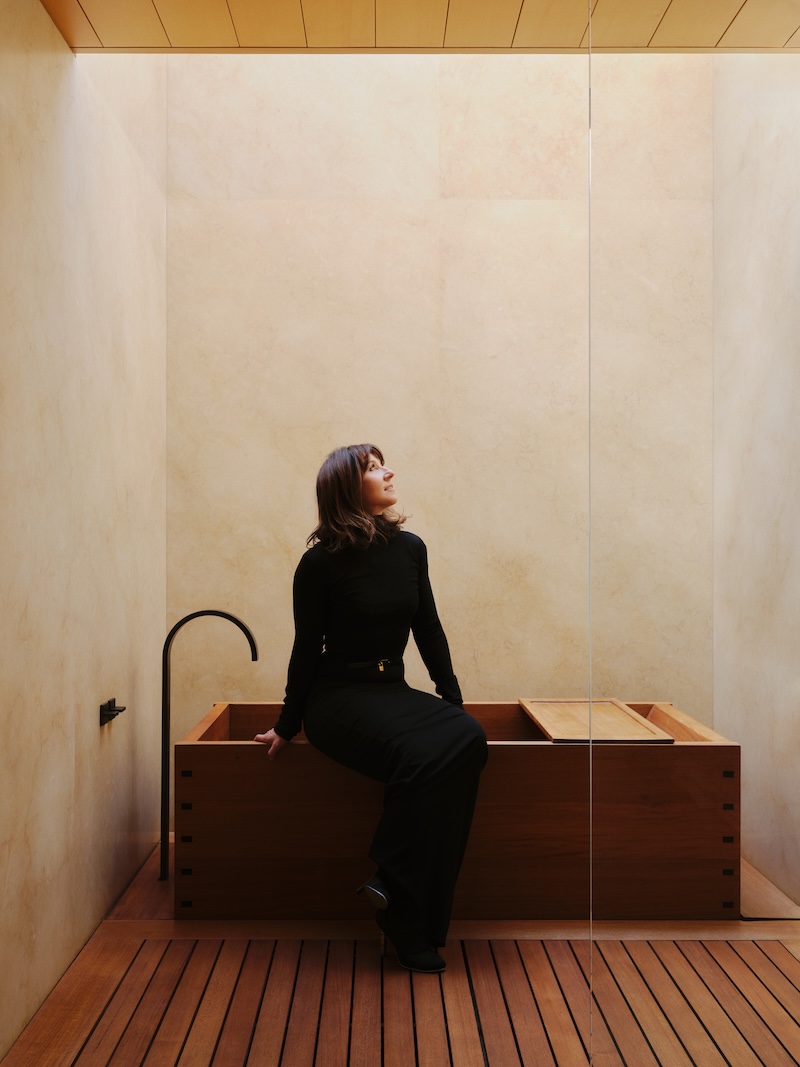
The Nobu Ryokan Malibu project is a perfect example. We drew from Japanese craftsmanship traditions while embracing the Californian coastal lifestyle. The result is timeless—a space that honors heritage while feeling completely of the moment.
How do you see the integration of architecture and interior design evolving in the coming years, especially with advancements in technology and a growing focus on well-being and sustainability?
The boundary between the two is dissolving, and I welcome that. As wellness, sustainability, and emotional intelligence become priorities, we need holistic thinking—design that moves seamlessly from structure to sensation. I set up little subcommittees in my office to focus on the future, be as design technologies and A.I. integration, or emerging trends. We have vendor visits at least once a week just to know what’s out there.
What are some of the cutting-edge innovations or future trends in materials and user experience that you are most excited about incorporating into Studio PCH’s work?
At Studio PCH, we’re excited about exploring new materials, sustainability, and multi-sensory design to create spaces that feel alive and deeply human. Innovation is not about novelty but about creating meaningful, immersive environments that enrich the way people live, gather, and connect. Most of all, we’re interested in using materials to tell cultural stories, blending local traditions with contemporary ideas to create spaces that feel alive and meaningful.
Séverine Tatangelo, Intl. Assoc. AIA – Principal, Studio PCH, Inc.
Séverine Tatangelo believes great creative ideas can be universal and thrives in inventing spaces celebrating the world’s architectural heritage – and its future. She has been working across the world as an architect for over 20 years, contributing to an ongoing change in lifestyles, while transcending rules, genres, and media.
*Disclaimer: The advice and perspectives shared here belong to the author and should not be considered official recommendations from AIA Los Angeles.
Photo by: Elizabeth Carababas


