AIA|LA ARCHITECTS IN ACTION:
Mohamed Sharif, AIA, RIBA

Architects in Action: Bridging Research, Resilience, and Civic Legacy
Q&A with Mohamed Sharif, AIA, RIBA
Vision for the Future of California
1. The End of the 5-Foot Setback: You’ve identified the standard 5-foot side yard as a critical vulnerability—essentially “kindling” for urban fires. If we are to abandon this zoning staple in favor of the “porous perimeter blocks” you explored in your Farther Apart and Closer Together research, what does the new legal and physical framework of a Los Angeles residential block look like in 2035?
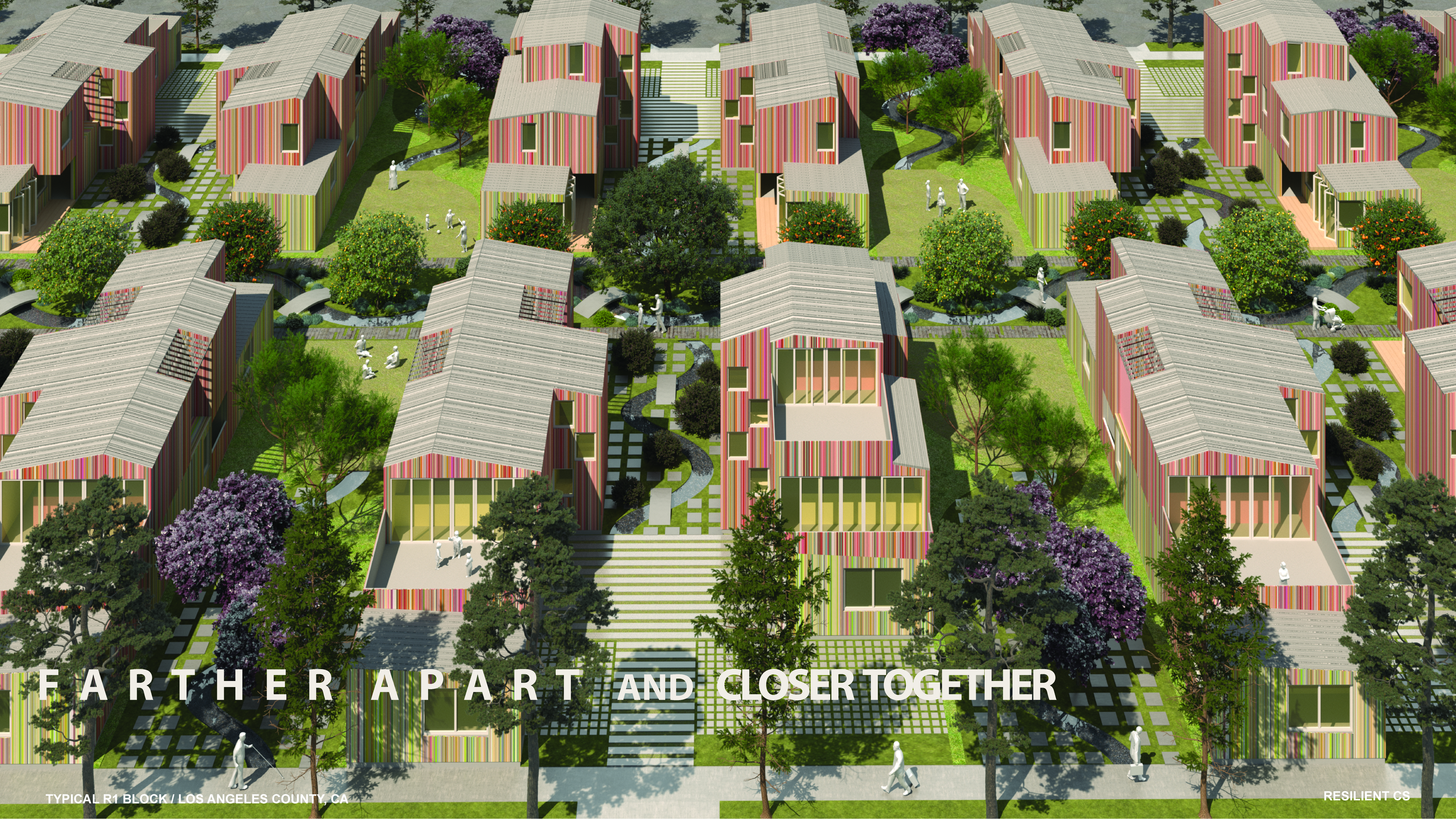
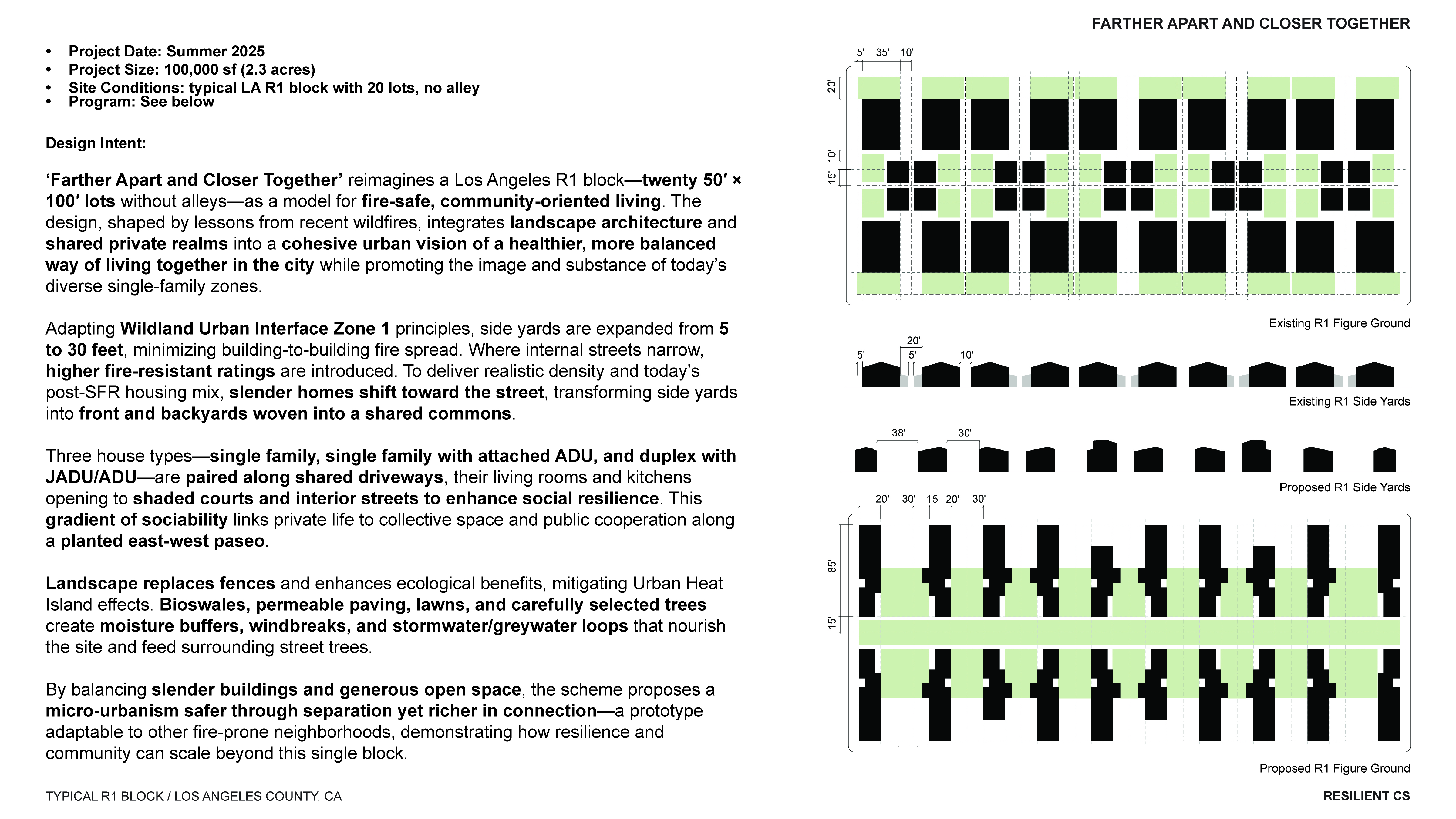
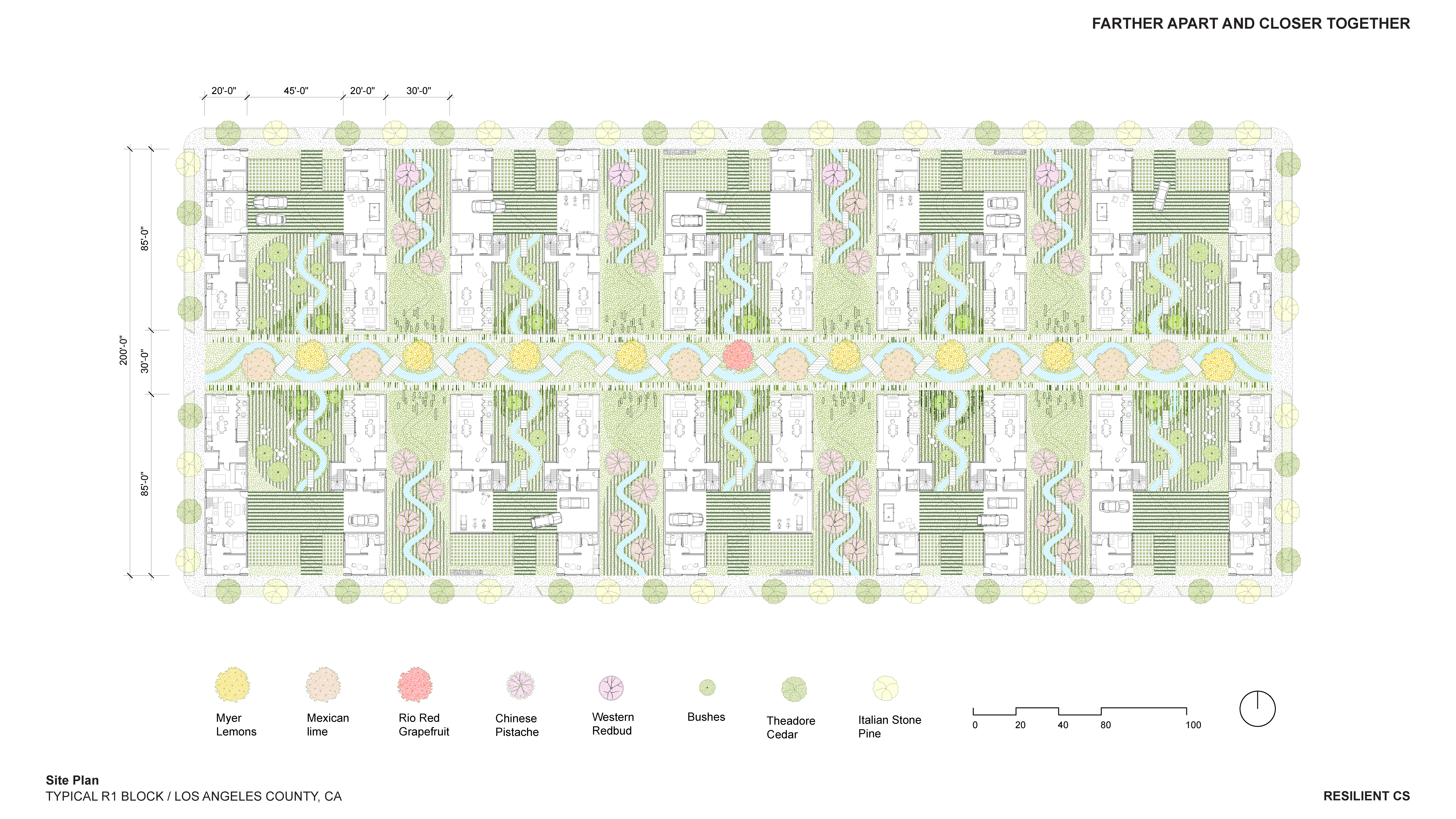
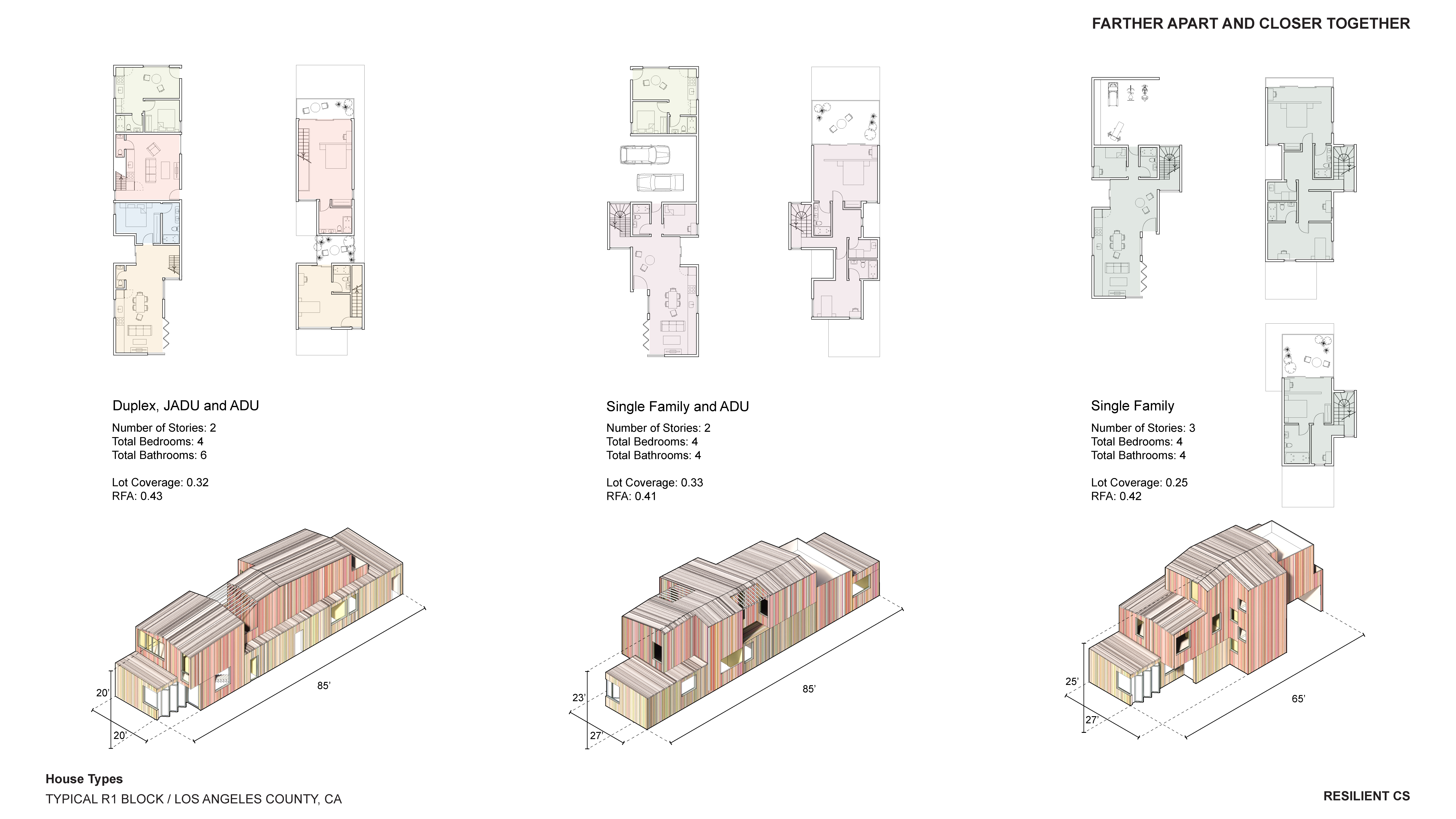
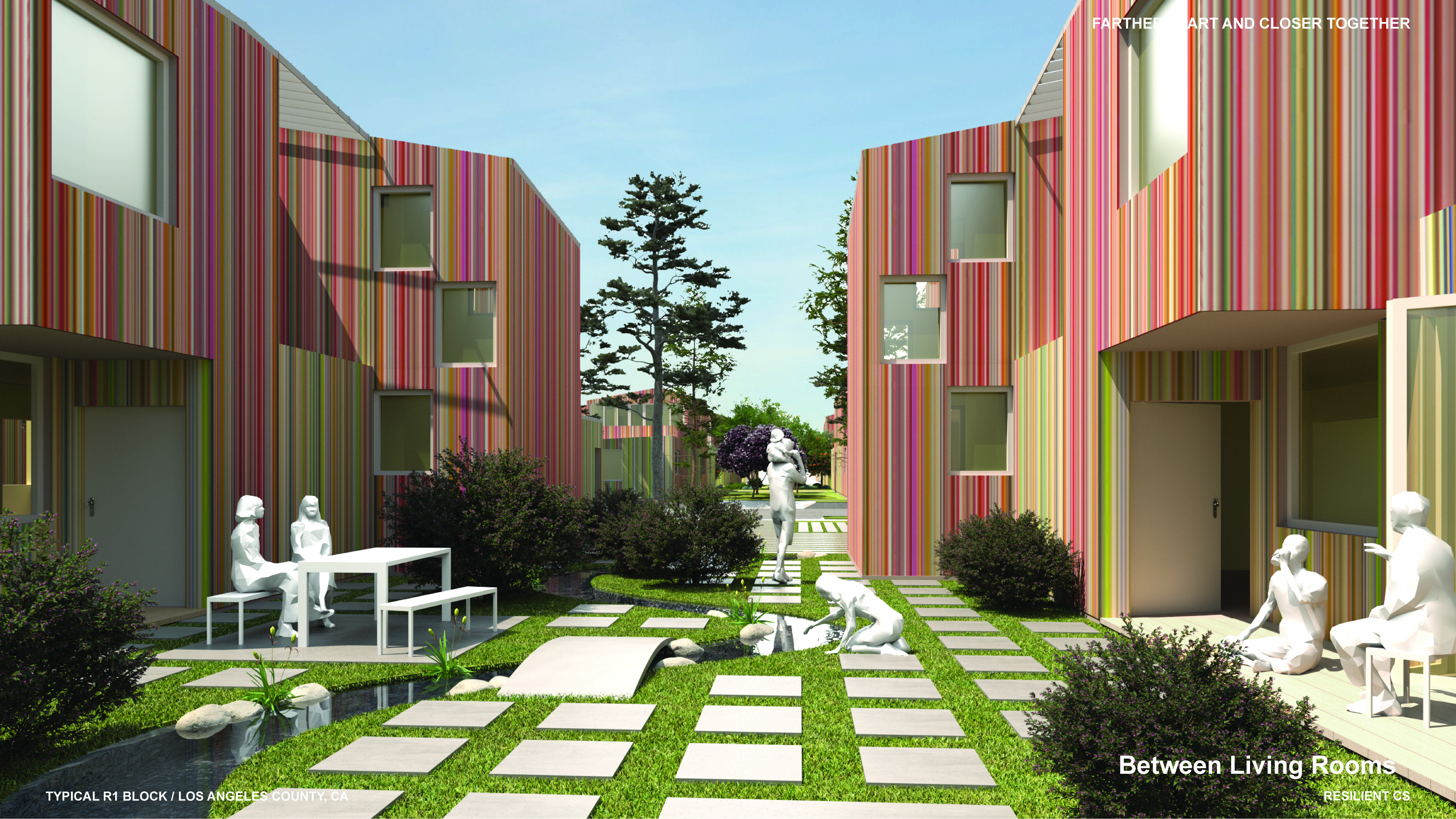
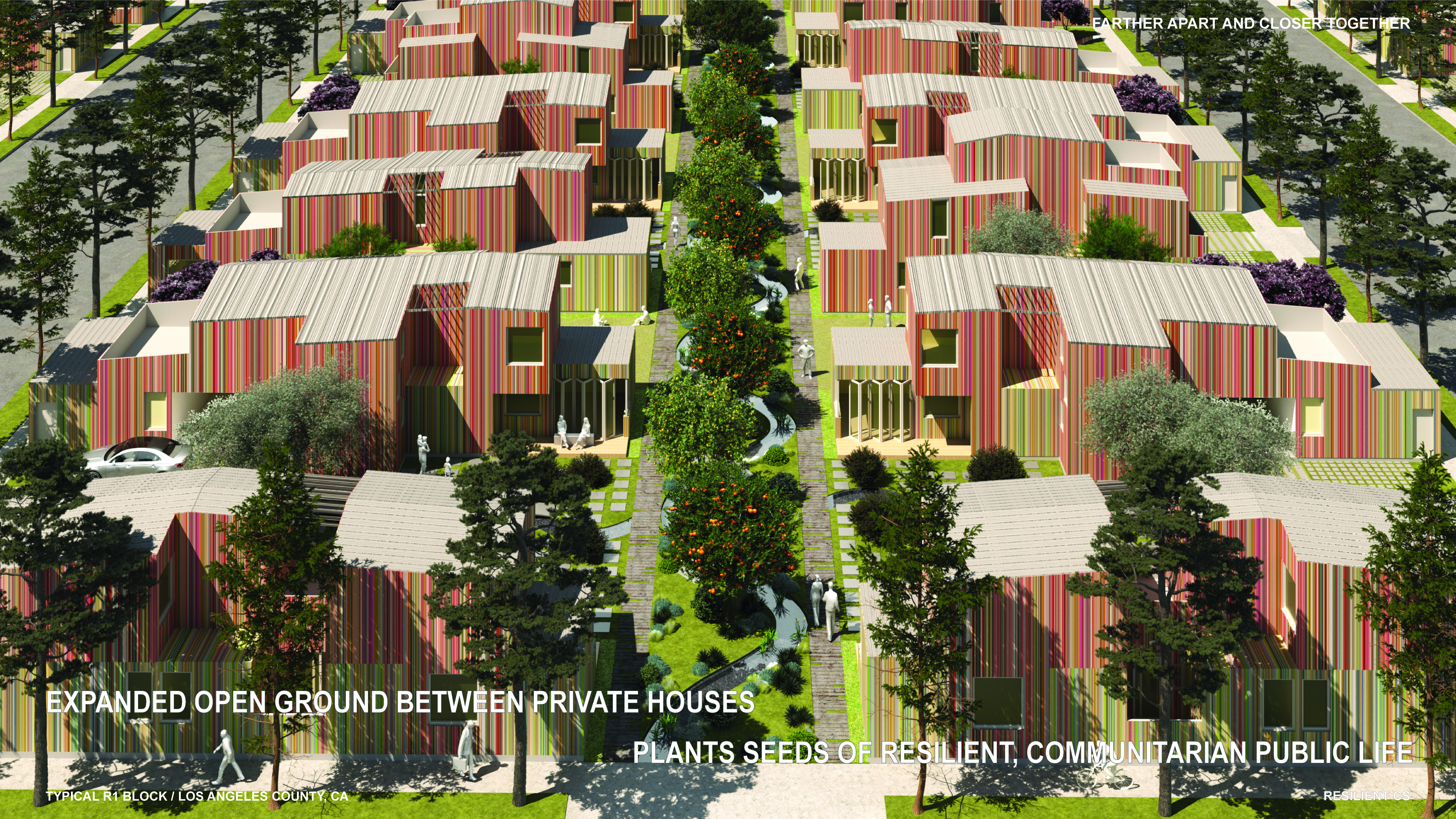
‘Farther Apart and Closer Together’ was developed holistically and integratively in collaboration with Professors Dana Cuff and Stephanie Landregan, who provided indispensable wisdom and feedback on the Public and Landscape Architecture dimensions of the work. In the seminar, the students developed a hypothetical, yet super-plausible, project for a Los Angeles R1 block comprising twenty 50′ x 100′ lots without alleys, serving as a model for fire-safe, community-oriented living.
From the proposal:
“The design integrates landscape architecture and shared private realms into a cohesive, publicly oriented urban vision of a healthier, more balanced way of living together in the city, while promoting the image and substance of today’s diverse single-family zones.”
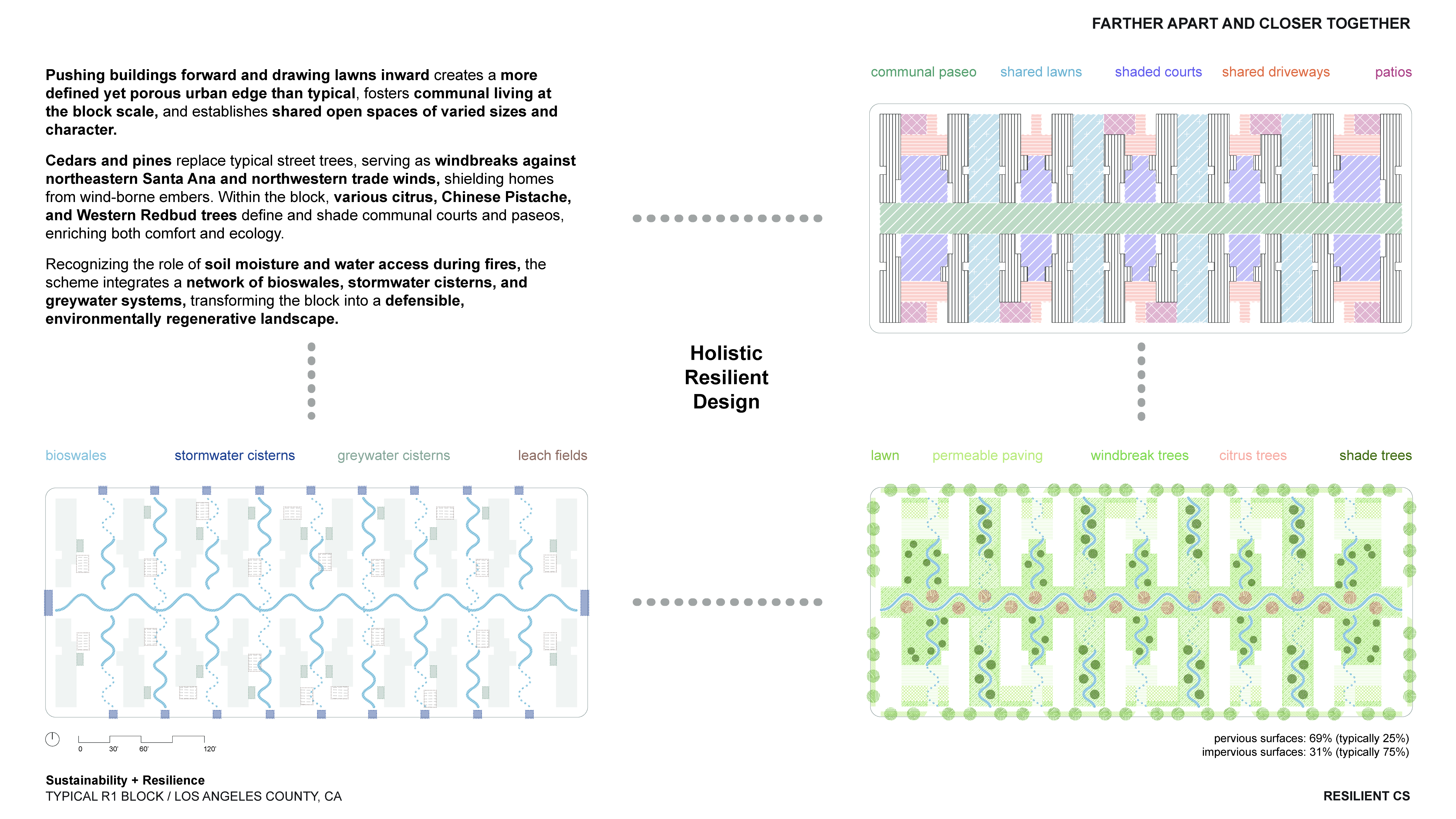
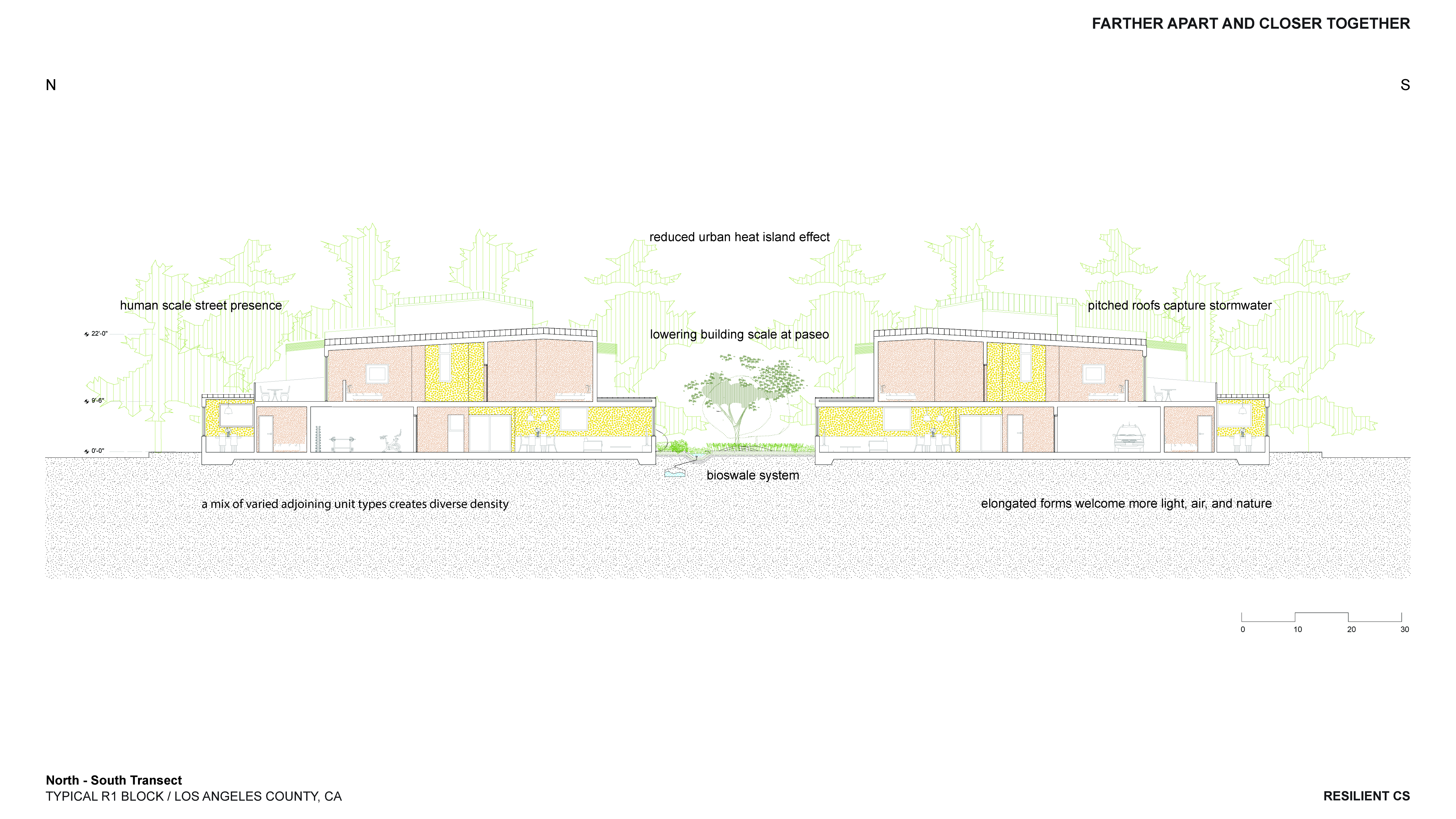
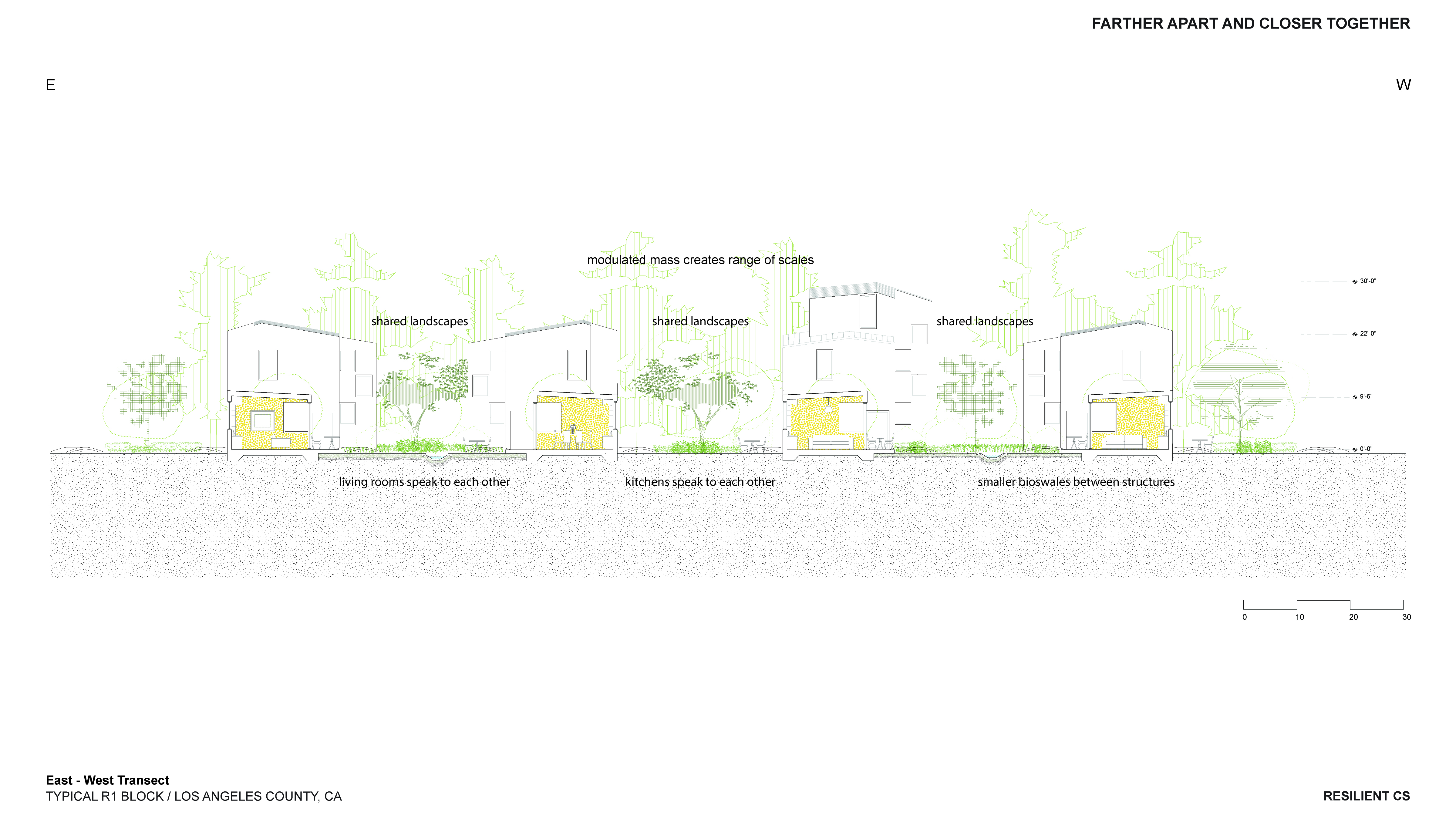
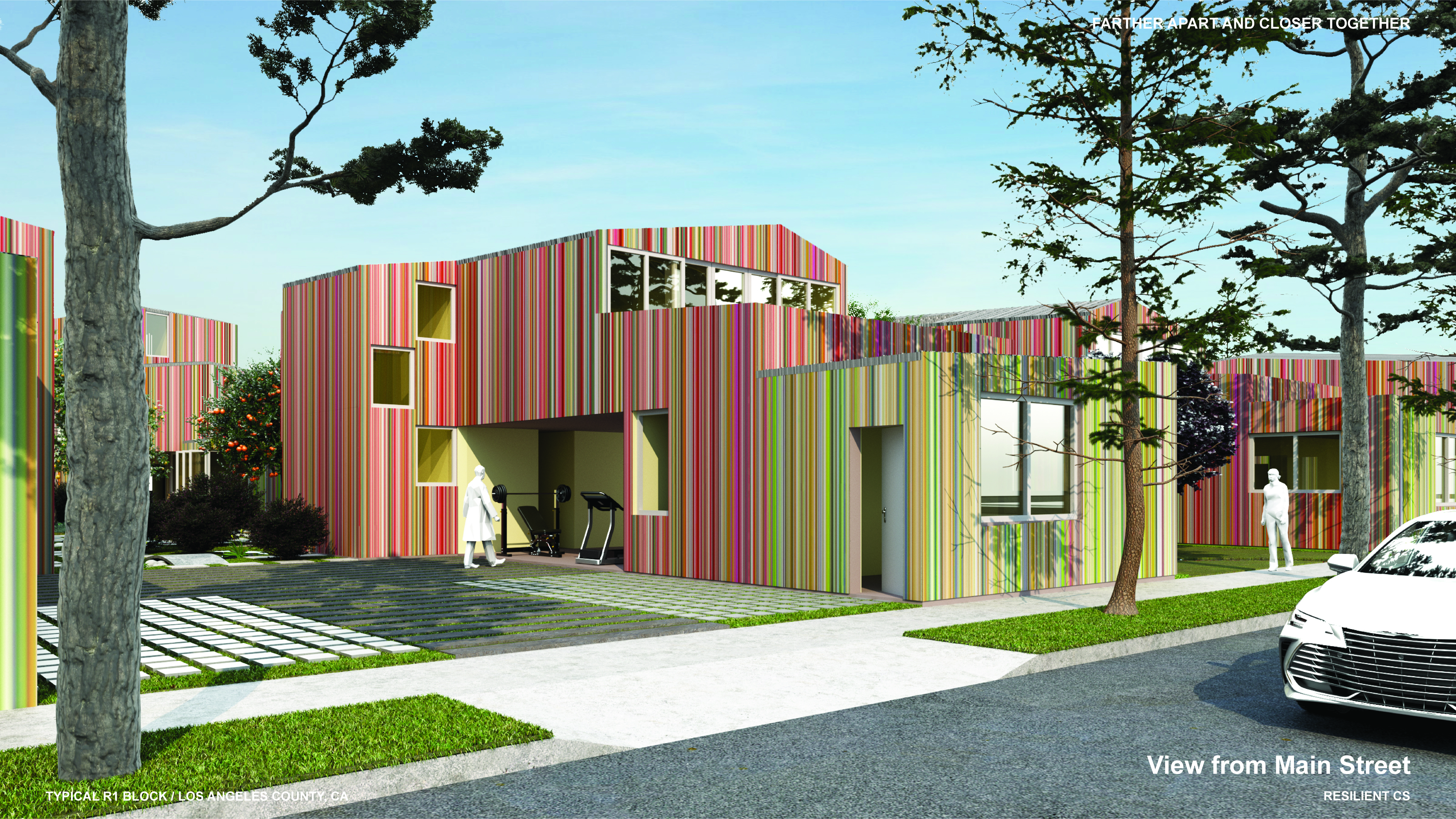
Adapting Wildland Urban Interface Zone 1 principles, side yards are expanded from 5’ to 30’ to minimize building-to-building fire spread. Where internal streets narrow, higher fire-resistant ratings are introduced. To deliver realistic density and today’s post-SFR housing mix, slender homes shift toward the street, transforming side yards into front and backyards woven into a shared commons. Pushing buildings forward and drawing lawns inward creates a more defined yet porous urban edge than typical, fosters communal living at the block scale, and establishes shared open spaces of varied sizes and character. So, the trade-off is: expand the side and rear yards by minimizing the front yards, and allow R1 zones to house 3-story buildings.
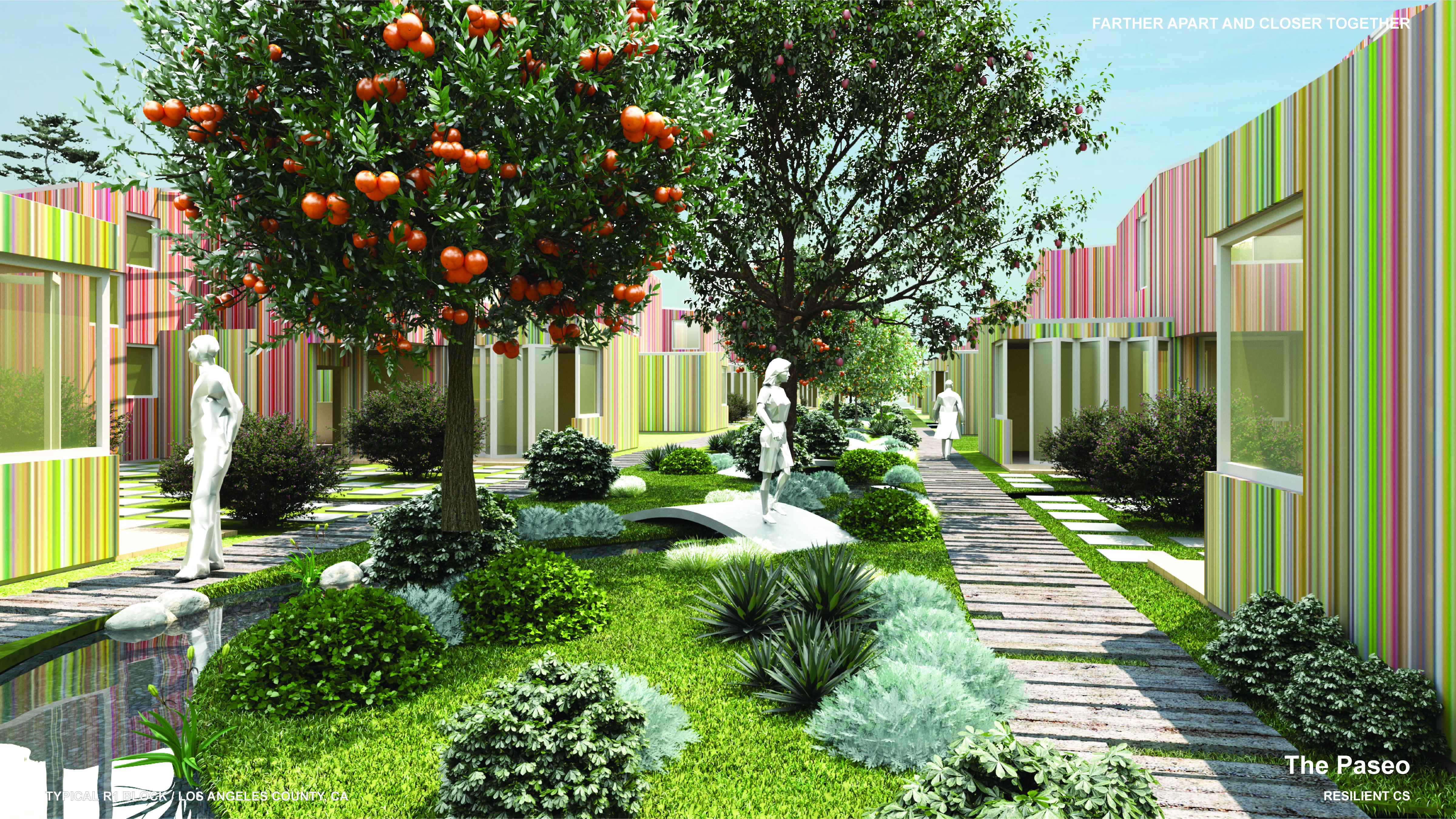
Three house types: single family, single family with attached ADU, and duplex with JADU/ADU are paired along shared driveways, their living rooms and kitchens opening to shaded courts and interior streets to enhance social resilience. This gradient of sociability links private life to collective space and public cooperation along a planted east-west paseo.
Landscape replaces fences and enhances ecological benefits, mitigating Urban Heat Island effects. Bioswales, permeable paving, lawns, and carefully selected trees create moisture buffers, windbreaks, and stormwater/greywater loops that nourish the site and feed surrounding street trees. Cedars and pines replace typical street trees, serving as windbreaks against the northeastern Santa Ana winds and the northwestern trade winds, shielding homes from wind-borne embers. Within the block, various citrus, Chinese Pistache, and Western Redbud trees define and shade communal courts and paseos, enriching both comfort and ecology.
By balancing slender buildings and generous open space, the scheme proposes a micro-urbanism safer through separation yet richer in connection—a prototype adaptable to other fire-prone neighborhoods, demonstrating how resilience and community can scale beyond this single block.”
In parallel with the seminar, our practice, Sharif, Lynch: Architecture, developed a narrow standard plan and standard site plan proposal for a fire-safe house and ADU prototype that assumes expanded side yards and a layered earthen, fire-rated building envelope, while maintaining a traditional front-yard setback. A shotgun plan for Southern California, LongHouse, offers an immediately implementable alternative to side-yard-hogging homes, with a positive domino effect on a street, for a renewed, defensible neighborhood with more light, air, and vegetation than the norm.
You can see the projects here and here.
2. WUI Strategies in the Urban Core: We typically associate “defensible space” with the urban edge, but you argue for extending Wildland Urban Interface (WUI) principles citywide. How do we balance the need for these defensive “buffer zones” with the state’s urgent mandate to densify our existing single-family neighborhoods?
Far too often, well-meaning, municipal, county, and state responses to the recent wildfires proved shortsightedly reactive, inadvertently rolling back hard-earned advances in areas like clean energy (suspending electrification to maintain gas) and new R-1 density-oriented development, even allowing the unsafe non-conforming setbacks that aided ignition through radiation to be reinstated under the often confusing like-for-like rebuild parameters.
Given this, it’s not a stretch to imagine authorities rescinding relaxed ADU side- and rear-yard setbacks in the name of safety, while effectively making ADU development impossible on most lots. Heading off these regressive edicts before they emerge demands plausible visions like ‘Farther Apart and Closer Together’ that allow for both density and safety through reduced front-yard setbacks and increased building height and storeys.
3. Soil as Infrastructure: Your work with the Healthy Grounds panel highlighted the invisible crisis of soil toxicity post-wildfire. How do you envision the “plant-fungi bioremediation” methods discussed by Danielle Stevenson moving from niche experiments to standard operating procedure for California developers and homeowners?
Danielle Stevenson’s brilliant brownfield remediation work is scalable and, fortunately, already operating collaboratively with the city. It is important to engage with Danielle again to understand how we may best amplify this work and appropriately advocate for its incorporation into broader SOPs, in concert with the relevant built environment professional bodies, starting with ASLA.
4. A “Fire Control District”: The Blue Ribbon Commission calls for a permanently funded Fire Control District. In your vision, does this entity function purely as a regulatory body, or do you see it becoming a design patron that actively commissions new types of resilient public infrastructure?
We certainly don’t need another technocratic bureaucracy defaulting to status quo—if not status quo ante—worldviews and practices. If such a body is created, its purpose must be catalytic: to commission and fund exemplary projects that show how we might live together more intelligently, safely, and beautifully. Its value should lie not in administration but in demonstration—advancing a civic culture grounded in the consilience of ecology, infrastructure, and community. Nothing less will matter, and nothing less will do.
The Role of Architects & Designers
5. Buildings as Climate Registers: You have described your firm’s philosophy as treating form and profiles as “technologies in and of themselves”—buildings that act as “climate registers.” In an era where we often rely on mechanical systems or hidden insulation to solve climate problems, how can architects return to using the shape of the building itself as the primary sustainability tool?
We borrow the term ‘climate register’ from the late Alison and Peter Smithson and extend their interest in putting form to work instrumentally and symbiotically along a spectrum of sensations. We are particularly interested in self-shading form, where building masses and profiles tilt, turn, and rise from the ground, creating shade and cool temperatures in overheating urban fabric while animating contexts through new aesthetic experiences of silhouettes and interstitial spaces.
Recently, this approach has been enriched through dialogues with our UCLA colleague, Associate Professor Salmaan Craig, whose climatological approach to horizontal and vertical thermal hierarchy encourages conceiving building form and organization in terms of a range of modalities, from passive to active, modern to ancient.
6. The “Proto-Expert”: You mention fostering a culture of “proto-expert, engaged citizenship” among your students. How does the role of the architect change when we view ourselves not just as designers of buildings, but as citizens with a specific technical responsibility to the public realm?
Fostering a culture of “proto-expert, engaged citizenship” begins with recognizing architectural knowledge and skillsets as public resources. My role as a clinical faculty member and program director at a public research university carries a high expectation that I clearly define and demonstrate my expertise as an informed and authoritative educator. I do this through the impact of applied research in practice with my UCLA colleague Todd Lynch—expressed through buildings, texts, and public service—and calibrated to ways of teaching that frame and engage today’s challenges through plausible, progressive design work in the academic studio and seminar.
When students, like the group who worked on ‘Farther Apart and Closer Together’, see that architecture operates simultaneously in the studio, in practice, and in public life, they begin to understand their own roles tangibly. Cultivating that sense of responsibility early—while students are still forming their professional identities—is what I mean by preparing them as proto-experts.
7. Interdisciplinary Friction: You highlighted the success of collaborating with Greg Kochanowski—a dual architect/landscape architect—on fire-safe modules. Do we need to fundamentally dissolve the boundaries between architecture and landscape architecture education to effectively tackle the climate crisis, or is there value in keeping the disciplines distinct but aligned?
While I understand the egalitarian impulse to dissolve boundaries in the name of discursive breadth, I lean toward keeping disciplines as distinct as possible, without closure—cultivating focused depth while remaining open to alignment. I’m drawn to figures who expand their fields through specific overlaps in knowledge and practice that genuinely improve our collective lot.
More than ever, in this moment of bellicose authoritarian populism—marked by the rejection of empirical knowledge and a hardening of compassion—we need generous experts with steady, thoughtful voices and laterally oriented minds to help us navigate beyond the toxic fog and the mud.
Advice for Emerging Professionals
8. Navigating the Academy and the Studio: You have successfully maintained a rigorous practice while directing the undergraduate program at UCLA. For emerging professionals who are torn between the theoretical freedom of academia and the practical demands of the construction industry, what advice do you have on how to bridge those two worlds rather than choosing one?
A friendly word of caution for architecture graduates drawn to both teaching and practice: without clear, idea-driven goals, well-defined boundaries, and a genuine commitment to engaging both the school and the office in mutually enriching ways, it’s easy to get stuck in the middle. You may find yourself neither fully realized as a scholar nor fully confident as a practicing architect—or splitting your energies, saying one thing in the classroom while doing something very different in the studio. Thoughtful alignment early on can help keep both paths meaningful and rewarding, and an unwavering commitment to continually improving ideas and skills will give your praxis gravitas and relevance.
9. Laconic yet Lively: Your bio describes your work as “laconic yet lively” and “spartan and luxurious.” For young designers navigating an era of complexity and uncertainty, how can they learn to achieve “economy of means”—doing more with less—without sacrificing the poetic quality of their work?
Because the idea is easily confused with purely quantitative efficiencies that drain architecture of its pleasures, and because pragmatism is not inherently devoid of poetics, we encourage approaching the task of doing more with less by expanding “economy of means” into an “economy of means for desired expressions and effects.” Framed this way, the concept aligns design values with workflows and strategies that balance form and performance from the outset. The result is architecture whose intentions are embedded in its methods of making—projects able to achieve expressive clarity and technical performance while remaining resilient to the erosions of value engineering.
10. Learning from the Ordinary: Your undergraduate dissertation on Venturi and Scott Brown is in the RIBA permanent collection. How does that early interest in learning from the existing landscape inform your current advice to students analyzing the “ordinary” or “ugly” parts of Los Angeles today?
I wrote my dissertation on VSBA as an act of constructive rebellion, prompted—borrowing from Joseph Conrad—by a fascination with what was considered an abomination: a seemingly heretical break from orthodox modernism that rendered them non grata in my pedagogical upbringing. Self-directed research revealed Denise Scott Brown’s profound role in shaping a far broader, worldly agenda for architectural form and organization than Robert Venturi had articulated before meeting her.
It also opened my eyes to similarly peripatetic figures—Team X members, and particularly her teachers, the Smithsons, and their frenemy Reyner Banham—who, like Scott Brown before her, also got into cars, absorbing and learning from the highs and lows, olds and news of the world around them.
At UCLA Architecture and Urban Design, where we celebrate our 60th anniversary in June 2026, I regularly remind students that Denise Scott Brown was one of our founding faculty members, that her influential Learning From syllabi began here, and that our urbanism-oriented studios continue a historical chain that expands her legacy of transformative documentarianism.
It serves as a vivid reminder that there is a difference between looking and seeing—especially if you are committed to creating new opportunities for architecture and urbanism in dialogue with, and in play with, the sacred and the profane worlds around you.
AIA|LA Board Director Initiatives (Academic Liaison)
11. You co-convened the 2025 AIA|LA Academic Summit with a focus on the 2026 World Cup and 2028 Olympics and have highlighted the potential to repurpose event infrastructure into multifunctional resilience hubs and cooling centers. How can the academic community, in collaboration with professional boards and stakeholders, help ensure that these mega-events leave a legacy of enduring public spaces that are not only thoughtfully designed but also built, maintained, and actively serve the vulnerable communities that need them most?
The recent transdisciplinarily conceived Shade LA design competition is an excellent example of what partner university institutions can achieve in collaboration with municipal bodies and event entities to inspire and seed vital components of lasting infrastructure that serve as concrete examples of scalable resilience hubs. We need more such multi-partner initiatives, and that begins with taking stock of this specific effort to understand its lessons and build on them moving forward.
Image Credits:
Mohamed Sharif, AIA, RIBA – Partner, Sharif, Lynch and Architecture & Director, Undergraduate Program in Architectural Studies and Graduate Program Design Faculty, UCLA Architecture and Urban Design
Mohamed is the Principal in Charge of Design and related cultural and technological research. Before founding S, L: A with Todd Lynch, Mohamed designed many award-winning projects across a range of scales, including the 11,000 SF ESRI Campus Pavilion in Redlands, CA, the competition for the 800,000 SF McCormick Place Adaptive Re-use in Chicago, IL, and the 2000 SF Jellyfish Exhibition at the Aquarium of the Pacific in Long Beach, CA. Mohamed is also an Associate Adjunct Professor and Director of the Undergraduate Program in the UCLA Department of Architecture and Urban Design, teaching in both undergraduate and graduate programs.
A frequent writer, Mohamed’s essays and reviews have appeared in various publications, including 306090, arq, Constructs, JAE, and Log. His most recent essay is an introduction to SO-IL’s work in the Japanese journal a+u. He served on the editorial board of arq: Architectural Research Quarterly (Cambridge University Press) from 2006 to 2016. He was a longtime advisory board member of the Los Angeles Forum for Architecture and Urban Design, previously leading it as President from 2007 to 2009.
Mohamed earned a Bachelor of Science (Honors) in Architecture and a Master of Science in Advanced Architectural Studies from the Scott Sutherland School of Architecture in Aberdeen, Scotland. He spent his third year of undergraduate study at the Illinois Institute of Technology as an exchange student. His master’s design thesis earned the James B. Johnston Thesis Prize, and his undergraduate dissertation “On Venturi and Scott Brown” garnered a RIBA Butterworth-Heinemann prize. In 1993, the RIBA retained the dissertation in its permanent collection.
*Disclaimer: The advice and perspectives shared here belong to the author and should not be considered official recommendations from AIA Los Angeles.


