AIA|LA ARCHITECTS IN ACTION:
David Hertz, FAIA, LEED AP

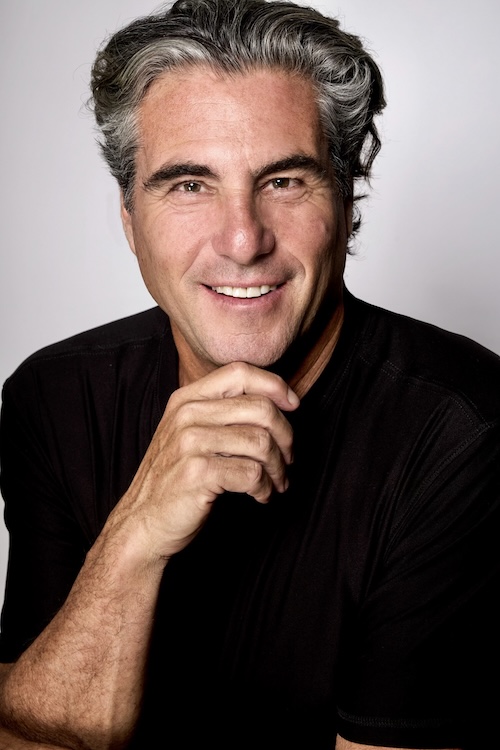
Pioneering Regenerative Design and Community Resilience
Q&A with David Hertz, FAIA, LEED AP
I. Design Philosophy & Leadership Style
1. For over 40 years, you’ve worked “at the edge of sustainability and the forefront of regenerative architecture.” How do you define “regenerative architecture,” and what does it mean to expand “the conceptual limits of architecture” in your practice?
Regenerative architecture goes beyond sustainability—it actively restores and revitalizes the systems it touches. It’s about designing buildings and environments that don’t just minimize harm but improve ecological and social conditions. Expanding the conceptual limits of architecture means embracing interdisciplinary thinking, incorporating systems design, and engaging deeply with place, culture, and ecology to imagine new possibilities for how we live.
2. As a “systems thinker” engaged in various fields through design, how does this holistic approach influence your design philosophy and your leadership in complex projects?
Systems thinking allows me to see the interconnectedness of environmental, social, and economic factors. In design and leadership, it means recognizing the broader context, anticipating unintended consequences, and finding elegant, integrative solutions. It promotes collaboration across disciplines and empowers teams to think beyond silos to create lasting impact.
3. You’re committed to “connecting the art of building with responsible stewardship of the Earth.” What core values guide this integration, and how do you instill this ethos within your teams and projects?
The core values that guide my work are respect for nature, equity, resilience, and beauty. I believe that beauty is not superficial—it’s a way to inspire stewardship and care. Within my teams, I cultivate a culture of curiosity, humility, and responsibility. We prioritize materials and methods that align with ecological principles and community well-being.
II. Community Brigade & Wildfire Recovery
4. As a Class 1 Wildland Firefighter and a member of the Los Angeles County Fire Department’s Community Brigade, you have unique hands-on experience with wildfires. How has this direct involvement shaped your understanding of community resilience and the architect’s role in fire-prone regions?
Firsthand firefighting has given me a visceral understanding of risk, terrain, and the real-world performance of buildings under extreme stress. It’s informed my conviction that architects must design defensible spaces, integrate passive fire resilience, and work in tandem with emergency services. Community resilience starts with preparedness and is reinforced through intelligent design.
5. Your family has deep roots in Malibu, and you’ve personally assisted with fire rebuilds after the Woolsey Fire. What specific architectural and administrative support do you provide, and what are the most profound lessons you’ve learned about the emotional and practical challenges of post-fire recovery?
I provide everything from design to navigating permitting processes and advocating for code adjustments and fire-resilient design consultation. The emotional toll of displacement is profound. Recovery isn’t just about rebuilding structures—it’s about restoring hope, identity, and community. The process must be empathetic, efficient, and deeply rooted in the local context.
6. Beyond immediate rebuilding, what innovative design and planning strategies do you believe are essential for making communities in fire-prone areas fundamentally more resilient for the future?
We need a shift toward decentralized infrastructure, hardened perimeters, defensible space, and fire-adapted landscaping. Land use planning must integrate buffer zones and safe evacuation routes. At the building scale, innovations like ember-resistant design, off-grid systems, and fire-resilient materials are key. Community brigades and mutual aid networks are also critical in building community responses that offer unique situational awareness in a hyperlocal context.
III. Protecting Wilderness & Ocean Health
7. As a board member of Heal The Bay and a lifelong surfer, you’re deeply connected to ocean health. What are the most critical design and policy interventions needed to protect our wilderness areas and improve the health of our oceans, particularly along the California coast?
We need stronger watershed management, green infrastructure to reduce runoff, and better enforcement of pollution controls. On the design side, permeable surfaces, natural filtration systems, and low-impact coastal development are essential. Policies must prioritize habitat preservation, equitable access, and climate adaptation.
8. Your work with Skysource, which won the Water Abundance XPRIZE, democratizes water. How can architects and urban planners integrate such decentralized, innovative water solutions into both new developments and existing communities, especially in drought-prone regions?
We need to reimagine water as a localized, circular system. Atmospheric water generation, greywater recycling, and on-site filtration can all be integrated into buildings and neighborhoods. Planners should incentivize decentralized systems and allow for code innovations that reflect new technologies. Water security must become a design priority.
9. What advice would you offer to civic leaders in Los Angeles regarding actionable steps they can take to better protect the delicate balance of our wilderness areas and coastal ecosystems?
Embrace nature-based solutions—restore wetlands, expand urban forests that are fire resilient, and invest in ecological corridors. Implement stronger zoning protections, especially in the wildland-urban interface. Support community science and stewardship programs. Civic leadership must be bold and long-term in its vision. Expand the Community Brigade program.
IV. Innovation, Resilient Design & Advice for Civic Leaders
10. You invented Syndecrete decades ago and were awarded the National Design Award for Climate Action. What emerging materials or technologies are you most excited about today that promise to advance innovation and best practices in resilient design?
I’m excited about carbon-sequestering materials, mycelium-based insulation, adaptive shading systems, and prefabricated modular components that enhance speed and performance. Biogenic and circular economy materials hold great promise. Resilient design will be accelerated by innovation in both material science and digital fabrication, especially in an age of increasingly challenging climates.
11. As a co-founder of the Resilience Fund for Advancing Climate Technologies and the Resilience Foundation, how do these initiatives aim to combat some of the world’s greatest challenges through design and product solutions?
Both initiatives support the development and deployment of scalable solutions in water, energy, and housing. We focus on impact investing, mentorship, and connecting innovators with real-world applications. Design is a force multiplier—it shapes behavior, infrastructure, and futures. Advancing small-scale innovative solutions that are distributed and nimble allows for rapid scalability and can maximize beneficial impacts.
12. Having mentored students at SCI-Arc, Art Center, Yale, and USC, what is the most important advice you give to aspiring architects who wish to work “at the edge of sustainability and the forefront of regenerative architecture”?
Be curious. Be brave. Seek out interdisciplinary knowledge and ground your work in values, not just aesthetics. Learn to communicate across cultures and sectors. Design is a powerful tool—use it to serve both people and the planet.
13. What advice would you give to civic leaders in Los Angeles regarding prioritizing and implementing resilient design strategies in large-scale urban development projects?
Start with equity and climate adaptation at the center. Incentivize high-performance design, mandate resilience audits, and invest in green infrastructure. Align codes and funding with long-term environmental goals. Bring design professionals to the table early in planning processes.
14. Beyond technical solutions, how can design foster a deeper connection between communities and their environment, inspiring greater stewardship and resilience?
Design can evoke wonder and belonging. By embedding natural systems and cultural narratives into our built environment, we invite people to engage, care, and co-create. Public spaces, art, and community-led design all play vital roles. Creating Community Resilience Hubs that offer unique local and community support will be critical in the near future.
15. What is the single most urgent change you believe needs to happen in the architecture and planning professions to effectively address the climate crisis and ensure a more resilient future?
We must shift from extractive to regenerative thinking in every aspect of design. This requires new metrics of success, interdisciplinary collaboration, and a deep moral commitment to future generations. The climate crisis is also a leadership crisis—our professions must lead with courage, humility, and action.
David Hertz, FAIA, LEED AP – Principal Architect, David Hertz Architects and Studio of Environmental Architecture
David Hertz, FAIA, Architect, founded Syndesis in 1983 and S.E.A.The Studio of Environmental Architecture, a practice focused on regenerative design in an age of resilience.
David won the 2022 Smithsonian Cooper Hewitt National Design Award for Climate Action. In 2018, Hertz won the Water Abundance XPRIZE a 1.5 M prize to make over 2,000 liters of water from air.
In 2006, David was awarded the Distinguished Alumni Award from the Southern California Institute of Architecture SCI-Arc and in 2008, he was elected to the prestigious American Institute of Architects College of Fellows, as one of its youngest members in its over 155-year history.
David’s award-winning work has been published widely and exhibited internationally. Some highlights include exhibitions in the Museum of Modern Art (MOMA), the Smithsonian National Museum of Natural History, the National Building Museum, and the Cooper Hewitt, Smithsonian Design Museum. David has taught studios and lectured at Yale, USC, UCLA SCI ARC, UPenn, and Art Center College of Design.
In 2024 was amongst a select group of experts invited to the White House to participate in the National Resilience Framework working group.
David is also a trained Wildland Fire Fighter with LA County Fire Division 7 Community Brigade.
*Disclaimer: The advice and perspectives shared here belong to the author and should not be considered official recommendations from AIA Los Angeles.


