AIA|LA ARCHITECTS IN ACTION:
Avi O. Grigoresco, FAIA, LEED AP

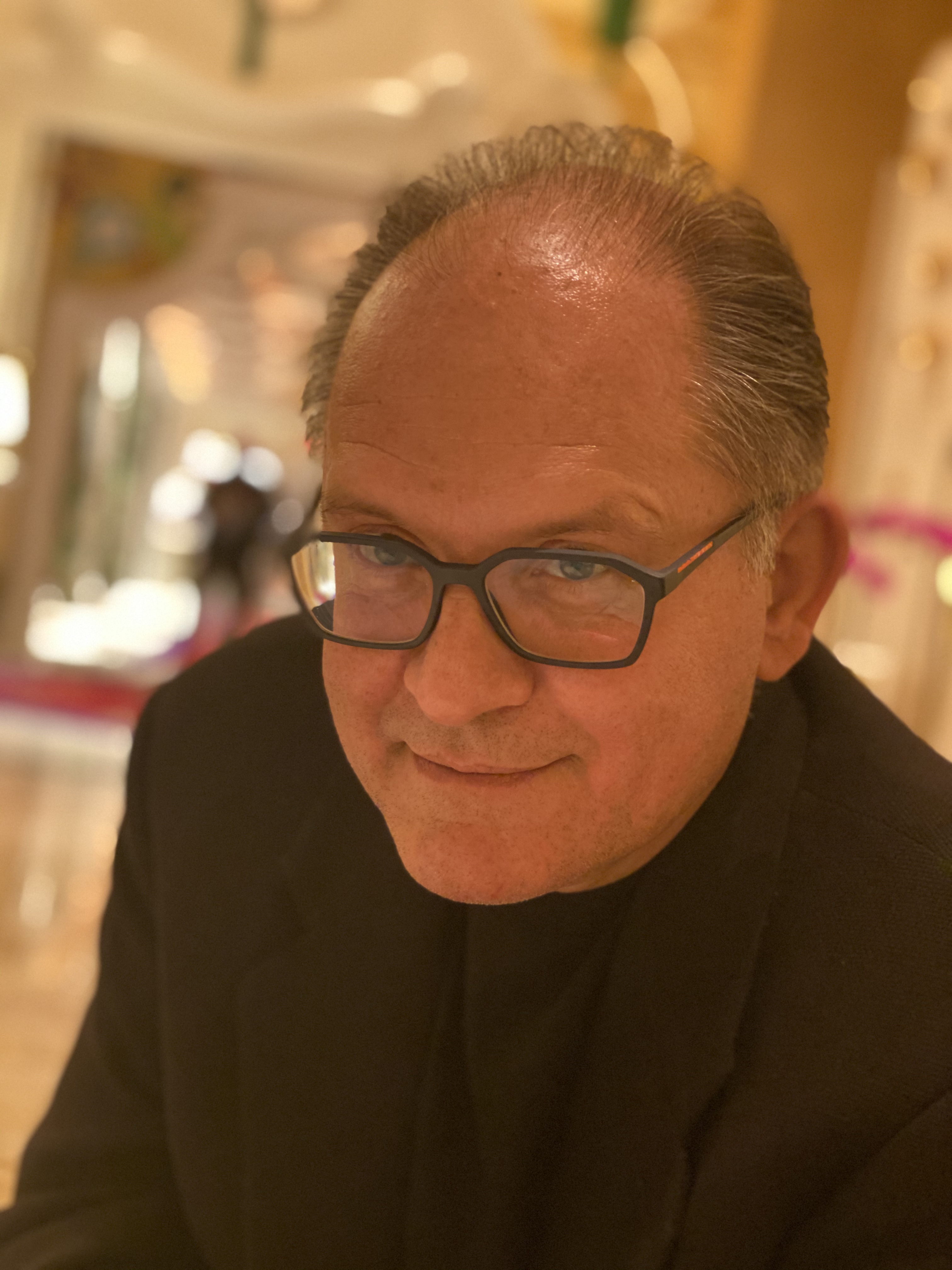
Designing for Health, Efficiency, and Community Well-being
Q&A with Avi Octavian Grigorescu, FAIA
I. Design Philosophy & Core Values
1. Your professional “north star” is defined by three guiding principles: intuitive, pervasive, and aspirational. Could you elaborate on how each of these principles translates into tangible design choices and outcomes in the healthcare facilities you manage?
“Intuitive” emerges as that seamless connection, where designs become almost second nature, easing the burdens of patients and staff alike. Weave in natural light, open sightlines, and touches of nature through biophilic cues, much as casual acquaintances might offer unexpected comfort, turning spaces into instinctive havens of healing. “Pervasive” spreads like a grapevine closer to the rhythms of daily life and weaving health into the fabric of work, play, and home, reducing barriers and bridging gaps in our social worlds. “Aspirational” lifts the gaze higher, envisioning environments that spark hope and ingenuity, akin to those peripheral bonds that reveal new facets of ourselves, not just for function but to inspire.
2. Having grown up in Romania and moved to California as a political refugee, how has your personal journey influenced your perspective on architecture’s role in society, particularly in serving diverse communities?
My path from Bucharest’s shadowed streets to California’s sunlit expanses in 1980 as a political refugee unfolds like a tapestry of consequential encounters—those fleeting yet formative ties that reshape us. Under a regime where architecture often loomed as a symbol of division rather than unity, I learned how built spaces can either confine or liberate the human spirit. Arriving amid California’s mosaic of cultures, I discovered design’s power to knit disparate threads into a cohesive whole and foster belonging. To me, architecture mends societal rifts. My refugee roots instill a deep empathy, viewing buildings not as mere structures but as dynamic catalysts—much like consequential strangers—who heal divisions and amplify unity in our pluralistic tapestry.
3. What core values do you believe are essential for an architect working in the healthcare sector, where human well-being and critical functions are paramount?
Compassion, integrity, innovation, equity—these aren’t buzzwords; they’re non-negotiables in healthcare architecture. Compassion hacks empathy into blueprints: Quiet zones with views that dial down stress hormones. Integrity means zero compromises—eco-materials to future-proof against climate hits. Innovation: Health tech integrations that scale access exponentially. Equity seals it: Designs that dismantle barriers for the underserved, boosting outcomes across demographics. These core values elevate buildings from functional to transformative, unlocking peak human performance in healing.
II. Leadership & Healthcare Architecture
4. As the Capital Projects Team Manager for Kaiser Permanente West Los Angeles, you oversee over 100 projects at any given time. What is your leadership style in managing such a vast and complex portfolio, ensuring design excellence alongside operational efficiency?
My leadership mirrors a well-orchestrated social convoy—collaborative, nimble, and purpose-bound, steeped in a tapestry of teamwork and growth. Managing over 100 endeavors, from subtle tweaks to grand visions, hinges on cultivating trust and shared agency. I guide by immersion, rallying architects, engineers, and healers to weave their insights together, much as consequential strangers enrich our perspectives. Balancing artistry with pragmatism, I deploy agile rhythms: frequent dialogues, metric-driven insights, and proactive scans for hurdles. Early stakeholder-weaves align with our total health narrative, while Lean Six Sigma trims excesses, smoothing paths like a grapevine channeling vital info. This fosters endurance, evident in weathering supply storms amid crises. Nurturing new voices and marking triumphs, I nurture accountability and spark, crafting realms that heal while stewarding resources—ultimately advancing our shared commitment to affordable, high-quality healthcare.
5. You’ve steered the design and construction of major hospital projects, including UC Irvine Douglas Hospital and the County of Ventura replacement hospital. What were the most significant challenges in these large-scale endeavors, and how did you overcome them?
Steering projects like UC Irvine Douglas Hospital and the County of Ventura replacement hospital presented challenges in scale, regulations, and stakeholder alignment. At UC Irvine, integrating advanced research facilities with patient care demanded balancing cutting-edge tech with budget constraints, compounded by California’s seismic performance requirements. We overcame this through phased planning and value engineering, collaborating with multidisciplinary teams to prioritize features like flexible labs that supported both education and healing. For Ventura’s replacement, post-disaster resilience involved community buy-in amid environmental concerns; challenges included site constraints and funding timelines. The path to Solutions included community workshops for input and sustainable design integrations. In both, Lean Six Sigma mapping identified inefficiencies, cutting costs without compromising quality. These experiences reinforced adaptive leadership, delivering facilities that enhance health outcomes and community trust. I brought these learnings with me to Kaiser Permanente and am able to incorporate them into the work I do daily.
6. Beyond the functional requirements, how do you approach designing healthcare environments that are not just efficient but also create experiences that positively impact health and health outcomes for patients and staff?
Beyond functionality, I aim for holistic experiences, leveraging evidence-based principles to boost well-being. This means infusing spaces with biophilic design—natural light, greenery, and art—to reduce stress, as studies show these elements lower cortisol levels and speed recovery. For staff, ergonomic layouts and respite areas prevent burnout, improving retention. Patient journeys are mapped for empathy: quiet zones, family-inclusive rooms, and tech interactive displays for education. This approach aligns with our mission, viewing architecture as a health determinant—creating equitable, inspiring environments that foster healing and innovation.
III. Lean Six Sigma & Process Improvement
7. As a Lean Six Sigma Black Belt, how do you apply these methodologies to optimize design and construction processes within healthcare capital projects, leading to greater efficiency and value?
My Black Belt playbook: DMAIC framework cuts waste, amps value. Define: Align goals with our design standards. Measure/Analyze: Data on timelines, root out delays. Improve: Stream maps shrink cycles 20-30%. Control: Audits lock gains. The result: Faster builds, cost savings, superior facilities—are elements of our continuous improvement culture in hyperdrive, patient-focused from the ground up.
8. Could you share a specific example where applying Lean Six Sigma principles significantly improved a project outcome or streamlined a complex aspect of healthcare facility development?
By analyzing our vendor coordination process, we identified opportunities to streamline approvals through centralized steps. We mapped the process, identifying redundancies in approvals. By implementing a centralized dashboard and just-in-time procurement, we reduced lead times by 25% and cut costs by 15%. This streamlined complexity ensures on-time delivery of enhanced patient areas, improving flow and safety. The outcome: better resource allocation and a model for future projects, embodying our commitment to efficiency and excellence.
9. How can architects, generally, integrate principles of operational efficiency and continuous improvement, as seen in Lean Six Sigma, into their design practices for any project type?
Architects can integrate Lean Six Sigma by adopting iterative processes: start with stakeholder mapping to define needs, measure performance metrics, and analyze inefficiencies. For any project, use tools like Kaizen events for incremental improvements and AI platforms for simulations. This fosters efficiency across all building types—residential to commercial—reducing waste and enhancing sustainability. Training in these principles, as I did, equips architects to deliver value-driven designs, promoting innovation and adaptability in the profession.
IV. Health Impacts of the Built Environment & Advice for Civic Leaders
10. You advocate for “pervasive” facilities, closer to where patients live, work, and play. What specific design or urban planning strategies can civic leaders implement to improve access to healthcare and positively impact community health through the built environment?
For “pervasive” facilities, civic leaders can promote mixed-use zoning to integrate clinics into neighborhoods, enhancing walkability with green corridors and transit hubs. Strategies should include adaptive reuse of vacant buildings for pop-up health centers and incentives for sustainable designs. Partnering with healthcare organizations for community health hubs can address disparities, incorporating public spaces for wellness programs. These efforts improve access, reduce transportation emissions, and boost preventive care, fostering healthier, equitable communities.
11. What advice would you offer to civic leaders in Los Angeles regarding the critical role of architecture and urban planning in proactively addressing public health challenges beyond just healthcare facilities?
I believe that urban planning should embed health into all designs: green infrastructure to combat heat islands, active transportation networks for physical activity, and equitable zoning to reduce food deserts. Beyond facilities, resilient housing should include air filtration against pollution. And public-private partnerships, like AIA initiatives, can allow collaboration with architects to integrate data-driven designs. This proactive approach can mitigate challenges like obesity and mental health, creating vibrant, sustainable communities.
V. Wildfire Recovery & Resilient Design
12. While healthcare-focused, California’s context includes wildfire risks. How do you integrate resilient design principles into healthcare facilities, considering not only operational continuity but also patient safety and preparedness for natural disasters like wildfires?
Kaiser Permanente’s current approach recognizes the threat of wildfires and natural disasters, which sadly have impacted our facilities. As design leader in the SCAL Market, I adopt Kaiser Permanente’s approach and implement it into the work I do. We integrate resilient design through robust materials like fire-resistant facades and HVAC systems with HEPA filters to combat smoke penetration. For operational continuity, we incorporate microgrids and backup generators, ensuring uninterrupted care during outages. Patient safety features include evacuation zones, automated shutters, and landscape buffers with defensible space. These align with LEED standards and enhance preparedness via drills and tech early-warning sensors. This holistic approach safeguards lives and maintains service, embodying a commitment to community resilience.
13. What lessons from designing robust healthcare infrastructure, which must remain operational during crises, can be applied to broader wildfire recovery and rebuilding efforts in residential or commercial sectors?
Lessons from healthcare include redundancy in systems—dual power sources and modular designs for quick repairs—applicable even to residential rebuilding with elevated foundations and firebreaks. Community engagement ensures needs-based recovery, while sustainable materials reduce future risks.
14. What strategies are crucial for advancing innovation and best practices in resilient design within the highly regulated and complex healthcare architecture sector?
Crucial strategies include interdisciplinary collaboration. Advocate policy updates to streamline approvals for resilient, innovative tech and invest in R&D.
15. Looking to the future, what is one major innovation or shift you foresee in healthcare architecture that will profoundly impact patient care and community well-being?
I think we will see the rise of AI-integrated, adaptive buildings that respond in real-time to needs — adjusting lighting, air quality, and layouts for personalized care. This shift, blending IoT and biometrics, will enhance outcomes by anticipating health events and optimizing spaces.
Avi O. Grigoresco, FAIA, LEED AP – Senior Manager Design/ Construction Projects, Kaiser Permanente
Avi Octavian Grigoresco, FAIA, LEED AP, is a registered architect licensed in California and Arizona. Born and educated in architecture in his native Romania, he is also a certified Kaiser Permanente Improvement Advisor and Juran Institute Lean Six Sigma Black Belt.
For the past decade, Avi has served as Capital Projects Team Manager for Kaiser Permanente’s West Los Angeles service market. Prior to that, he led master planning, design, and construction for the Ventura County Replacement Hospital and initiated planning for a new research building at UC Riverside. Earlier, as Senior Architect at the University of California, he directed the UC Irvine Douglas Replacement Hospital and oversaw projects at UC San Diego’s Hillcrest and La Jolla campuses. From 2000 to 2008, as Managing Principal at SWA Architects in Arizona, Avi delivered health care projects for clients across California, Arizona, and Nevada including strategic development for one regional hospital and several rural facilities in Arizona, as well as health care campus redevelopments.
Avi’s contributions to health care architecture earned him induction into the AIA College of Fellows in 2020. His UC Irvine Douglas Hospital team received Building Design+Construction’s 2010 Platinum Award, and a dozen other awards have recognized his teams’ excellence in design and community impact. Avi actively participates in mentorship initiatives with several schools of architecture, and across the Kaiser Permanente organization, and enjoys opera and art collecting.
*Disclaimer: The advice and perspectives shared here belong to the author and should not be considered official recommendations from AIA Los Angeles.


