

- This event has passed.
SPRING ARCH TOUR FEST: Grafton House
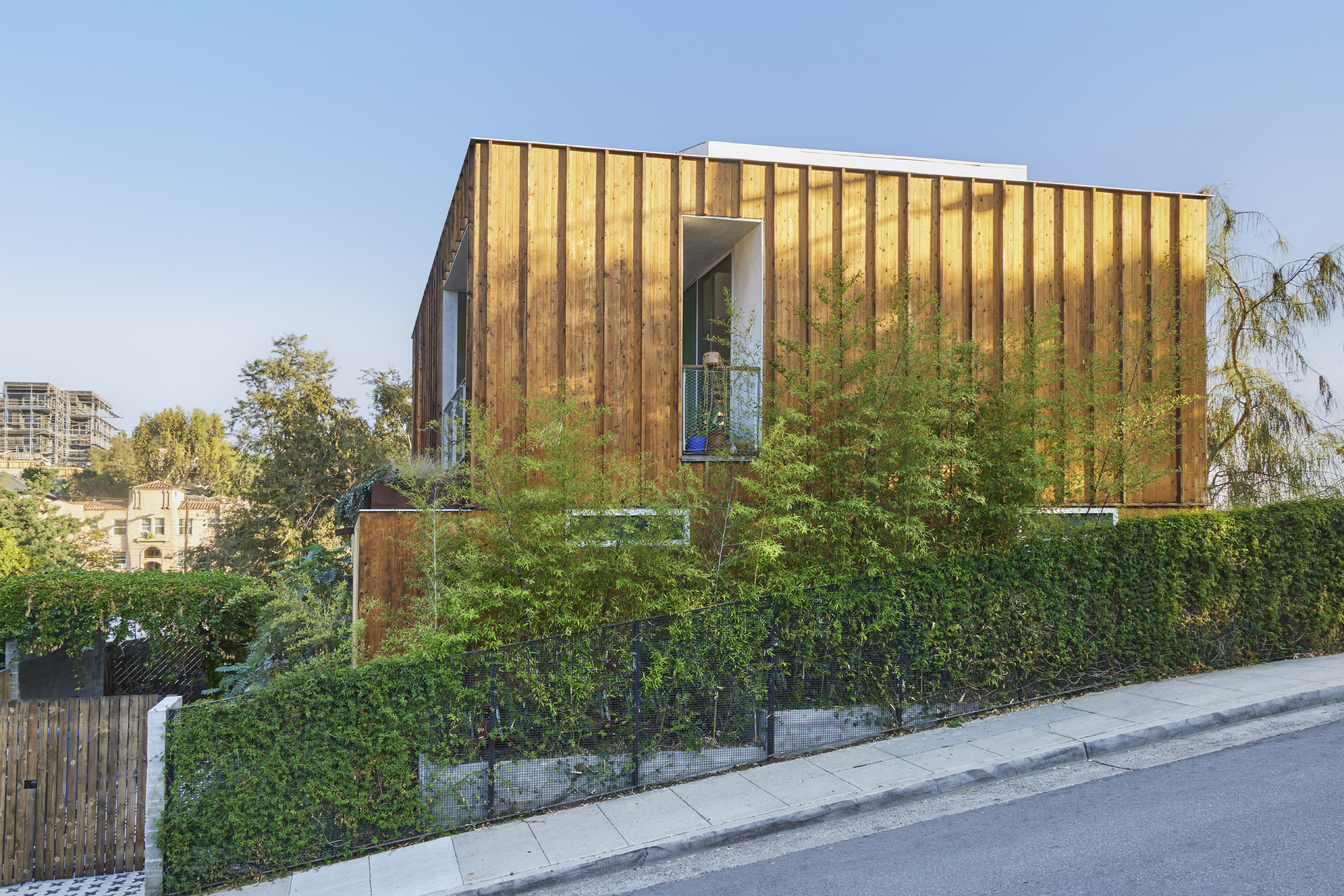
Photo Credit: Caitlin Atkinson
Spring ARCH TOUR FEST: Grafton House
Information regarding the tour will be emailed directly to registrants 24 hours before the event.
Built on a hillock in Echo Park with spectacular views of downtown L.A., the AIA Residential Award-winning Grafton House combines the urban living of owner/architect Fredrik Nilsson’s native Stockholm with the vibe of a Southern California treehouse. The single family dwelling – built on a half-lot with an eye to sustainability and small carbon footprint – consists of two cedar-clad volumes stacked upon each other and slid apart to create a large overhang and protected entry as well as a flipped traditional floor plan with bedrooms on the ground floor and living room, kitchen and dining on the second floor. This is Scandinavia meets East LA in a wooden treehouse.
Tour Led by:
Fredrik Nilsson, AIA – Founding Principal, Studio Nilsson
Raised in Stockholm, Sweden, Fredrik Nilsson attended Sci Arc and has worked on numerous award-winning projects in Los Angeles and internationally, from civic to office to mixed-use residential. In his own practice, Nilsson strives to intersect the craft of Scandinavian design and architecture with the warmth of Southern California, the complex metropolis of Los Angeles and other global influences.
Architect: Studio Nilsson
Building Credits:
General Contractor – Casa Vieja
Structural Engineer – Louis Vasquez
Landscape Architect – Terremoto
Interior Designer – Studio Nilsson
Learning Objectives:
- (elective CES credit): Participants will explore design strategies for small urban lots, emphasizing efficient space planning to maximize property use while ensuring privacy and noise mitigation. The session will examine the benefits of an “upside-down” two-story residential floor plan—placing living spaces on upper levels and private areas below—to optimize views and enhance privacy in dense urban environments. Attendees will analyze this case study and best practices to integrate these concepts into sustainable and context-sensitive residential designs.
- (elective CES credit): Participants will explore best practices in cedar wood cladding detailing to enhance the natural warmth and beauty of the material while ensuring long-term durability. The session will cover strategies for preserving cedar using water-based protective treatments, as well as key detailing techniques to manage moisture, prevent deterioration, and maximize the lifespan of the cladding. Attendees will gain an understanding of sustainable maintenance approaches and design solutions that balance aesthetics, performance, and environmental responsibility.
- (elective CES credit): Participants will examine strategies for siting buildings to optimize daylighting, enhancing energy efficiency and occupant comfort. The session will explore methods for harvesting natural light, including orienting bedrooms to capture morning sun and positioning living areas to benefit from afternoon light while mitigating glare and heat gain. Attendees will also learn design techniques for protecting interiors from harsh summer sun through shading devices, overhangs, and material selections that balance daylight access with thermal comfort and sustainability.
- (elective CES credit): Participants will explore principles of drought-tolerant site planning and landscaping to enhance sustainability, reduce water consumption, and improve site resilience. The session will cover strategies such as xeriscaping, native and adaptive plant selection, efficient irrigation techniques, and soil management practices that support long-term ecological health. Attendees will also examine the impact of impervious paving on stormwater management and learn design solutions, such as permeable materials and strategic grading, to reduce runoff, promote groundwater recharge, and support sustainable site development.
Parking information
Street parking available.


