AIA|LA ADVOCACY REPORT
January 27, 2026


AIA|LA Member Resource: Navigating the New LACP Development Services Bureau
Announcing the New Development Services Bureau
Los Angeles City Planning (LACP) has officially launched the Development Services Bureau, a major reorganization designed to create a unified “one-stop shop” for planning and zoning services. Resulting from years of collaboration with the Department of Building and Safety (LADBS), this initiative centralizes critical functions—including the Office of Zoning Administration (OZA), Zoning Review, Development Service Centers (DSCs), and Specialized Services—under a single management structure.
A pivotal change is the transfer of the zoning review portion of the plan check process from LADBS to City Planning. This strategic move aims to ensure consistent interpretation of zoning regulations, reduce conflicting code citations during project review, and foster better communication between applicants and City staff. The Bureau is also rolling out enhanced tools such as the Universal Planning Review Service, expanded Online Application options, and a new Service Navigator to streamline the user experience. By aligning these services, the City intends to create a more seamless, efficient, and transparent pathway for project approvals.
Outline of Services & Resources
The new Development Services Bureau consolidates several key divisions to support project applicants. Below is an outline of available resources:
Universal Planning Review Service: A new tiered service offering eligibility screenings and comprehensive reviews to streamline project processing.
Universal Planning Review Service
Zoning Review Division: Now housed within City Planning, this division handles zoning plan checks and Preliminary Zoning Assessments (PZAs) to identify non-compliant project aspects early.
Alcohol & Entertainment (BESt) Unit: Manages case intake for stand-alone alcohol sales (CUB) and entertainment entitlements (CUX), as well as the Restaurant Beverage Program (RBP).
Alcohol & Entertainment Services
Development Services Centers (DSCs) / Public Counters: The primary points of consultation for filing entitlements and administrative approvals. Locations include Metro (Downtown), Van Nuys, and South LA.
Public Counter Locations & Hours
Service Navigator: A digital tool to help applicants identify the correct starting point for their specific project needs.
City Planning Service Navigator
Online Application System (OAS): A portal for submitting various applications virtually, including alcohol clearance and Universal Planning Review requests.
Office of Zoning Administration (OZA): The quasi-judicial body responsible for granting adjustments, variances, and other land-use determinations.
The Office of Zoning Administration (OZA)
Editorial: A Unified Vision for Project Delivery
From Silos to Synergy: Why the New Bureau Matters for Architects
For decades, navigating the labyrinth of Los Angeles’ development process has often felt like a disjointed relay race. Architects have frequently found themselves caught between two separate entities—LADBS and City Planning—sometimes receiving conflicting interpretations of the same zoning code. The launch of the LACP Development Services Bureau marks a potential turning point in this narrative.
By transferring the responsibility of zoning review from LADBS to City Planning, the City is finally placing the “custodians of the code” in charge of its interpretation at the plan check level. This structural shift addresses a longstanding pain point for our members: the “late hit.” Too often, projects cleared by one department face unexpected hurdles when reviewed by another. A unified bureau promises a more holistic approach, where policy intent and code enforcement are aligned under one roof.
For the applicant, this should mean greater consistency. A Preliminary Zoning Assessment (PZA) conducted by the same department that will ultimately approve your entitlements reduces risk and uncertainty. The introduction of tools like the Universal Planning Review and the Service Navigator further signals a commitment to modernizing the customer experience.
However, reorganization is only the first step. The true measure of success will be in the execution—response times, the clarity of communication, and the willingness to partner with the design community to solve complex urban challenges. AIA|LA remains optimistic. This is an opportunity to transform a bureaucratic hurdle into a collaborative process, helping us build a more resilient, equitable, and beautiful Los Angeles.
Recommendations for Improvement
To ensure the Development Services Bureau fulfills its promise of a streamlined and effective process, AIA|LA offers the following recommendations:
AIA CALIFORNIA ADVOCACY UPDATE
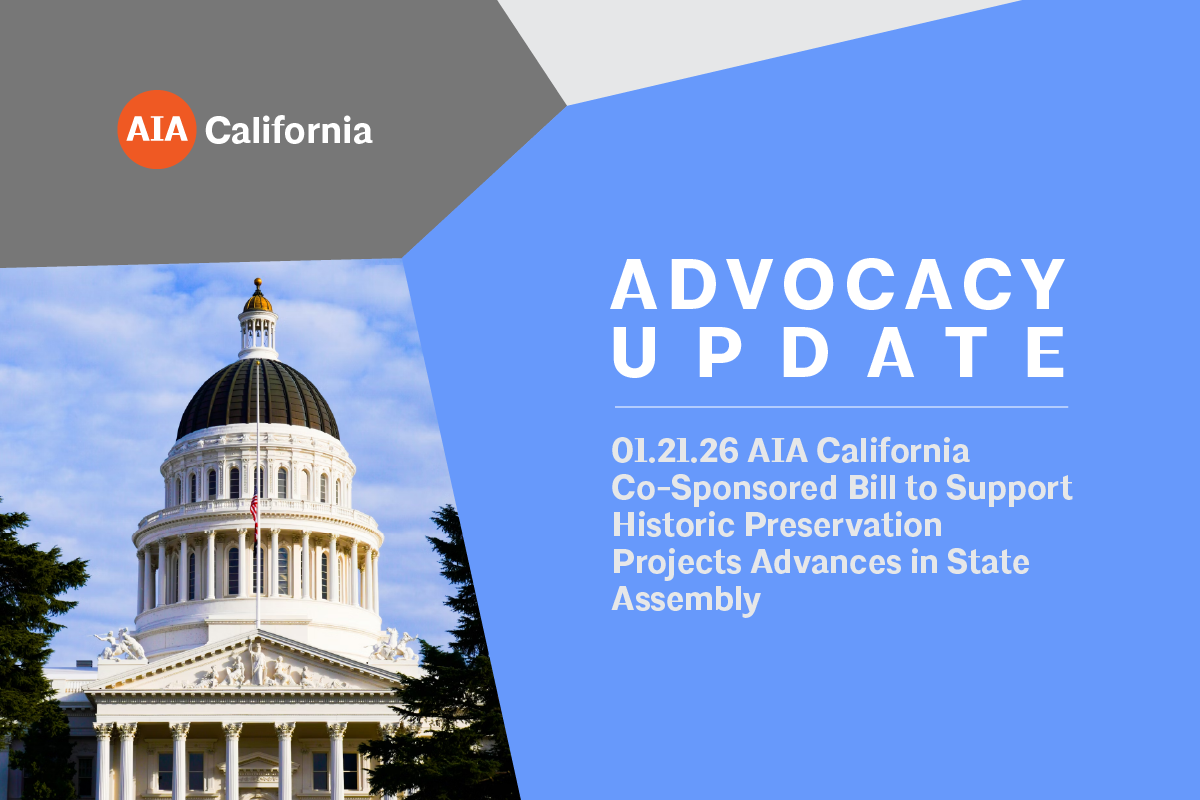
AIA California Co-Sponsored Bill to Support Historic Preservation Projects Advances in State Assembly
AIA California is pleased to report that Assembly Bill 1265 (Haney), legislation to renew and strengthen California’s Historic Preservation Tax Credit (HTC), passed out of the Assembly Committee on Revenue and Taxation last Monday and will next move to the Assembly Committee on Appropriations. The bill previously passed out of the Assembly Housing and Community Development Committee, marking continued progress through the Assembly policy process.
Originally established by the Legislature in 2019 through SB 451 (Atkins), the California Historic Preservation Tax Credit was created to encourage the rehabilitation and adaptive reuse of historic buildings. These projects play an important role in advancing housing production, supporting local economies, and reducing environmental impacts by reusing existing structures rather than demolishing and rebuilding.
However, early implementation of the credit revealed limitations that reduced its accessibility and statewide impact. AB 1265 renews the HTC and strengthens the program by improving predictability, aligning the state credit more closely with the federal historic tax credit, and ensuring that projects across California—large and small—can compete on equal footing.
From the perspective of architects, renewing the HTC is a critical tool for making complex rehabilitation projects financially viable. Adaptive reuse projects often face higher upfront costs, regulatory complexity, and financing challenges, even though they can deliver housing more quickly and with significantly lower embodied carbon than new construction. By strengthening the HTC, AB 1265 supports housing and mixed-use development, promotes climate-responsive design, and helps preserve the character and cultural heritage of California communities.
AIA California is proud to be a cosponsor of AB 1265, alongside the California Preservation Foundation. AIA California would like to thank the California Preservation Foundation for its leadership and partnership on this important issue and for its continued work to advance historic preservation, adaptive reuse, and community revitalization throughout California.
AIA California will continue to advocate for the bill as it moves through the legislative process and will keep members informed as AB 1265 advances through the legislative process.
AIA California’s 2025 advocacy efforts delivered major progress for the profession—strengthening the licensure pipeline, protecting project delivery, advancing housing and climate priorities, and supporting firms through key practice initiatives. These accomplishments reflect the coordinated leadership of AIA California members, committees, and statewide partners, who are committed to improving the built environment.

Help Shape the Future of LA: Join the AIA|LA & LACP Design Review Sessions
Calling all architects and designers with a vision for a better Los Angeles!
The AIA|LA, in partnership with the Los Angeles City Planning (LACP)’s Urban Design Studio, invites you to participate in the Professional Volunteer Program (PVP). This collaborative initiative offers a unique opportunity to directly influence the design quality of upcoming projects across the city and play a vital role in shaping the urban fabric of Los Angeles.
Why Participate?
Impact Your City: Share your design expertise and insights on pending projects that will be reviewed by the Planning Commission. Your feedback can help shape the future of our city’s built environment.
Educate and Collaborate: Work alongside LACP planning staff to discuss urban design issues, complex urban typologies, and project-specific design challenges.
Expand Your Network: Connect with fellow architects, designers, and city planning professionals who share your passion for urban design.
How to Get Involved:
The PVP will be hosting 31 virtual design review sessions throughout the year. These sessions are a great opportunity to get involved and make a real difference. We encourage you to register for three or four sessions that fit your schedule.
View the Full Schedule and Register Today:
Prepare for a Meaningful Impact:
To maximize your contribution, we recommend reviewing the Urban Design Studio’s resources and the City’s design guidelines:
Confidentiality:
PVP discussions provide an open forum for design feedback, and all participants are expected to maintain confidentiality and anonymity.
For More Information:
Please contact Will Wright, Hon. AIA|LA, at (213) 639-0764 or will[@]aialosangeles.org with any questions.
Together, we can create a more vibrant, equitable, and resilient Los Angeles through the power of design. Join us in shaping the city’s future!

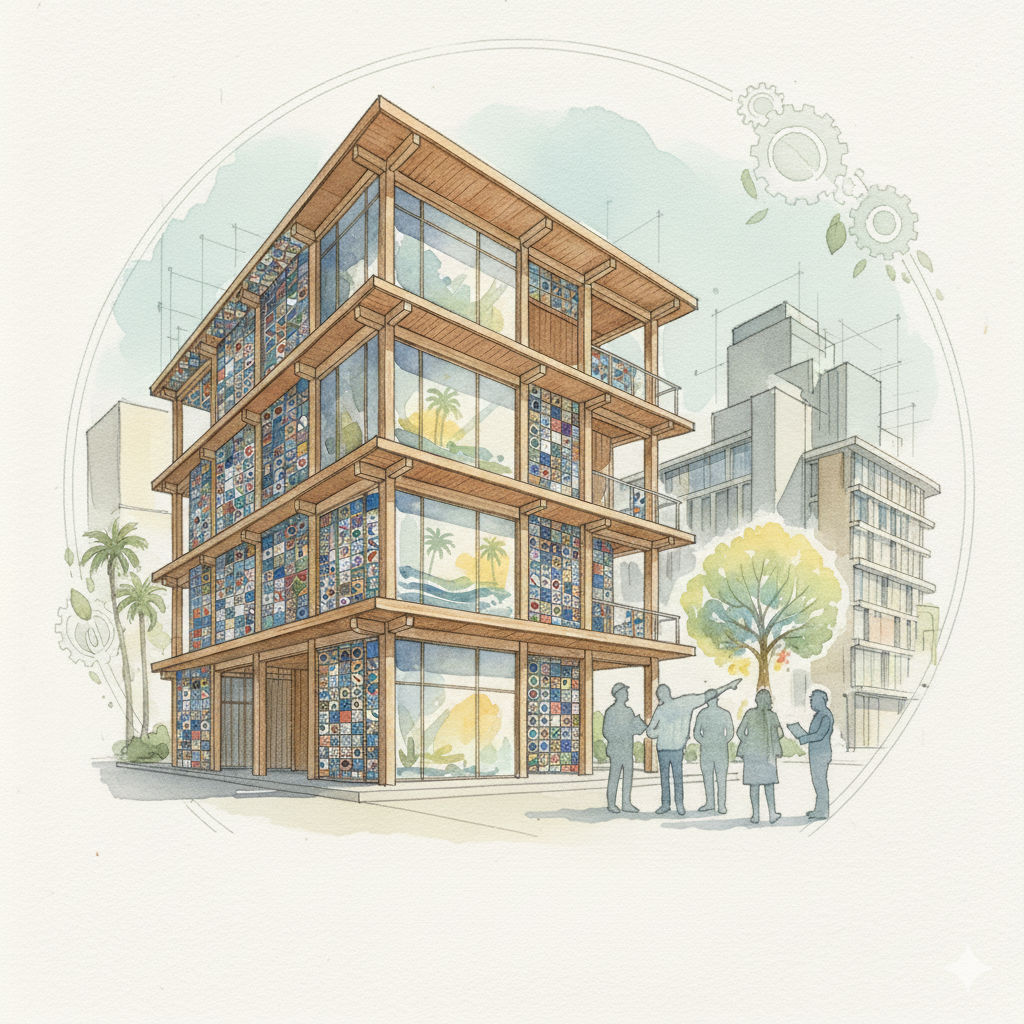
Call for Entries: Innovate with the Santa Monica Mass Timber Accelerator
AIA|LA is delighted to officially partner with the City of Santa Monica on an exciting new initiative: The Santa Monica Mass Timber Accelerator.
As architects and designers, we constantly seek methods that marry aesthetic beauty with environmental responsibility. Santa Monica has long held a reputation as a regional leader in sustainability and innovation. Now, through the Mass Timber Accelerator, we have a unique opportunity to advance the City’s built environment by exploring the potential of high-strength, prefabricated wood products.
Why Participate? Southern California is poised to become a significant market for mass timber, yet widespread adoption requires pioneers willing to demonstrate its feasibility. This program creates a structured pathway for design teams to lead that charge. Mass timber offers tangible benefits to the building sector, including:
Program Details & Support Part of the broader Accelerator Cities Program—co-funded by the Softwood Lumber Board and the USDA Forest Service—this initiative is designed to de-risk the adoption of new systems.
The program will competitively select up to five private development projects to receive funding and technical assistance. Selected teams will not be working alone; participants will receive expert guidance from WoodWorks regarding structural design, fire resistance, code compliance, and detailing. This is a rare opportunity to receive financial backing and high-level technical consulting to bring a mass timber project to life.
How to Apply: We invite all eligible design and development teams to apply. Whether you are looking to assess workforce capacity, explore Cross-Laminated Timber (CLT) feasibility, or simply create the next landmark sustainable project in Santa Monica, we want to see your vision.
Key Deadline: Applications are due to the Office of Sustainability & the Environment by February 27th, 2026, at 11:59 PM.
Selected teams will be notified by mid-March 2026. Join us in shaping a more sustainable, efficient, and beautiful future for Santa Monica.
Download the Santa Monica Mass Timber Accelerator Application Guide Here
FOR MORE INFORMATION:
Will Wright, Hon. AIA|LA
Director, Government & Public Affairs
t: 213.639.0764
e: will@aialosangeles.org
www.aialosangeles.org
*Disclaimer: The advice and perspectives shared here belong to the author and should not be considered official recommendations from AIA Los Angeles.


