AIA|LA ARCHITECTS IN ACTION:
Eve Reynolds, AIA - Founder, Arcolution

Equitable Restroom Accommodation: Defending Everyone’s Right to Be and to Pee in the Public Sphere
by Eve Reynolds, AIA*
As of September 2025, it is illegal in twenty out of fifty states for trans and gender nonconforming people to use the restroom associated with their identity in public buildings, in K-12 schools, government buildings, colleges, and more. “You cannot pee here, and you have no place being here,” is the not-so-subtle message. The fact that no equitable restroom accommodation has been offered in any of these states to counter the exclusionary laws proves the point that trans folk are simply not welcome. “There are only two genders, and yours is written on your birth certificate.” Don’t let the door hit you on the way out.
Yet, across cultures and around the world, the fact is that there are significant amounts of people who do not fit neatly into the binary categories of heterosexual cis male and heterosexual cis female. In the U.S., those who identify as LGBTQ+ include more than 31 million people, according to a Gallup poll published in February 2025. Of all respondents in that Gallup study, 1.3% identify as transgender. That translates to over 4.4 million trans adults in this country. Another study from the Pew Research Center in 2022 found an even higher percentage (1.6%) of U.S. adults who identify as transgender or nonbinary. As a result of these “trans bathroom bans,” hundreds of thousands, if not millions, of people across the country are directly and adversely impacted.
Why are trans people being barred from using the bathroom of their identity in twenty states, while people in the other thirty states enjoy an inclusive and accommodating restroom policy without issue? Proponents of the bans, notably all from Republican-dominated state legislatures, cite concerns over privacy, safety, and the need to protect women and children from potential assault. However, this claim has been researched and fully debunked in study after study. Jody Herman, Senior Scholar of Public Policy at the Williams Institute, UCLA School of Law, summarized the issue in this statement:
“Current policy debates about transgender people’s access to restrooms are based on a narrative, asserted without evidence, that safety and privacy in women’s spaces are at risk. However, research shows that transgender people are the ones who face harm from others in these spaces, including being denied access, verbal harassment, and physical assault. Moreover, they are at greater risk of harm when laws require them to use restrooms according to their assigned sex at birth.”
The cruelty of being denied access to appropriate restroom facilities in public buildings has a secondary but no less important effect on the victims, in that it can lead to serious medical conditions.
Targeting and ostracizing any particular segment of society poses an existential dilemma for us as conscientious and caring citizens. It threatens our deeply held core belief that everyone has a right to participate fully in public life — and that includes fair and equitable access to public amenities. Further, and more to the point of this discussion, it is our duty as architects and design professionals to provide equitable access to restroom facilities for all building occupants. And in this task, we as architects, legislators, policy makers, and building officials have failed the public for the last four years since the first trans bathroom ban went into effect in Tennessee, and in every state that has followed suit since. It is painfully clear that we need better tools and new design strategies to meet this challenge. We need to think outside of this box.
It was for this reason that in September 2025, AIA|LA sponsored our panel discussion, “Equitable Restroom Accommodation for Trans and Gender Nonconforming People,” with thought leaders from the civil rights, architecture, and trans communities.* In a fast-paced discussion, our panel of experts from ACLU Southern California, UCLA School of Law, GLAAD, Disability Rights California, the TransLatina Coalition, and UC San Diego discussed design strategies, building and plumbing codes, and a policy position statement that will be presented to the National AIA for their adoption and advocacy across all 50 states.
At the root of the issue are the building and plumbing codes that dictate restroom design in the U.S. today, which date back to late 19th-century industrial America. Before the advent of indoor plumbing and restrooms, women used designated outdoor areas, outhouses and privies, or simply portable containers. However, by the late 1800’s, indoor plumbing had become a thing, and women’s organizations were actively advocating for dedicated women’s “washrooms” in factories and public buildings and for better public sanitation across the board. This advocacy resulted in the passage of the first state law in Massachusetts in 1887 that mandated separate men’s and women’s facilities. More than a century later, the codes still call for sex-segregated restrooms. It is ironic that the argument for separate bathrooms based on gender that was once heralded as protecting women’s virtue, safety, and privacy is the same argument that is being used now to deny trans and nonbinary people their most basic right to pee.
For those millions of people who, by law, have been forbidden from using restroom facilities in public buildings, take heart in knowing that new design strategies are already in place and working in progressive states across the country. New amendments have been proposed to the 2024 Uniform Plumbing Code that will allow multi-user all-gender restrooms in state buildings and colleges. Hope springs eternal that in time the same will happen for K-12 potty users. Better days are on the horizon.
Some of the findings of our panel discussion urge policymakers to consider these ideas:
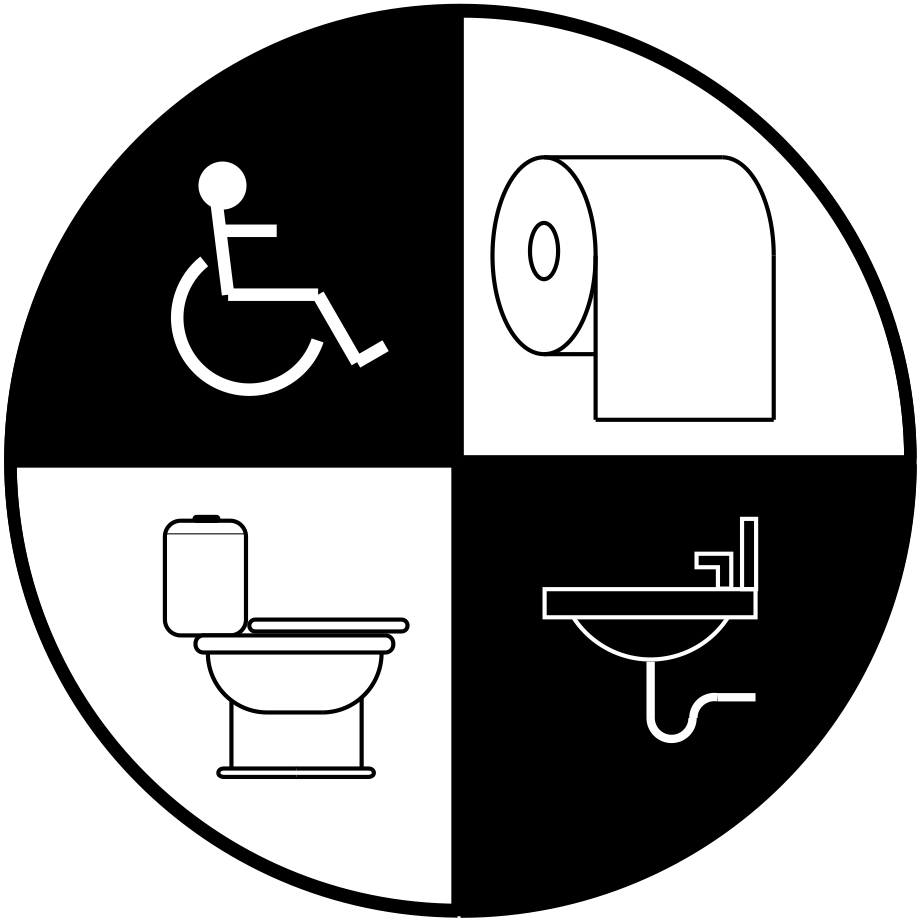
• Change the nature of graphic signage of restroom facilities from figurative depictions of male/female to depictions of the type of fixtures located within the restroom (e.g., toilet/lavatory). It’s not about the user – it’s about the function of the space.
• Convert all existing single-user toilet facilities in businesses, public, and government buildings to all-gender. This all-inclusive policy is easy to accomplish and represents the least capital investment. Low-hanging fruit for maximum impact.
• Going forward, provide all-gender single-user and gender-neutral multi-user restroom design in all public and government buildings in lieu of sex-separated facilities.
• Strike the antiquated binary requirement to “separate men’s and women’s restrooms” from the building and plumbing codes. Work through the AIA’s Codes and Standards committee to develop new policies that ensure maximum access, maximum safety, and maximum privacy for all facility users. Good policy and good design build in safety and privacy with respect and dignity for all building occupants.
• As important as it is to support inclusionary policies that allow for everyone to fully partake in public life, it is equally important to resist exclusionary policies that single out and exclude particular segments of the population from participating fully in public life. Propose inclusionary policies and rescind exclusionary policies and regulations.
The other achievement to come out of our panel discussion is the following proposed policy position statement for the National AIA’s adoption and advocacy:
“The AIA supports governmental policies, rules, and guidelines that ensure the rights of trans and gender nonconforming people to equitable and unfettered access to restrooms and to all other points of public accommodation within all public buildings. The AIA advocates for revisions to the codes and standards that will guarantee universal access to public accommodations for everyone, regardless of gender identity or expression, sexual orientation, disability, race, ethnicity, or religious practice.” – draft policy proposal
As architects, design professionals, and policy leaders for the built environment, the ball is in our court to address this injustice now four years in the making, which involves complexities of cultural, legal, social, and political dimensions. It’s a tall order, but this is what we do best: gather the stakeholders, identify the issues, find the solutions, and build the new thing. May we resolve to defend everyone’s innate right to be in the stream of life. And may we rise together in one unified voice to ensure that every last one of us has a safe place to be and a safe place to pee in the public realm.
__________
* A link to the Zoom Panel Presentation on Equitable Restroom Accommodation for Trans and GNC People can be found at AIA Los Angeles using the passcode: XPz249d#. (Please Note: This link will be added once the recording has been added to the AIA|LA YouTube Channel)
Eve Reynolds, AIA – Founder, Arcolution
Eve Reynolds, AIA, is a Los Angeles-based architect and founder of her firm, Arcolution.
*Disclaimer: The advice and perspectives shared here belong to the author and should not be considered official recommendations from AIA Los Angeles.


